
With energy bills still a concern for many households, smart thermostats are often promoted as an easy way to take better control of home heating and reduce unnecessary energy use. By allowing you to create schedules, adjust temperatures remotely and avoid heating an empty home, they can make a heating system far more responsive than a basic manual thermostat.
However, whether a smart thermostat will actually save you money depends on how you currently heat your home, how well your heating is already controlled and whether you make use of its energy-saving features. In this guide, we explain how smart thermostats work, where the potential savings come from and what UK households should consider before buying one.
How Can Smart Thermostats Help Reduce Heating Costs?
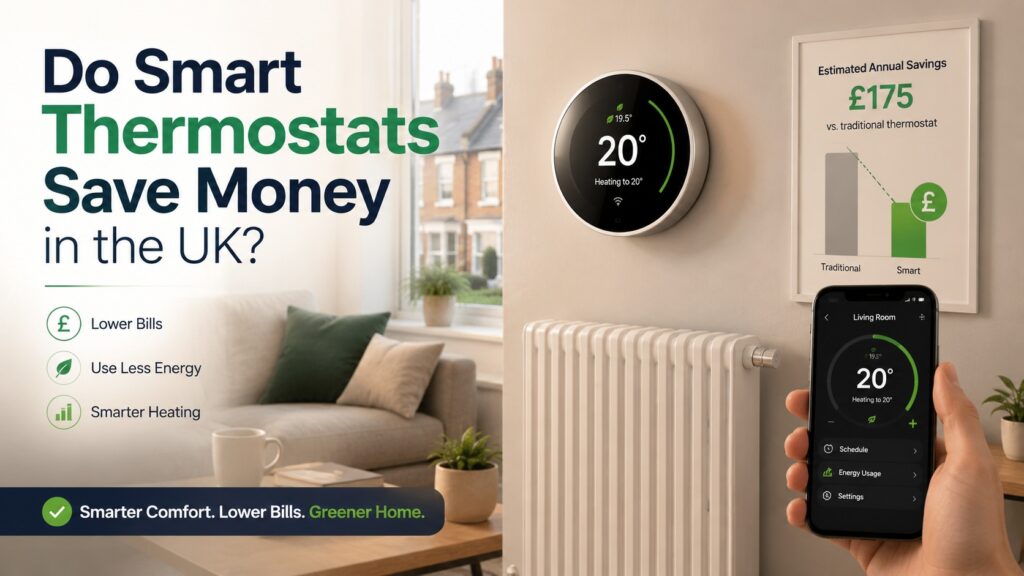
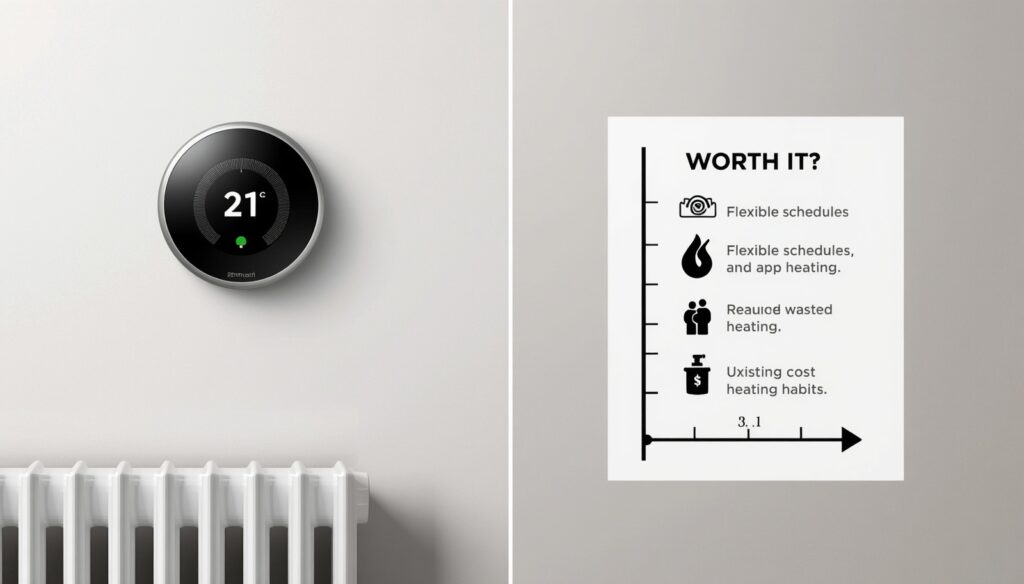
Smart thermostats can help reduce heating costs by giving households more precise control over when and how their heating is used. Instead of relying on a basic on-and-off routine, they allow you to build heating schedules around your daily habits, adjust the temperature from your phone and avoid warming rooms unnecessarily when nobody is at home.
The biggest potential benefit comes from reducing wasted energy. For example, a household that regularly leaves the heating running longer than needed may find it easier to cut back with app controls, programmed routines and more visible temperature management. Some models also offer features such as geolocation, open-window detection or learning functions, which can make heating control feel more responsive and less manual.
This is especially important with electric heating, where running time has a direct effect on cost. Our guide to whether electric radiators are expensive to run in the UK explains why thermostat control, timers and room choice matter so much.
It is important to remember that a smart thermostat does not magically lower bills on its own. Savings depend on how you use it, what type of heating control you currently have and whether your existing routine already avoids unnecessary heating. If you are unsure how these systems differ, our guide to smart thermostats vs heating controllers in the UK explains the distinction in more detail.
Do Smart Thermostats Save Money in Every Home?
Smart thermostats can support lower heating bills, but they do not create the same level of savings for every household. Their value is usually highest in homes where heating is currently left on for longer than necessary, temperatures are adjusted manually without a clear routine or occupants often forget to turn the system down before going out.
A household with very basic heating controls may notice a more meaningful difference because a smart thermostat adds scheduling, remote access and more accurate temperature management. In contrast, someone who already uses a well-planned heating schedule and rarely wastes energy may see a smaller improvement. The thermostat can still make daily heating easier to manage, but the financial benefit may be less dramatic.
The type of property also matters. Larger homes, households with irregular routines and people who work changing shifts may benefit more from flexible heating controls than homes where the same schedule works perfectly every day. For this reason, smart thermostats should be viewed as a tool for reducing avoidable heating waste rather than a guaranteed way to cut bills in every situation.
Which Smart Thermostat Features Can Help You Save Money?
The money-saving potential of a smart thermostat usually comes from features that help households reduce unnecessary heating rather than from the device itself. A simple app connection may be convenient, but the more useful tools are those that improve timing, prevent over-heating and make it easier to respond when daily routines change.
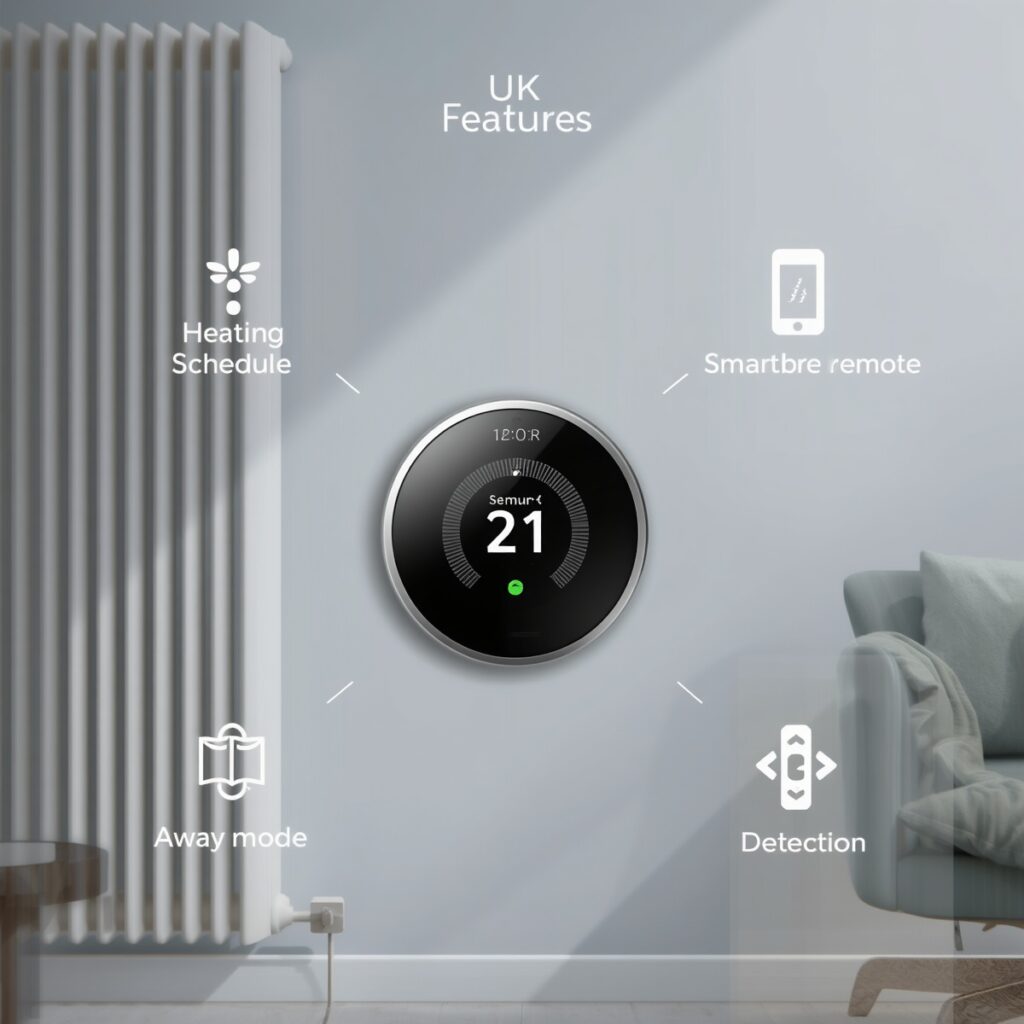
Heating schedules are one of the most practical features. They allow you to set different temperatures for mornings, evenings and overnight periods, which can help avoid running the heating at the same level all day. Remote control is also valuable, particularly if you leave home unexpectedly and realise the heating is still on. Instead of wasting energy for several hours, you can adjust it directly from your phone.
Some smart thermostats also include more advanced tools such as geofencing, occupancy-based routines, open-window detection or learning behaviour over time. These features are not essential for every user, but they may help households with less predictable schedules keep heating use closer to real needs. Models such as the Honeywell Home T6 smart thermostat are designed around this type of flexible everyday control.
How Much Money Can a Smart Thermostat Save in the UK?
The amount a smart thermostat may save depends on the heating habits of the household, the level of control already in place and whether its features are used consistently. It is more accurate to say that smart thermostats can help reduce wasted heating than to promise one fixed saving for every home.
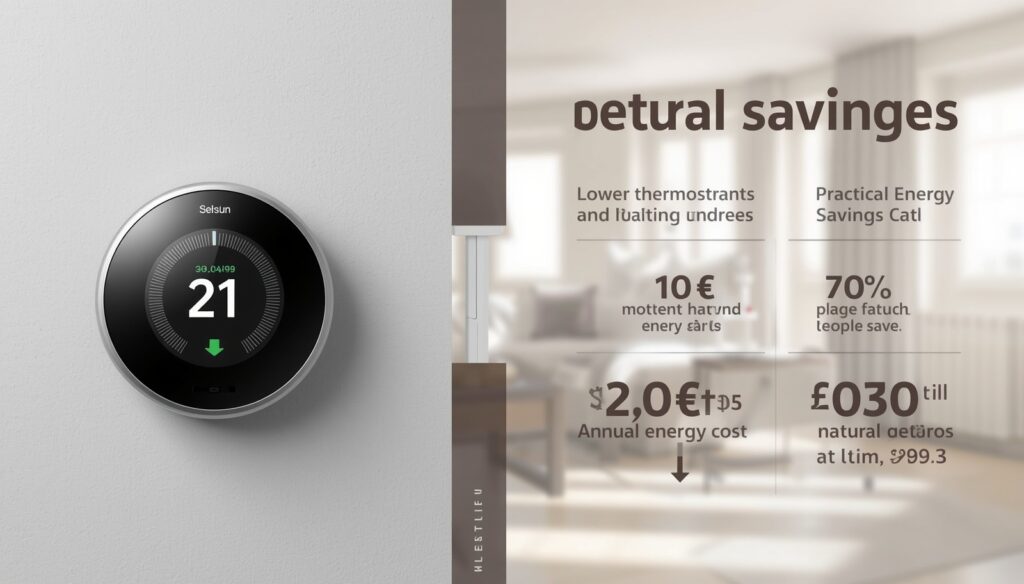
The Energy Saving Trust states that installing effective heating controls, including a programmer, room thermostat and thermostatic radiator valves, could save around £110 a year in Great Britain. It also notes that lowering the thermostat by just 1°C, from 22°C to 21°C, could save around £90 a year in Great Britain. A smart thermostat can support these kinds of savings by making temperature adjustments, schedules and remote control easier to manage day to day.
Ofgem also explains that smart thermostats and heating controls can help households set heating and hot water to run only when needed, which can reduce unnecessary energy use. This means the biggest savings are often found in homes where heating is currently left on too long, used at higher temperatures than necessary or not adjusted when routines change
What Affects How Much a Smart Thermostat Can Save?
The savings from a smart thermostat are not fixed, because every home uses heating differently. Two households can install similar devices and see very different results depending on their routines, current controls and how actively they use the thermostat’s energy-saving features. Understanding these factors makes it easier to judge whether a smart thermostat is likely to be worthwhile in your own home.
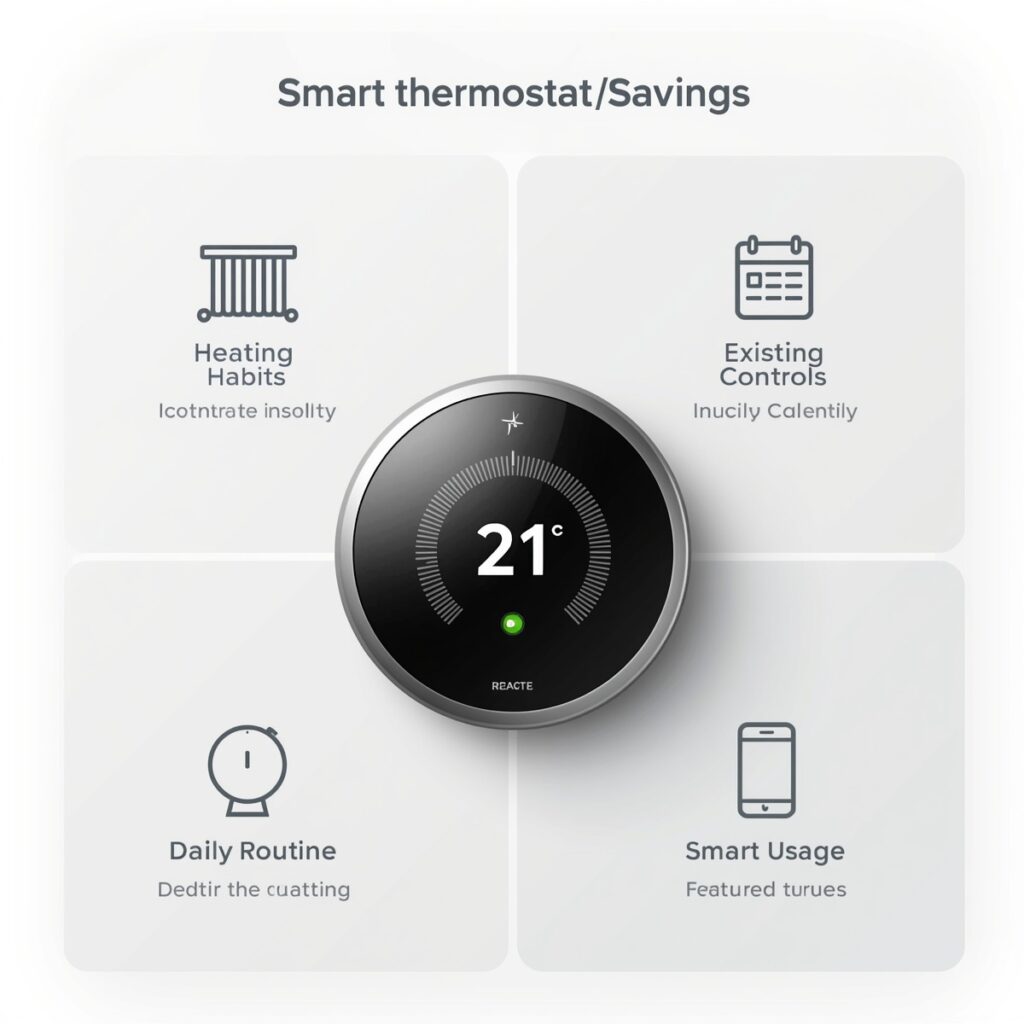
Your Current Heating Habits
Smart thermostats are usually most useful in homes where heating is not already managed carefully. If the heating often stays on after people leave the house, runs at the same temperature throughout the day or is adjusted only when someone remembers, there may be more wasted energy to reduce.
A smart thermostat can make those changes easier by giving you scheduled heating periods, app-based adjustments and clearer control over daily use. The device does not create savings by itself, but it can help replace inefficient habits with a more deliberate heating routine.
The Heating Controls You Already Have
The starting point matters. A home with only a basic manual thermostat may gain more from smart heating control than a home that already uses a well-set programmer, room thermostat and radiator valves effectively. In the second case, the thermostat may still improve convenience, but the extra savings could be smaller.
This is why smart thermostats should not be judged only by whether they are “energy efficient”. The real question is whether they offer better control than your current setup. Some systems, such as the Tado Smart Thermostat X, are designed to give households more flexible scheduling and app-based heating management where simpler controls may feel limiting.
How Predictable Your Daily Routine Is
Households with highly regular routines may find it easier to create an efficient heating schedule even with basic controls. However, homes with changing work patterns, school runs, irregular shifts or frequent time spent away may benefit more from a thermostat that can be adjusted remotely.
That flexibility can help prevent heating from running according to an outdated schedule when nobody is home. It also makes it easier to warm the property when plans change, rather than keeping the heating on “just in case”.
Whether You Use the Smart Features Properly
A smart thermostat only becomes genuinely useful when its features are used with purpose. Installing one and leaving it on a high fixed temperature is unlikely to produce meaningful results. The value comes from setting sensible schedules, reviewing heating patterns, using away modes where appropriate and avoiding unnecessary temperature increases.
For this reason, the best smart thermostat is not always the model with the longest feature list. It is the one that makes efficient heating control simple enough to use consistently.
When Might a Smart Thermostat Not Save Much?
A smart thermostat may offer convenience without producing major financial savings in every situation. If your heating is already well controlled, your home follows a very predictable routine and you rarely waste energy by heating empty rooms or leaving the system running too long, there may be less inefficiency for a smart device to correct.
Savings may also be limited if the thermostat is installed but not used actively. Features such as schedules, away modes and remote control only help when they are set up properly and adjusted when household routines change. A smart thermostat used like a basic manual control is unlikely to deliver its full value.
It is also worth thinking about the upfront cost. Some households may prefer a lower-cost improvement first, such as reviewing their heating schedule, reducing the set temperature slightly or using existing controls more carefully. A smart thermostat can be worthwhile, but it should be chosen because it solves a real control problem in the home, not simply because it is marketed as an energy-saving product.
What Should You Check Before Buying a Smart Thermostat?
A smart thermostat is more likely to be worthwhile when it matches both your heating system and the way your household actually uses energy. Before choosing one, it is sensible to look beyond the headline promise of lower bills and check whether the device will give you practical control that your current setup does not already provide.
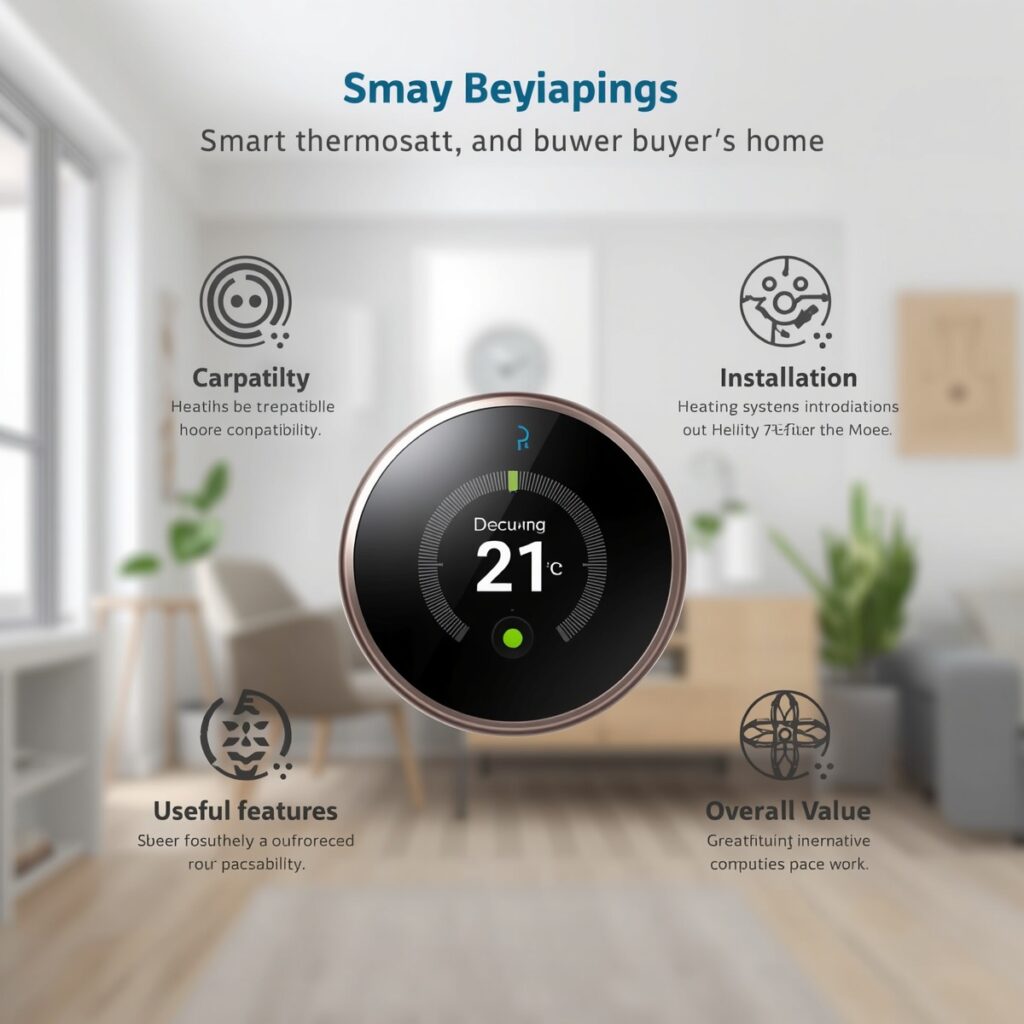
Compatibility with Your Heating System
Not every smart thermostat works with every boiler or heating arrangement. Before buying, check whether the model is suitable for your boiler type, whether it needs a separate receiver or hub and whether it supports the level of heating control you expect. This matters because a thermostat that is poorly matched to your system may offer less value than expected.
Installation and Ease of Setup
Some smart thermostats are designed for professional installation, while others may feel simpler to set up depending on your existing wiring and heating controls. Installation cost should be part of the overall decision, especially if you are buying the device mainly to save money over time.
A model such as the Hive Thermostat Mini may appeal to households looking for compact smart heating control, but the right choice still depends on compatibility, setup requirements and the features you will genuinely use.
Features You Will Actually Use
It is easy to be impressed by long feature lists, but not every extra function will matter in daily life. For many households, the most useful tools are simple scheduling, app control and the ability to change the heating when plans change. More advanced functions can be helpful, but only when they fit your routine.
Total Value, Not Just Purchase Price
The cheapest smart thermostat is not automatically the best value, and the most expensive one is not automatically the most effective. A better question is whether the thermostat gives you enough extra control to reduce waste, improve comfort and justify the upfront cost over time.
Are Smart Thermostats Worth It for UK Households?
For many UK households, a smart thermostat can be worth considering if it gives better control over heating that is currently too rigid, too manual or too easy to waste. The strongest case is not simply “buy one and your bills will fall”, but rather that smarter control can make it easier to heat the home only when needed and avoid habits that increase energy use unnecessarily.
A smart thermostat may be particularly worthwhile if you often leave the heating running when plans change, want to adjust temperatures remotely or need a more flexible schedule than a basic programmer allows. In those situations, the device can improve both comfort and efficiency, especially when used consistently over time.
However, households with an already well-managed heating routine may find the benefit is more about convenience than major bill reductions. The most sensible approach is to treat a smart thermostat as one part of a wider home efficiency strategy, alongside sensible temperature settings, good heating habits and suitable controls. Our broader home energy efficiency guides can help if you are comparing different ways to reduce unnecessary household energy use.
Frequently Asked Questions About Smart Thermostats and Energy Savings in the UK
Do smart thermostats reduce energy bills in the UK?
Smart thermostats can help reduce energy bills when they are used to cut unnecessary heating. Their main value comes from giving you better control over schedules, room temperatures and heating changes when your daily routine shifts. For example, remote access can help you turn the heating down if you leave home earlier than planned, while programmed schedules can reduce the chance of heating the property for longer than needed. However, the size of any saving depends on how efficiently you already use your heating, the type of controls you currently have and whether you make regular use of the thermostat’s smart features.
How long does it take for a smart thermostat to pay for itself?
There is no single payback period that applies to every UK home. It depends on the cost of the thermostat, whether professional installation is needed and how much wasted heating the device helps you reduce. A household with very basic controls and irregular heating habits may see better value than someone who already uses a well-planned schedule and rarely overheats the home. For this reason, it is better to judge a smart thermostat by the practical control it adds, rather than assuming it will always repay its cost within a fixed number of months or years.
Can a smart thermostat save money with a combi boiler?
A smart thermostat can help improve heating control in homes with a combi boiler, provided the chosen model is compatible with the system. It can make it easier to set heating schedules, adjust the temperature remotely and avoid running the heating when it is not needed. That can be useful in households where routines change often or where the heating is currently controlled manually. However, compatibility should always be checked before purchase, because different thermostats support different boiler setups, wiring arrangements and smart control features.
Is a smart thermostat worth it if I already use a heating timer?
It can still be worthwhile, but the benefit may be smaller. A heating timer already helps reduce waste by turning the system on and off at set periods, so a smart thermostat needs to add something genuinely useful beyond that. The main advantages are usually app control, easier schedule changes, more flexible temperature management and the ability to react when plans change. If your existing timer already fits your routine very well, a smart thermostat may improve convenience more than it reduces bills. If your schedule changes regularly, it may offer clearer value.
Do smart thermostats work better in larger homes?
Not automatically. Larger homes may have more opportunities for heating waste, especially if they are occupied at different times or if the whole property is heated when only part of it is in use. In that sense, smarter control can be useful. However, a standard smart thermostat usually controls the overall heating system rather than managing every room independently. Households looking for more precise room-by-room control may need to consider smart radiator valves or a more advanced zoned heating setup. The right choice depends on how the home is heated and where energy is most likely being wasted.
Can lowering the thermostat by 1°C save money?
Lowering the thermostat setting can reduce heating demand, which may help bring bills down over time. The exact saving depends on the property, insulation, outdoor temperature and how long the heating is used each day. A smart thermostat can make this kind of adjustment easier to maintain because it gives clearer control over temperature settings and schedules. Rather than making large changes that reduce comfort, many households may find that small, consistent adjustments are a more practical way to improve efficiency while keeping the home comfortable.
Final Verdict: Can Smart Thermostats Really Save Money?
Yes, smart thermostats can help save money in the UK, but only when they are used to reduce unnecessary heating rather than treated as a guaranteed bill-cutting device. Their real value comes from better control: clearer schedules, easier temperature adjustments, remote access and smart features that help heating respond more closely to everyday life.
They are most likely to be worthwhile in homes where heating is currently left on too long, routines change regularly or existing controls feel too basic. In homes that already use efficient heating schedules and sensible temperature settings, the financial benefit may be smaller, although the extra convenience can still be useful.
For most households, the best way to view a smart thermostat is as a practical energy-management tool. It will not transform bills on its own, but when chosen carefully and used consistently, it can support lower wasted energy, better comfort and more efficient heating habits over time.