
Portable power stations and traditional generators are often mentioned as interchangeable backup power solutions, but in practice they serve very different purposes. For UK households, campers, and remote workers, choosing the wrong option can lead to unnecessary costs, noise issues, or limitations in everyday use.
In 2026, portable power stations have evolved into quiet, emission-free systems capable of powering essential electronics and appliances without fuel, fumes, or complex maintenance. At the same time, generators still play a role in specific high-demand scenarios. Understanding where each solution makes sense is key to making a practical, long-term decision.
This guide compares portable power stations and generators based on real-world use, costs, safety, and usability in the UK — helping you decide which option truly fits your needs.
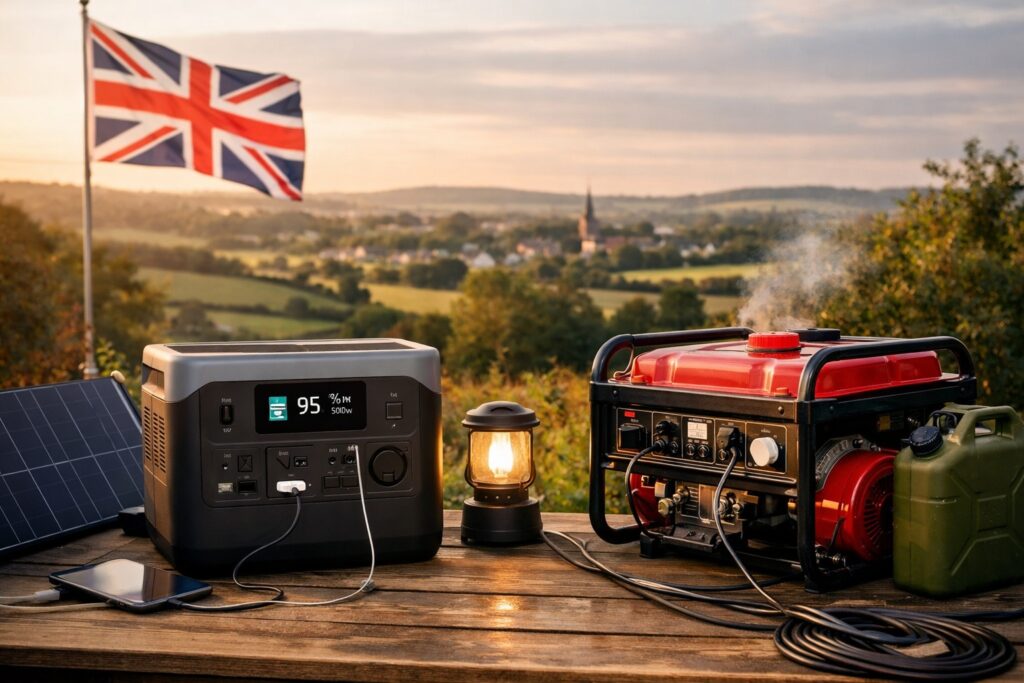
What Is the Difference Between a Portable Power Station and a Generator?
Portable power stations and traditional generators solve the same problem — providing electricity when the grid is unavailable — but they do so in fundamentally different ways.
A portable power station stores energy in an internal battery and delivers it through an inverter, producing clean and stable electricity suitable for modern electronics. It operates silently, produces no emissions, and can be used safely indoors. Charging is done via wall sockets, car outlets, or compatible solar panels, making it flexible for both home and off-grid use.
A generator, by contrast, produces electricity by burning fuel such as petrol or diesel. While generators can deliver very high output, they are noisy, emit exhaust fumes, require regular maintenance, and must be used outdoors. Fuel storage, refuelling, and long-term running costs are also important considerations that do not apply to battery-based systems.
Understanding this core difference helps clarify why portable power stations have become a preferred option for many UK households, while generators are increasingly reserved for more specialised or heavy-duty scenarios.

Portable Power Stations vs Generators – Key Differences for UK Users
Portable power stations and traditional generators both provide electricity when the grid is unavailable, but they differ fundamentally in how they work, how they are used, and who they are best suited for. These differences are especially important for UK households, campers, and off-grid users choosing between portable power stations vs generators in 2026.
Understanding these distinctions explains why portable power stations are increasingly replacing generators for everyday backup power, travel, and home use.
Portable Power Stations vs Generators – Noise Levels and Indoor Safety
When comparing portable power stations vs generators, noise and safety are among the most critical differences. Portable power stations operate silently because they rely on internal batteries rather than combustion engines. This makes them safe for indoor use in homes, flats, campervans, tents, and enclosed spaces, with no risk of fumes or carbon monoxide.
Generators use combustion engines and produce constant noise and exhaust emissions. As a result, they must be operated outdoors and can be disruptive in residential areas, campsites, or shared environments.
For UK users who prioritise quiet operation, indoor safety, and flexibility, portable power stations offer a clear advantage over generators.
Portable Power Stations vs Generators – Fuel, Maintenance and Running Costs
Another major difference between portable power stations vs generators is how they are powered and maintained. Portable power stations store electricity in batteries and can be recharged using mains power, car charging, or solar panels. Once purchased, ongoing costs are low, particularly when using off-peak electricity or solar charging.
Generators require continuous fuel input, such as petrol or diesel, which adds recurring costs and storage requirements. Fuel prices fluctuate, and generators also require regular servicing, oil changes, and mechanical maintenance.
Over time, the total cost of ownership for a generator is often higher than that of a portable power station, especially for users who rely on backup power regularly rather than occasionally.
Portable Power Stations vs Generators – Ease of Use and Setup Time
Ease of use is where the difference between portable power stations vs generators becomes especially clear. Portable power stations are designed for plug-and-play operation — switch the unit on, connect devices, and power is available immediately. Displays provide clear information about battery level, input, and output, making them easy to manage even for first-time users.
Generators require more complex setup: outdoor placement, refuelling, manual or electric starting, noise monitoring, and safe shutdown procedures. Weather conditions and fuel availability can also affect usability.
For users who value simplicity, fast deployment, and stress-free operation during power cuts or travel, portable power stations are the more practical solution.
Why Portable Power Stations Make More Sense Than Generators in the UK in 2026
For most UK households, campers, and off-grid users, portable power stations now offer a more realistic, safer, and more convenient alternative to traditional generators. They align better with modern energy needs, environmental expectations, and everyday usability.
Generators still have a place in heavy-duty or industrial scenarios, but for the majority of real-world use cases in the UK, portable power stations provide a better balance of performance, safety, and long-term value.
Portable Power Stations in the UK – How They Work and Why They’re Gaining Popularity
Portable power stations work by storing electricity in high-capacity lithium batteries and converting it into usable AC and DC power through a built-in inverter. Unlike generators, they do not generate electricity on demand; instead, they deliver stored energy in a controlled, stable, and device-safe way.
In the UK, their popularity has grown rapidly due to changing lifestyles and energy needs. More people work from home, rely on uninterrupted internet access, and use sensitive electronics that require clean power. Portable power stations meet these needs without noise, fumes, or fuel dependency.
Another key reason for their rise is flexibility. A single unit can act as a short-term home backup during power cuts, a portable energy source for camping or van travel, and a reliable off-grid solution when paired with solar panels. This versatility makes them far more appealing than traditional generators for everyday users.
Their near-silent operation and zero emissions also make them suitable for indoor use, campsites, and residential areas where fuel generators are impractical or restricted. For many UK users, portable power stations represent a modern, cleaner alternative to traditional backup power solutions.

Traditional Generators Explained – Power Output, Fuel Use, and Limitations
Traditional generators produce electricity by burning fuel such as petrol, diesel, or gas to power an internal combustion engine. This mechanical energy is then converted into electrical output, allowing generators to deliver high wattage for extended periods as long as fuel is available.
In the UK, generators are most commonly used in industrial settings, construction sites, rural properties, or situations where very high power output is required. They are capable of running heavy appliances, tools, and equipment that exceed the limits of most portable power stations.
However, this power comes with clear trade-offs. Generators are noisy, produce exhaust fumes, and require proper ventilation, making them unsuitable for indoor use. Fuel storage, refuelling, and regular maintenance are also necessary, which adds cost and inconvenience over time.
Another important limitation is power quality. Many generators do not provide the clean, stable electricity required by sensitive electronics such as laptops, routers, medical devices, or modern home office equipment. Voltage fluctuations and surges can damage devices unless additional conditioning equipment is used.
While generators remain useful in specific scenarios, particularly where continuous high output is essential, their practicality for everyday home backup or recreational use in the UK is increasingly limited compared to modern portable power stations.

Portable Power Stations vs Generators – Key Differences That Matter in the UK
At a glance, portable power stations and traditional generators both aim to solve the same problem: providing electricity when the grid is unavailable. In practice, however, they differ significantly in how they operate, where they can be used, and who they are best suited for.
The most immediate difference is how power is generated. Portable power stations store energy in high-capacity lithium batteries and deliver electricity silently through an inverter. Generators, by contrast, must burn fuel continuously to produce power, which results in noise, exhaust fumes, and vibration.
For UK households, this distinction is critical. Portable power stations can be safely used indoors, in flats, garages, campervans, and enclosed spaces where generators would be dangerous or outright prohibited. Their clean operation makes them suitable for powering home offices, routers, medical equipment, and essential electronics during outages.
Another key difference lies in convenience and maintenance. Portable power stations require virtually no ongoing maintenance beyond recharging, while generators demand regular servicing, fuel management, and careful storage. Over time, these factors significantly affect total ownership cost and day-to-day usability.
In terms of power quality, portable power stations deliver stable, clean electricity designed for modern electronics. Many generators, especially budget models, produce fluctuating output that can be harmful to sensitive devices unless additional protection is used.
That said, generators still hold an advantage in continuous high-load scenarios. For extended outages requiring sustained high wattage—such as powering heavy tools or large appliances for many hours—a generator may remain the more practical option.
For most UK users, however, especially those prioritising safety, quiet operation, and ease of use, portable power stations represent a more versatile and future-proof solution.

Which Option Makes More Sense in the UK in 2026?
In 2026, the choice between a portable power station and a traditional generator in the UK is shaped less by raw power output and more by practicality, regulation, and everyday usability.
UK households are increasingly reliant on stable electricity for remote work, broadband connectivity, smart devices, and essential electronics. At the same time, environmental regulations, noise restrictions, and space limitations make fuel-powered generators less appealing for most residential settings. In many urban and suburban areas, running a generator is simply impractical or restricted due to noise and emissions.
Portable power stations align far better with how energy is actually used in modern UK homes. They can be operated safely indoors, require no fuel storage, and integrate seamlessly into everyday life. Whether used as a short-term backup during outages, for remote working resilience, or for travel and leisure, they offer flexibility without disruption.
Another important factor is energy independence. With rising electricity costs, many UK users now combine portable power stations with solar charging or off-peak grid charging to reduce reliance on peak-rate electricity. This approach is not only quieter and cleaner than generators but also more predictable in long-term running costs.
For most users in 2026, the question is no longer “Which option delivers the most power?” but rather “Which solution fits my lifestyle, living space, and long-term needs?”
In that context, portable power stations have become the more sensible default choice for the majority of UK households.
If you’re comparing different models and capacities, our Portable Power Stations buying guide breaks down the best options for UK households, campers, and off-grid users.
When a Traditional Generator Still Makes Sense
Despite the clear advantages of portable power stations for most UK users, there are still specific scenarios where a traditional generator can be the more practical choice.
Fuel-powered generators remain relevant in situations that require very high continuous output for extended periods, such as construction sites, agricultural use, or remote locations where fuel is readily available and noise restrictions are minimal. They can also be useful in professional environments where equipment demands exceed the output limits of even large portable power stations.
However, these use cases are increasingly niche. For the average household, camper, remote worker, or small business owner in the UK, the drawbacks of generators — including noise, emissions, fuel storage, maintenance, and indoor safety limitations — often outweigh their benefits.
In contrast, portable power stations continue to evolve rapidly, offering faster charging, higher inverter efficiency, improved battery chemistry, and greater compatibility with solar energy. As technology advances, the gap between generators and battery-based solutions narrows further each year.
For most people in 2026, generators are no longer the default backup solution — they are a specialist tool for specialist needs.
Portable Power Stations vs Generators – Frequently Asked Questions
Are portable power stations better than generators for UK homes?
For most UK households, portable power stations are a better choice than generators. They are silent, emission-free, and safe to use indoors, which makes them ideal for power cuts, home offices, and everyday backup needs. Unlike generators, they do not require fuel storage, outdoor placement, or ongoing mechanical maintenance.
Generators may still be useful for very high power demands, but for typical household devices such as routers, laptops, lighting, TVs, and small appliances, portable power stations offer a more practical and user-friendly solution.
Can a portable power station fully replace a generator?
In many real-world scenarios, yes — a portable power station can replace a generator. For camping, van life, remote work, emergency home backup, and short power outages, portable power stations provide more than enough capacity and convenience.
However, for continuous heavy-duty use, such as running large construction tools or powering an entire house for days without recharging, a traditional generator may still be required. The key is matching the power solution to realistic usage needs.
Are portable power stations safe to use indoors?
Yes, portable power stations are safe for indoor use because they do not rely on combustion. They produce no exhaust fumes, carbon monoxide, or harmful emissions. This makes them suitable for use inside homes, flats, caravans, campervans, and tents.
Generators, by contrast, must never be used indoors due to the risk of carbon monoxide poisoning and fire hazards.
Do generators provide more power than portable power stations?
Generally, generators can deliver higher continuous output than entry-level portable power stations. However, modern mid-range and premium portable power stations can now power fridges, freezers, medical devices, TVs, and multiple electronics simultaneously.
For most UK users, the available output from a well-chosen portable power station is sufficient for emergency and everyday backup without the downsides associated with generators.
Which is cheaper to run: a portable power station or a generator?
Over time, portable power stations are usually cheaper to run. They can be recharged using mains electricity, off-peak tariffs, car charging, or solar panels, with minimal ongoing costs.
Generators require fuel such as petrol or diesel, regular servicing, oil changes, and replacement parts. Rising fuel prices and maintenance costs often make generators more expensive in the long term.
Are portable power stations better for camping and van life than generators?
Yes. Portable power stations are far better suited for camping, festivals, and van life. They are quiet, compact, lightweight, and do not disturb others. They can also be charged via solar panels during the day, making them ideal for off-grid travel.
Generators are noisy, heavy, and often restricted or banned at campsites due to noise and safety concerns.
Should I choose a portable power station or a generator in 2026?
For most UK users in 2026, a portable power station is the smarter choice. Advances in battery technology, faster charging, higher output, and solar compatibility have made portable power stations more versatile than ever.
Generators still have a place in specialist or industrial use, but for homes, travel, emergencies, and everyday backup, portable power stations offer better safety, convenience, and overall value.
Final Thoughts – Portable Power Stations or Generators in 2026?
For most people in the UK, portable power stations now represent the smarter, safer, and more practical choice for backup and off-grid power. They are quieter, cleaner, easier to use, and far better suited to modern lifestyles that rely on electronics, remote work, and flexible energy solutions.
Traditional generators still have their place in specialist environments, but for everyday users — whether at home, camping, travelling in a van, or preparing for power outages — portable power stations offer a far more balanced and future-proof solution.
The key to making the right decision lies in understanding how much power you actually need, how often you’ll use it, and where convenience, safety, and reliability matter most. When chosen correctly, a portable power station can provide peace of mind, energy independence, and long-term value without the downsides associated with fuel-based generators.
If you’re comparing models or trying to decide which type of portable power station best suits your needs, our Portable Power Stations buying guide breaks down the best entry-level, mid-range, and premium options available in the UK, helping you choose with confidence.
If you are planning to use a power station specifically for outdoor trips, our guide to the best portable power station for camping in the UK explains which models work best in real camping conditions.