
In the UK, excess indoor moisture is a far more widespread problem than many homeowners and renters realise. Condensation on windows, damp patches on walls, musty smells, and laundry that never seems to dry properly are all clear signs that humidity levels inside the home are too high.
When these issues appear, two solutions are most often considered: electric dehumidifiers and passive moisture absorbers. Both are widely available across the UK and are often marketed as simple fixes for condensation and damp. At first glance, they may seem interchangeable — after all, both collect water from the air — but in real-world use, they work in very different ways and deliver very different results.
This guide compares dehumidifiers vs moisture absorbers based on typical UK home conditions, including cool temperatures, high outdoor humidity, and limited ventilation for much of the year. We explain how each solution works, where it makes sense to use them, and which option actually provides reliable, long-term moisture control for condensation, damp, and everyday living.

What Is a Dehumidifier and How Does a Dehumidifier Work in UK Homes?
A dehumidifier is an electric appliance designed to actively remove excess moisture from the air and reduce indoor humidity to a healthier, more comfortable level. Unlike passive solutions, a dehumidifier continuously processes air in the room, extracts water vapour, and releases drier air back into the space.
In UK homes, dehumidifiers are most commonly used to tackle everyday problems such as window condensation, damp walls, musty odours, and slow indoor laundry drying. By lowering relative humidity, a dehumidifier helps create conditions that are less favourable for mould growth, dust mites, and persistent moisture damage.
The way a dehumidifier works is straightforward but highly effective. Moist air is drawn into the unit by a fan, moisture is removed using either cooling (compressor models) or absorption (desiccant models), and the extracted water is collected in a tank or drained away through a hose. The drier air is then circulated back into the room, gradually stabilising humidity levels.
Because this process is active and continuous, a dehumidifier can respond quickly to everyday moisture sources common in UK households, such as cooking, showering, drying clothes indoors, and limited ventilation during colder months. This makes it a reliable solution not just for occasional condensation, but for ongoing humidity control across lived-in spaces.
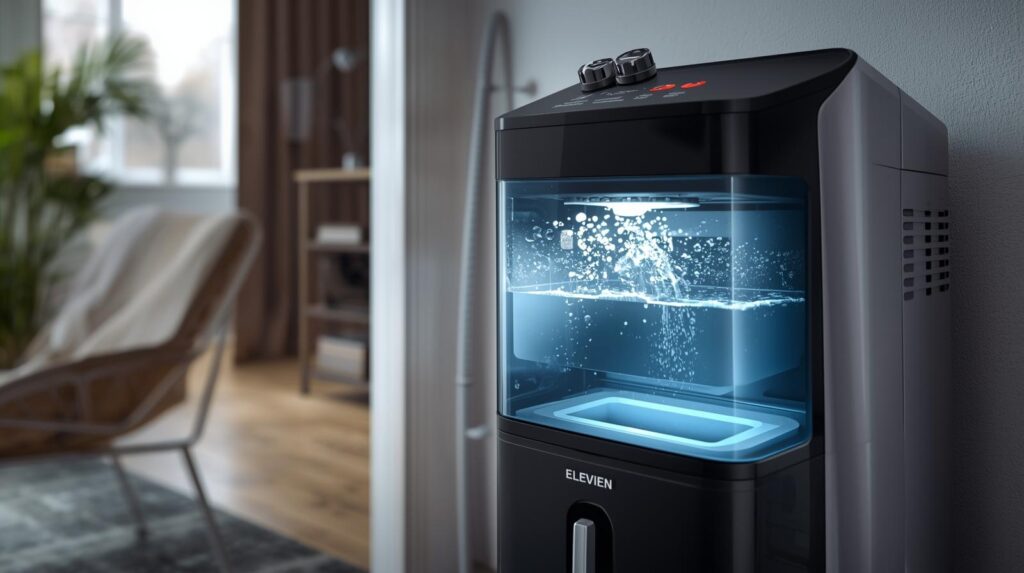
Compressor vs Desiccant Dehumidifiers – Key Differences for UK Conditions
When choosing a dehumidifier for a UK home, the most important technical decision is whether to go for a compressor dehumidifier or a desiccant dehumidifier. While both remove moisture from the air, they behave very differently depending on room temperature, ventilation, and year-round usage.
Compressor dehumidifiers work by cooling the air so that moisture condenses into water. This technology is highly effective and energy-efficient in warmer, lived-in rooms, such as bedrooms, living rooms, and open-plan spaces. In UK homes with central heating, compressor models are excellent for managing everyday condensation, reducing humidity from cooking and showering, and helping dry laundry indoors during milder months.
However, compressor performance drops noticeably in cooler environments, typically below around 15°C. This makes them less suitable for unheated spaces such as garages, basements, utility rooms, or rarely used spare rooms during autumn and winter.
Desiccant dehumidifiers, on the other hand, use a moisture-absorbing material rather than cooling the air. This allows them to work consistently at low temperatures, even in cold or unheated rooms. As a result, desiccant models are often preferred for garages, basements, workshops, caravans, and older UK properties where room temperatures remain low for much of the year.
While desiccant dehumidifiers may consume more electricity per hour on paper, they often remove moisture more reliably and faster in cold conditions, which can reduce overall run time. Choosing the right technology for the room environment is therefore critical — selecting the wrong type can lead to higher running costs and disappointing results, even if the capacity rating looks impressive.
What Is a Moisture Absorber and How Does It Work in UK Homes?
A moisture absorber is a passive humidity control product designed to collect excess moisture from the air without using electricity. Instead of actively circulating air like a dehumidifier, it relies on moisture-attracting crystals or granules that slowly absorb humidity and turn it into liquid water, which is then collected in a small container.
In UK homes, moisture absorbers are commonly used in wardrobes, cupboards, bathrooms, caravans, storage rooms, and small enclosed spaces where airflow is limited and access to power may be inconvenient. They are often marketed as a simple, low-effort solution for condensation and musty smells, particularly in spaces that are not used daily.
Because moisture absorbers have no fans, motors, or electronic components, they operate completely silently and require no setup. Once placed, they begin absorbing moisture immediately. However, their performance is entirely dependent on environmental conditions and the absorption capacity of the crystals. Once saturated, the absorber stops working and must be replaced or refilled to continue collecting moisture.

What Moisture Absorbers Can and Can’t Do in Real UK Homes
In real UK living conditions, moisture absorbers have very clear limitations that are often misunderstood. They can be helpful in specific, controlled situations, but they are not a universal solution for condensation or damp problems across an entire home.
Moisture absorbers work best in very small, enclosed spaces where humidity builds up slowly and predictably. In these environments, they can help reduce light condensation and prevent musty odours from developing over time. Typical examples include wardrobes, cupboards, shoe storage, caravans in storage, or rarely used spare rooms.
However, moisture absorbers do not actively control humidity levels. They do not circulate air, respond to sudden moisture spikes, or regulate relative humidity in a room. This means they struggle in spaces where moisture is produced regularly, such as bedrooms, bathrooms, kitchens, or anywhere laundry is dried indoors.
In everyday UK homes, common activities like showering, cooking, breathing, and drying clothes release large amounts of moisture into the air. In these situations, a moisture absorber often fills up quickly and then becomes ineffective, giving the impression that it has “stopped working” when it has simply reached its absorption limit.
This is the key reason why moisture absorbers are best seen as a temporary or supplementary solution, not a replacement for active humidity control when condensation or damp is an ongoing issue.
Dehumidifiers vs Moisture Absorbers – Key Differences Explained
Although dehumidifiers and moisture absorbers are often grouped together as solutions for condensation and damp, they work in fundamentally different ways and deliver very different results in real UK homes.
A dehumidifier is an active electrical appliance. It pulls moist air through the unit, removes excess water from the air, and releases drier air back into the room. This continuous air circulation allows it to actively control indoor humidity levels, respond to moisture spikes, and maintain a more stable and comfortable environment.
A moisture absorber, by contrast, relies entirely on passive chemical absorption. It does not move air, does not regulate humidity, and cannot adapt when moisture levels suddenly increase. Once the crystals are saturated, the product stops working until it is replaced or refilled.
This difference becomes especially important in UK homes, where humidity is often constant rather than occasional. Condensation on windows, damp air in bedrooms, and slow indoor laundry drying require ongoing moisture control, not a slow, one-off absorption process.
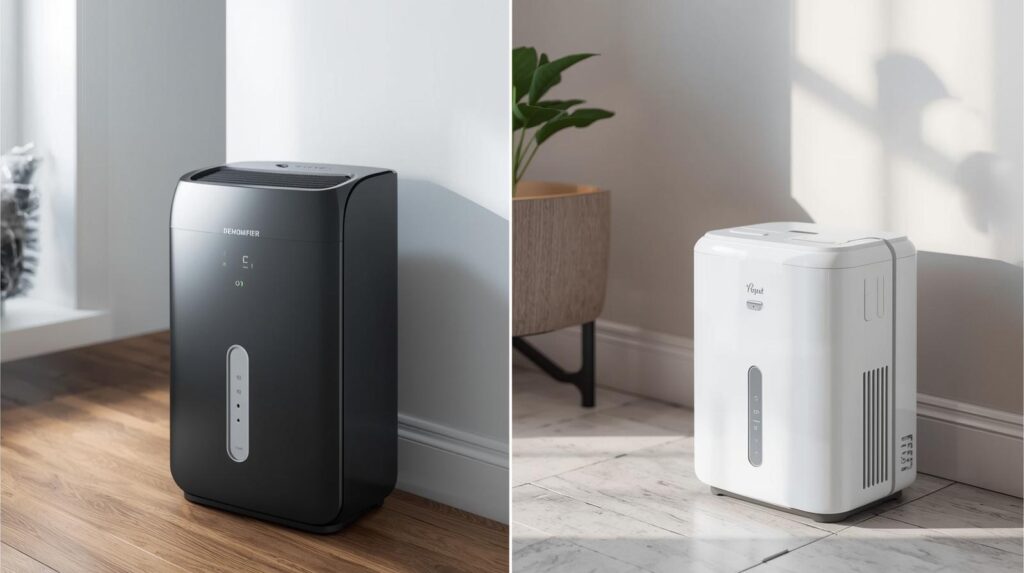
Active vs Passive Moisture Control – Why It Matters for Condensation
The most important difference between dehumidifiers and moisture absorbers is how they handle air movement.
A dehumidifier actively circulates air, which means it can:
- Reduce humidity across an entire room
- Prevent condensation on windows and walls
- Support faster indoor laundry drying
- Help lower the risk of mould growth over time
Moisture absorbers cannot do any of this. They only affect the small pocket of air directly around them, which is why results are often slow, inconsistent, or barely noticeable in lived-in rooms.
In practical terms, this means a dehumidifier improves overall indoor air comfort, while a moisture absorber provides only very localised, short-term moisture reduction.
Running Costs, Maintenance, and Long-Term Value in the UK
Moisture absorbers are often perceived as the cheaper option because they do not use electricity. However, they rely on consumable refills, which need replacing regularly in humid environments. Over months of use, these costs add up quickly.
Dehumidifiers do use electricity, but modern models are designed to be energy efficient and run only when needed. Importantly, they do not require refills or replacement parts, making them more cost-effective for long-term moisture control in many UK households.
For homes dealing with recurring condensation, damp smells, or laundry moisture, the difference in long-term value becomes very clear.
When a Moisture Absorber Is Enough – And When a Dehumidifier Is Needed
Understanding when a moisture absorber is enough and when a dehumidifier is required is essential to avoiding wasted money and ongoing condensation problems. In UK homes, moisture absorbers are often used in situations they were never designed for, which leads to disappointment and repeated purchases without real improvement.
Moisture absorbers can work, but only in very limited and specific conditions. Outside of those scenarios, active humidity control with a dehumidifier becomes necessary.
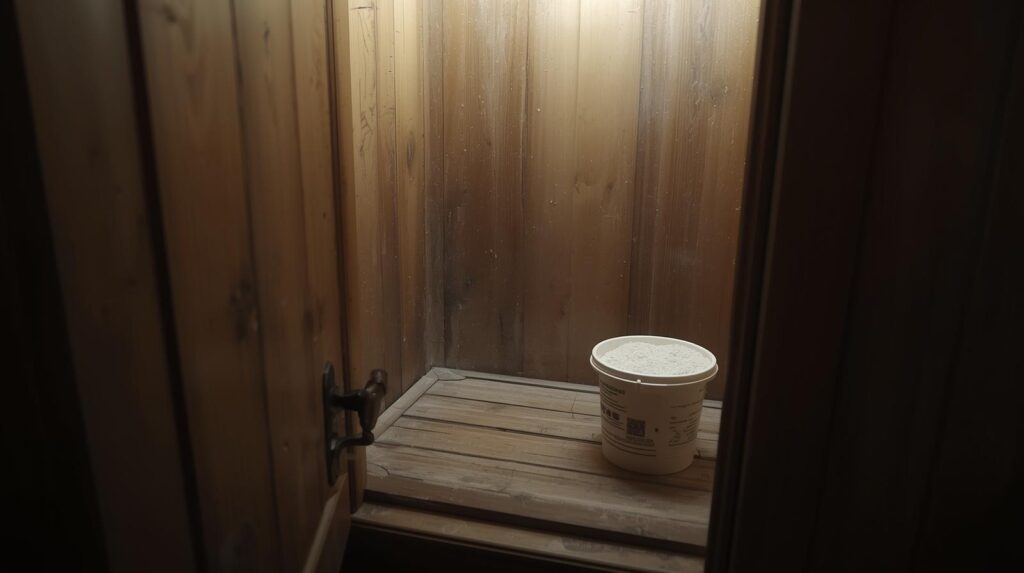
Situations Where Moisture Absorbers Can Work in UK Homes
A moisture absorber can be effective only when all of the following conditions are met:
- The space is very small and enclosed
- There is no active moisture source (no showers, cooking, or laundry)
- Humidity builds up slowly and occasionally, not daily
- The goal is odour control or light condensation reduction
Typical UK examples include wardrobes, cupboards, storage boxes, caravans in storage, or rarely used spare rooms. In these situations, moisture absorbers can help reduce musty smells and collect small amounts of excess moisture over time.
They should be seen as a supplementary or temporary solution, not a replacement for proper humidity control.
Where Moisture Absorbers Fall Short for Condensation and Damp
Problems arise when moisture absorbers are used in lived-in spaces. They struggle or completely fail in environments such as:
- Bedrooms and living rooms used daily
- Bathrooms and kitchens with steam and humidity spikes
- Flats drying laundry indoors
- Homes with poor ventilation
- Rooms already showing window condensation or mould
Because moisture absorbers do not circulate air or regulate humidity levels, they simply cannot keep up with real-world moisture loads in these spaces. The result is often a container that fills quickly, while condensation and damp return unchanged.
The Common UK Mistake – Treating a Moisture Absorber as a Dehumidifier
A very common pattern in UK homes looks like this:
- A moisture absorber is placed in a problem room
- It fills with water, giving a false sense of success
- Condensation and damp continue to appear
- More absorbers are added, increasing cost but not results
At this point, the issue is no longer “light moisture” — it is excess indoor humidity, which requires an active solution.
If condensation appears regularly on windows, laundry takes too long to dry, or damp smells return within days, a moisture absorber is no longer enough.
Why Dehumidifiers Are More Effective for UK Homes Than Moisture Absorbers
In UK homes, moisture problems are rarely occasional. Cool temperatures, high outdoor humidity, and limited natural ventilation mean that indoor air often stays damp for long periods, especially during autumn and winter. In these conditions, dehumidifiers are far more effective than moisture absorbers because they actively control humidity rather than reacting to it passively.
A dehumidifier works continuously to stabilise indoor humidity levels, which is essential for preventing condensation, damp smells, and mould growth in everyday UK living environments.

Active Moisture Removal vs Passive Absorption in UK Conditions
The key difference between a dehumidifier and a moisture absorber is how moisture is removed from the air.
A dehumidifier actively pulls moist air through the unit, extracts the water, and releases drier air back into the room. This process allows it to lower humidity across an entire space and respond quickly to everyday moisture sources such as showering, cooking, and drying clothes indoors.
Moisture absorbers, by contrast, rely on slow chemical absorption. They do not move air, do not regulate humidity levels, and stop working once the crystals become saturated. This passive approach is simply not sufficient for ongoing moisture control in most UK homes.
Real-World Benefits You Notice Quickly With a Dehumidifier
When used correctly, a dehumidifier delivers practical benefits that are noticeable within days rather than weeks. In UK homes, this often includes:
- Less condensation on windows and cold surfaces
- Faster indoor laundry drying without excess moisture
- Reduced musty smells across whole rooms
- Lower risk of mould developing on walls and furniture
- Improved overall comfort, especially in bedrooms
These improvements come from controlling humidity, not just collecting water in one spot.
One Proper Solution Instead of Multiple Temporary Fixes
Many households end up placing multiple moisture absorbers around the home and replacing them every few weeks. Over time, this often costs more than a single dehumidifier, while still failing to solve the underlying problem.
A correctly chosen dehumidifier replaces:
- Multiple moisture absorbers
- Ongoing refill costs
- Guesswork about whether humidity is under control
For homes dealing with recurring condensation or damp, an electric dehumidifier provides a measurable, long-term solution rather than repeated short-term fixes.
Dehumidifier Types Explained for UK Homes – Compressor vs Desiccant
When choosing a dehumidifier in the UK, capacity alone is not enough. The type of dehumidifier technology plays a major role in how well the unit performs in real homes, especially given the UK’s cool climate and seasonal temperature changes.
The two main types used in UK households are compressor dehumidifiers and desiccant dehumidifiers. While both remove moisture from the air, they behave very differently depending on room temperature and usage conditions.
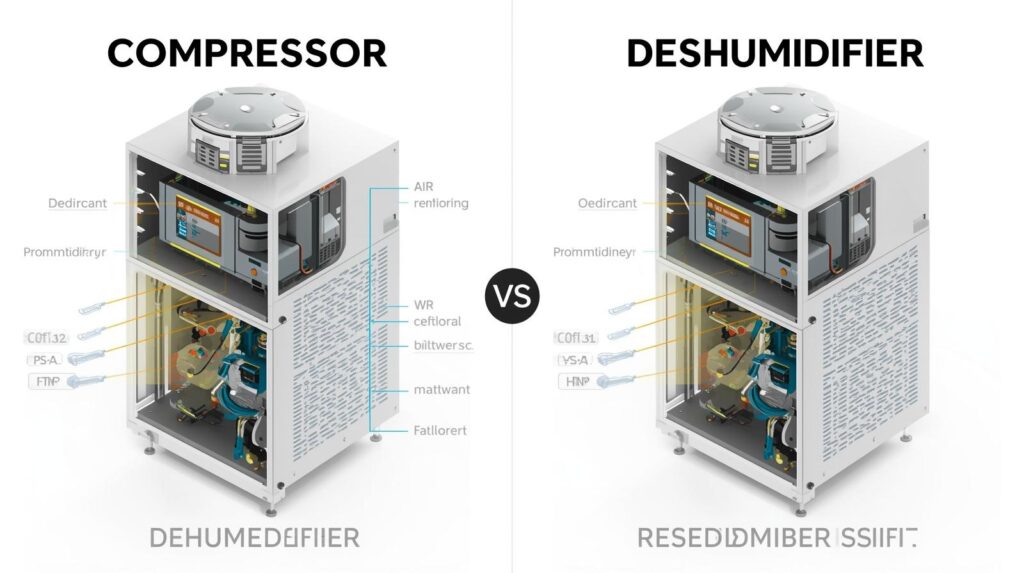
Compressor Dehumidifiers – Best for Warm, Lived-In UK Rooms
Compressor dehumidifiers are the most common type found in UK homes. They work by cooling the air so that moisture condenses into water, which is then collected in a tank or drained away.
They perform best in heated, lived-in rooms, such as:
- Living rooms and lounges
- Bedrooms with central heating
- Open-plan spaces
- Homes used consistently throughout the day
In these environments, compressor dehumidifiers are highly energy-efficient and capable of removing large amounts of moisture while keeping running costs low.
However, their performance drops noticeably when temperatures fall below around 15°C, which is common in garages, basements, spare rooms, and older properties during winter.
Desiccant Dehumidifiers – Reliable in Cold and Unheated UK Spaces
Desiccant dehumidifiers use a moisture-absorbing material instead of cooling air. This allows them to operate consistently at low temperatures, making them particularly effective in colder UK environments.
They are especially well suited for:
- Garages and basements
- Unheated spare rooms
- Utility rooms and workshops
- Older UK homes with limited insulation
Because they are not affected by cold air, desiccant dehumidifiers often remove moisture faster in winter conditions, even though their wattage may appear higher on paper.
Which Dehumidifier Type Is Right for Most UK Homes?
There is no single “best” type for every situation. In UK homes, the right choice depends mainly on room temperature, not just room size.
In simple terms:
- Warm, regularly heated rooms → Compressor dehumidifier
- Cold, unheated, problem rooms → Desiccant dehumidifier
Choosing the wrong type often leads to poor performance and unnecessary energy use, which is why understanding this distinction is essential before buying.
Dehumidifier Energy Use and Running Costs in the UK – What Really Matters
One of the most common concerns when choosing a dehumidifier in the UK is energy consumption. Many products are marketed as “low energy,” but in real-world use, running costs depend far more on how and where the dehumidifier is used than on the headline wattage alone.
UK homes typically face cooler temperatures, higher outdoor humidity, and longer indoor moisture retention during autumn and winter. In these conditions, understanding how different dehumidifiers consume energy is essential to avoiding higher-than-expected electricity bills.
Compressor Dehumidifiers and Energy Efficiency in Warm Rooms
In heated rooms, compressor dehumidifiers are usually the most energy-efficient option. When temperatures stay above around 18°C, they remove moisture quickly and then cycle on and off to maintain stable humidity levels.
In real UK homes, this means:
- Lower electricity use per litre of water removed
- Shorter run times once humidity stabilises
- Ideal for bedrooms, living rooms, and everyday living spaces
Used correctly, a compressor dehumidifier can run for several hours a day without significantly impacting electricity costs, especially when combined with timers or humidity sensors.
Desiccant Dehumidifiers and Cold-Weather Performance
Desiccant dehumidifiers often appear less energy efficient at first glance because they usually have a higher wattage. However, in cold or unheated rooms, they can actually be more cost-effective overall.
This is because:
- They remove moisture consistently at low temperatures
- They do not struggle or stall in winter conditions
- They often achieve results faster in cold spaces
In garages, basements, and spare rooms, a desiccant dehumidifier may run for a shorter total time while delivering better moisture control than a compressor unit that is operating inefficiently.
Why Moisture Absorbers Are a False Economy
Moisture absorbers are often perceived as “free to run” because they do not use electricity. In practice, their ongoing costs are hidden in refills and replacements, especially in damp UK environments.
They:
- Saturate quickly in real homes
- Stop working once full
- Require regular replacement to remain effective
Over time, the cost of multiple refills across several rooms can exceed the running cost of a properly sized electric dehumidifier, while still failing to control overall humidity.
Choosing a Dehumidifier Based on Real UK Usage
The most energy-efficient dehumidifier is not the one with the lowest wattage, but the one that:
- Matches the room temperature
- Removes moisture efficiently
- Does not need to run continuously
Understanding real-world energy behaviour is far more important than relying on marketing labels alone.
Dehumidifier Capacity and Room Size – Why “Litres per Day” Can Be Misleading
When choosing a dehumidifier in the UK, many buyers focus almost entirely on the litres per day figure. While capacity is important, it is also one of the most misunderstood specifications and, on its own, rarely reflects real-world performance in British homes.
Manufacturers usually test extraction rates under ideal laboratory conditions — warm air and very high humidity. In everyday UK environments, especially during autumn and winter, actual moisture removal can be significantly lower.

Why Room Conditions Matter More Than Floor Size
Room size alone does not determine how much moisture needs to be removed. In real UK homes, humidity levels are affected by several factors that are often overlooked.
These include:
- Room temperature and heating usage
- Ventilation quality
- Insulation and window type
- How the room is used day to day
For example, a small bathroom with poor ventilation may require more moisture removal than a larger living room that is well heated and aired. Similarly, a cold spare bedroom can remain damp far longer than a frequently used warm space.
Understanding Dehumidifier Capacity in Practical Terms
Instead of treating capacity figures as exact performance promises, it is more useful to view them as general categories.
In practical UK use:
- Mini / very small units
Best for wardrobes, cupboards, and very small enclosed spaces with light condensation. - Mid-range dehumidifiers (around 8–12L/day)
Suitable for bedrooms, bathrooms, small flats, and regular indoor laundry drying. - High-capacity dehumidifiers (16–20L+/day)
Designed for serious damp, whole-home moisture control, basements, and persistent condensation issues.
This approach helps avoid underpowered purchases that fail to solve the problem.
Why Bigger Is Not Always Better
Choosing a dehumidifier that is too powerful for the space can lead to inefficient operation. Oversized units often reach target humidity quickly and then switch on and off repeatedly.
This can result in:
- Unnecessary noise
- Reduced efficiency
- Increased wear on internal components
A correctly sized dehumidifier that runs steadily usually delivers better long-term results than an oversized model working intermittently.
When Higher Capacity Is the Right Choice
A higher-capacity dehumidifier becomes the correct option when:
- Condensation appears daily on windows
- Mould is already visible
- Multiple rooms are affected
- Laundry is dried indoors regularly
- The property is older or poorly insulated
In these cases, stronger moisture removal stabilises humidity levels faster and helps prevent long-term damage rather than simply managing symptoms.
Why Dehumidifiers Work Better Than Moisture Absorbers in UK Homes
In real UK living conditions, excess humidity is rarely a one-off problem. Cool temperatures, high outdoor moisture, limited ventilation and frequent indoor activities such as cooking, showering and drying laundry mean that humidity builds up continuously, not occasionally.
This is where the difference between active dehumidifiers and passive moisture absorbers becomes impossible to ignore.

Active Moisture Control vs Passive Absorption
A dehumidifier actively pulls moist air through the unit, removes water and releases drier air back into the room. This process allows humidity levels to drop across the entire space, not just in one corner.
Moisture absorbers, on the other hand:
- Do not circulate air
- Do not regulate humidity levels
- Only affect a very small local area
- Stop working once saturated
This passive behaviour is why absorbers struggle to keep up with everyday UK humidity, especially in lived-in rooms.
The Practical Difference You Notice Day to Day
When used correctly, a dehumidifier delivers benefits that moisture absorbers simply cannot match:
- Noticeably less window condensation
- Faster indoor laundry drying
- Reduced musty smells throughout the room
- Lower risk of mould growth
- Improved comfort in bedrooms and living areas
These improvements come from controlling humidity, not just collecting water.
One Proper Solution Instead of Multiple Temporary Fixes
Many UK households follow the same pattern:
- Start with one moisture absorber
- Add more when it fills quickly
- Replace refills every few weeks
- Still experience condensation and damp
At this point, the cost and effort often exceed that of a single properly sized dehumidifier — without delivering the same results.
If you want to compare different dehumidifier types, capacities and real-world use cases, you can explore our full Dehumidifiers buying guide, which breaks down entry-level, mid-range and high-capacity options for UK homes.
Why This Matters More in the UK Than in Warmer Climates
In warmer countries, homes often dry naturally through heat and ventilation. In the UK, even opening windows does not always reduce indoor humidity because outdoor air is frequently moist.
A dehumidifier works independently of weather conditions, making it a reliable year-round solution rather than a seasonal fix.
When a Moisture Absorber Is Enough — and When It Isn’t in UK Homes
Moisture absorbers are not completely useless — but their role in UK homes is very limited and often misunderstood. Knowing when they actually make sense (and when they don’t) helps avoid wasted money and ongoing frustration with damp problems.
Situations Where Moisture Absorbers Can Work
Moisture absorbers can be effective only when all of the following conditions are met:
- The space is very small and enclosed
- There is no active moisture source
- Humidity builds up slowly and occasionally
- The goal is odour reduction, not humidity control
Typical examples include:
- Wardrobes and cupboards
- Storage boxes or storage rooms
- Caravans or boats in storage
- Rarely used spare rooms
In these cases, absorbers can help reduce musty smells and collect small amounts of moisture over time — as long as refills are replaced regularly.
Where Moisture Absorbers Fail in Real UK Conditions
Problems begin when moisture absorbers are used in spaces they were never designed for. They struggle — or completely fail — in situations such as:
- Bedrooms and living rooms used daily
- Bathrooms and kitchens with steam
- Homes drying laundry indoors
- Flats with poor ventilation
- Rooms already showing mould or heavy condensation
Because absorbers do not move air or react to humidity changes, they simply cannot keep up with real moisture loads.
The Common UK Mistake That Delays a Real Solution
A very common pattern looks like this:
- An absorber is placed in a problem room
- It fills quickly, creating a false sense of success
- Condensation returns unchanged
- More absorbers are added — increasing cost, not results
At this point, the issue is no longer “light moisture”. It is ongoing excess humidity, which requires active control.
Clear Signs It’s Time to Upgrade to a Dehumidifier
If you notice any of the following, a moisture absorber is no longer enough:
- Regular window condensation
- Damp smells returning within days
- Visible mould spots
- Laundry taking too long to dry indoors
These are clear indicators that passive solutions have reached their limit.
Dehumidifiers vs Moisture Absorbers in UK Homes – Frequently Asked Questions
Are dehumidifiers better than moisture absorbers for condensation in UK homes?
Yes. Dehumidifiers are far more effective than moisture absorbers for condensation in UK homes because they actively remove moisture from the air. UK properties experience frequent humidity due to cool temperatures and limited ventilation, which passive absorbers cannot manage efficiently. A dehumidifier lowers overall room humidity, preventing condensation from forming in the first place, rather than reacting after moisture has already built up.
Do moisture absorbers actually work for damp and mould?
Moisture absorbers can work only in very small, enclosed spaces with light and occasional moisture. They do not actively control humidity, circulate air, or prevent mould growth in rooms that are used daily. In homes with recurring damp or mould, absorbers usually fill quickly and stop being effective, while the underlying humidity problem. remains unchanged
Can a dehumidifier replace moisture absorbers completely?
In most UK homes, yes. A correctly sized dehumidifier replaces multiple moisture absorbers by actively controlling humidity across the entire room. This eliminates the need for refills, reduces long-term costs, and provides measurable improvements such as less condensation, faster laundry drying, and better air comfort.
Are dehumidifiers expensive to run compared to moisture absorbers?
Not necessarily. While dehumidifiers use electricity, modern models are energy efficient and often cost less over time than constantly replacing absorber refills. Moisture absorbers may appear cheaper upfront, but ongoing refill costs add up quickly, especially in humid UK homes where they saturate fast.
When is a moisture absorber actually the right choice?
A moisture absorber is suitable only when all of the following apply:
- The space is very small (wardrobe, cupboard, storage box)
- There is no active moisture source
- The goal is odour control, not humidity regulation
For bedrooms, bathrooms, flats, or laundry drying, a moisture absorber is not sufficient.
.
What is the biggest mistake UK homeowners make with damp solutions?
The most common mistake is treating ongoing humidity as a small problem. Many people start with moisture absorbers, assume they are working when they fill with water, and delay proper humidity control. By the time condensation, mould, or damp smells persist, the issue has already escalated. At that point, only an active dehumidifier can restore stable indoor humidity.
Final Verdict – Dehumidifier or Moisture Absorber for UK Homes?
For most UK homes, a dehumidifier is the only solution that genuinely controls moisture rather than reacting to it. Moisture absorbers can help in very limited situations, such as small cupboards or wardrobes, but they are not designed to handle the everyday humidity created by cooking, showering, breathing, and drying laundry indoors.
If you are dealing with regular window condensation, damp smells, slow-drying clothes, or recurring mould, a moisture absorber will only delay the problem. It collects water locally but does nothing to stabilise humidity across the room. This is why many households end up buying multiple absorbers and refills without ever solving the underlying issue.
A correctly chosen dehumidifier actively lowers humidity, improves air comfort, protects walls and furnishings, and delivers results you can actually feel and measure. Whether it’s a compressor model for warm living spaces or a desiccant unit for colder rooms, active moisture control is what works long-term in UK conditions.
In short:
- Moisture absorbers = temporary, local, and limited
- Dehumidifiers = reliable, whole-room, and preventative
If moisture is an ongoing issue rather than a one-off inconvenience, investing in the right dehumidifier is not an upgrade — it’s the correct solution.
If you are dealing with regular window moisture or damp patches, our guide to the best dehumidifier for condensation in the UK explains which type of unit is most effective in real UK homes.