Emergency Power Buying Guide – How to Stay Powered During Power Cuts in the UK
Power cuts and short-term blackouts are becoming a more common concern for UK households, particularly during winter months and periods of extreme weather. While most outages last only a few hours, even a brief loss of electricity can disrupt daily routines, communication and basic comfort at home. Emergency power solutions are designed to help households stay connected and functional during these short interruptions.
For families, emergency power is not about running an entire home or replacing mains electricity. It is about keeping essential devices working when they are needed most — phones charged, lights on, internet access available and small electronics powered for a limited time. These solutions are built for readiness and simplicity rather than long runtimes or high power output.
This buying guide focuses on practical emergency power options suitable for everyday UK homes. It explains when emergency power makes sense, the types of devices available and what they can realistically support during an outage. The aim is to help families choose lightweight, easy-to-use solutions that provide reassurance during power cuts without overlapping with full backup systems or portable power stations designed for longer-term use.
This guide is especially useful if you:
- want backup power for short power cuts or blackouts
- need to keep phones, lights or internet running temporarily
- are preparing an emergency kit for a family home
- want simple, ready-to-use power rather than complex systems

This page contains affiliate links. We may earn a commission if you make a purchase through these links, at no extra cost to you.
When Emergency Power Makes Sense at Home
Emergency power is most useful in situations where electricity is lost for a short period and everyday routines need to continue with minimal disruption. In the UK, most power cuts last a few hours, but even brief outages can affect communication, lighting and access to essential information. Having simple backup power available helps households stay prepared without investing in complex systems.
Short-term outages often happen during winter storms, high winds or local network issues. During these moments, emergency power can keep phones charged for updates, provide lighting after dark and support basic connectivity such as routers or small electronics. For families, this reassurance is often more important than powering larger appliances.
Emergency power also makes sense as part of a household emergency kit. Devices that are lightweight, portable and easy to store can be kept ready for unexpected situations without requiring permanent installation or technical setup. This makes them suitable for both homeowners and renters who want a flexible solution.
Importantly, emergency power is designed for temporary support rather than long-term independence from the grid. Understanding this role helps set realistic expectations and ensures that households choose solutions that match short outages rather than full backup scenarios.

Types of Emergency Power Devices Explained
Emergency power solutions come in several forms, each designed to support specific needs during short power cuts or unexpected situations. Understanding the differences between these devices helps households choose practical options that provide reassurance without overcomplicating emergency preparation.
Small Emergency Power Banks and Radios
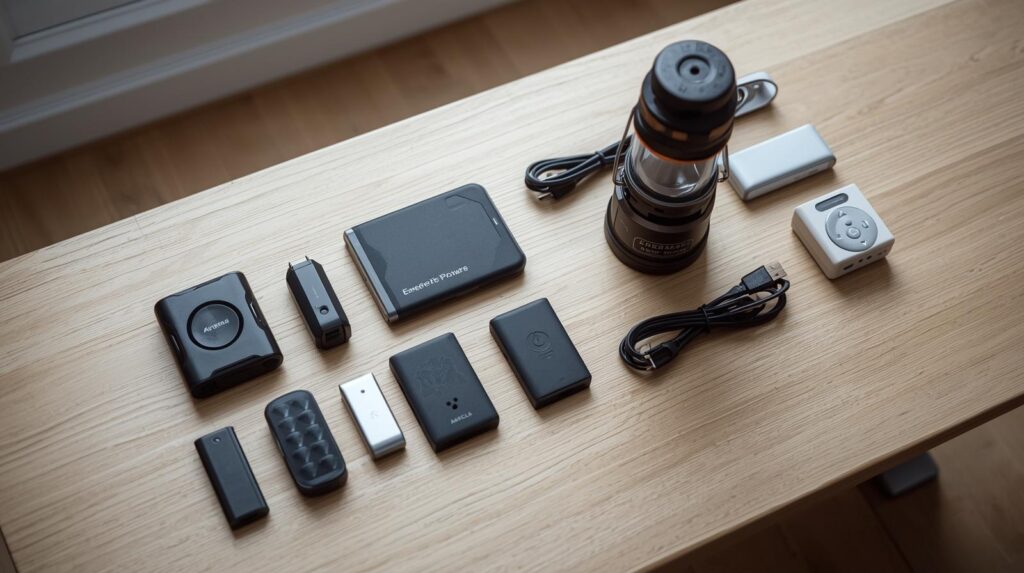
Compact emergency power banks are designed to keep essential devices running for a limited time. Many combine USB charging with built-in torches or radios, making them useful for communication and basic lighting during outages. These devices are easy to store, quick to deploy and well suited to emergency kits in family homes.
Emergency Lights and Battery-Powered Lanterns
Emergency lights and lanterns provide immediate illumination when mains power is lost. They are especially useful during evening or nighttime outages, helping households move safely around the home. Because they operate independently from other devices, they offer reliable lighting without relying on phones or chargers.
Car and Travel Emergency Power Devices
Car emergency power devices, such as compact jump starters with USB outputs, offer flexible backup options both at home and on the move. In addition to vehicle-related use, they can charge phones or small electronics during power cuts. Their portability makes them a practical addition to household emergency preparation.
Small Backup Devices for Short Outages
Some emergency power devices are designed to provide temporary power for essential electronics such as routers, lamps or laptops for a few hours. These solutions are not intended to run large appliances or entire homes, but they can help maintain connectivity and basic functionality during brief outages.
Together, these device types focus on readiness, simplicity and short-term support. Choosing the right combination depends on whether the priority is lighting, communication, connectivity or a mix of essential needs.

What Emergency Power Can and Cannot Do
Emergency power solutions are designed to provide short-term support during power cuts, not to replace mains electricity or run an entire home. Understanding what these devices can realistically power helps avoid disappointment and ensures households choose solutions that match real emergency needs.
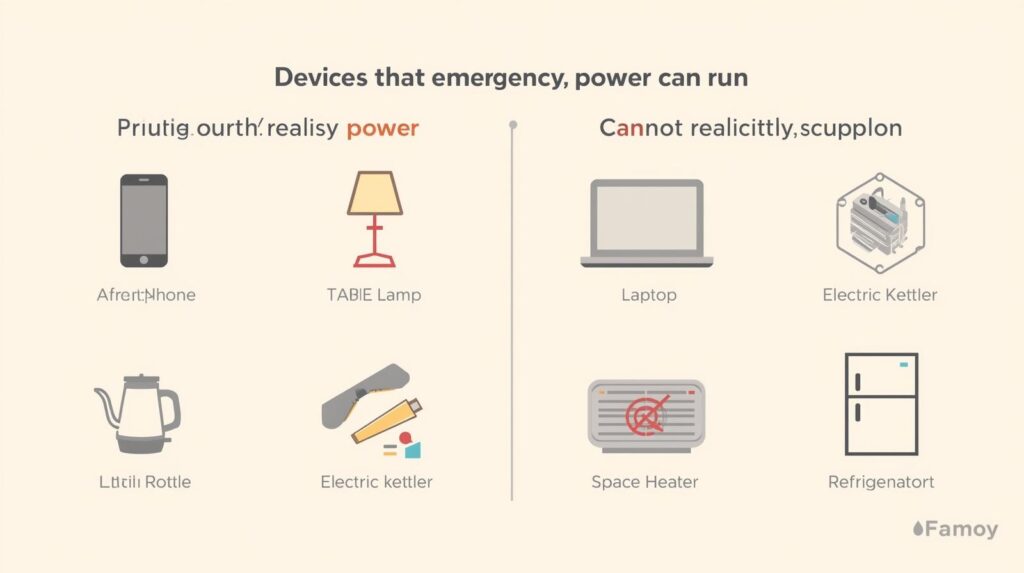
During short outages, emergency power works best for essential, low-power devices. Phones, tablets, LED lights, internet routers and laptops can usually be powered or recharged for a limited time, helping families stay connected and informed. This level of support is often enough to maintain basic comfort and safety until power is restored.
However, emergency power has clear limitations. High-energy appliances such as electric heaters, kettles, washing machines or full-size refrigerators require far more power than these devices are designed to provide. In some cases, very short use may be possible with higher-capacity emergency units, but this is not their intended purpose and should not be relied upon.
Setting realistic expectations is essential. Emergency power is about bridging a temporary gap — keeping essential devices running for a few hours — rather than delivering long-term or whole-home backup. When used with this understanding, emergency power solutions provide reassurance and practical support without unnecessary complexity.
How to Choose the Right Emergency Power Solution
Choosing the right emergency power solution starts with understanding what you want to protect during a power cut. For most households, the priority is not running everything, but keeping essential devices working safely and reliably until electricity is restored. Focusing on simplicity and readiness helps avoid unnecessary complexity.
Identify Essential Devices First
Begin by listing the devices that matter most during an outage. For many families, this includes phones for communication, lighting for safety, internet access for updates and one or two small electronics such as a laptop. Emergency power works best when it is sized for these essentials rather than stretched to cover high-demand appliances.
Ease of Use and Readiness
Emergency power devices should be easy to use under pressure. Simple controls, clear indicators and straightforward charging methods make a real difference when power is lost unexpectedly. Devices that can be stored safely and checked periodically are more likely to be ready when they are needed.
Portability and Storage
Compact size and portability are important considerations, especially for family homes with limited storage space. Lightweight devices are easier to move between rooms or take to a car if needed. Solutions that do not require permanent installation are also suitable for renters and flexible living arrangements.
By prioritising essential needs, ease of use and practical storage, households can choose emergency power solutions that provide reassurance during short outages without overinvesting in unnecessary capacity.

How We Selected Emergency Power Products
Emergency power products should be practical, easy to use and reliable in short, unexpected situations. The purpose of this guide is not to recommend complex systems, but to highlight solutions that make sense for real UK households when power is temporarily unavailable.
Selection Criteria for Short-Term Emergencies
Products included in this guide were selected based on how well they support essential needs during brief power cuts. We focused on ease of use, portability, charging flexibility and suitability for common household scenarios such as keeping phones powered, providing lighting or maintaining basic connectivity for a few hours. Devices that require minimal setup and can be stored safely as part of an emergency kit were prioritised.
Emergency power solutions in this category are intentionally limited in scope. They are not designed to replace mains electricity or run high-demand appliances. Instead, they offer reassurance and short-term support when it matters most.
Different Needs, Different Levels of Backup
Households prepare for emergencies in different ways. Some prefer simple, compact devices for communication and lighting, while others value small backup options that can support a router or laptop for a limited time. For this reason, the products referenced across this guide include a mix of entry-level options, balanced all-round solutions and practical alternatives.
To explore the available options in more detail, you can view the full range in the
Emergency Power category
and choose solutions that match your household’s emergency needs and level of preparedness.