The Anker SOLIX C300 Emergency Power Bank 288Wh is designed for reliable, everyday emergency power use in typical UK situations, where short-to-medium power cuts, unstable weather, and temporary loss of mains electricity are realistic concerns rather than rare events. It sits firmly in the core emergency power category, offering a clear and practical step up from small entry-level power banks while remaining compact, efficient, and easy to live with.
With a significantly higher 288Wh battery capacity, this model is better suited for supporting essential household devices such as routers, phones, tablets, lighting, radios, and other low-to-mid power electronics during outages. Instead of providing only brief charging support, it delivers more noticeable and consistent runtime, helping maintain communication, basic comfort, and continuity during longer interruptions.
This emergency power solution is aimed at users who want dependable performance for regular preparedness, without moving into bulky, expensive, or whole-home backup systems. If you’re looking for a balanced core emergency power option that bridges the gap between small emergency power banks and large portable power stations, the Anker SOLIX C300 offers a strong middle ground in terms of capacity, usability, and real-world practicality.
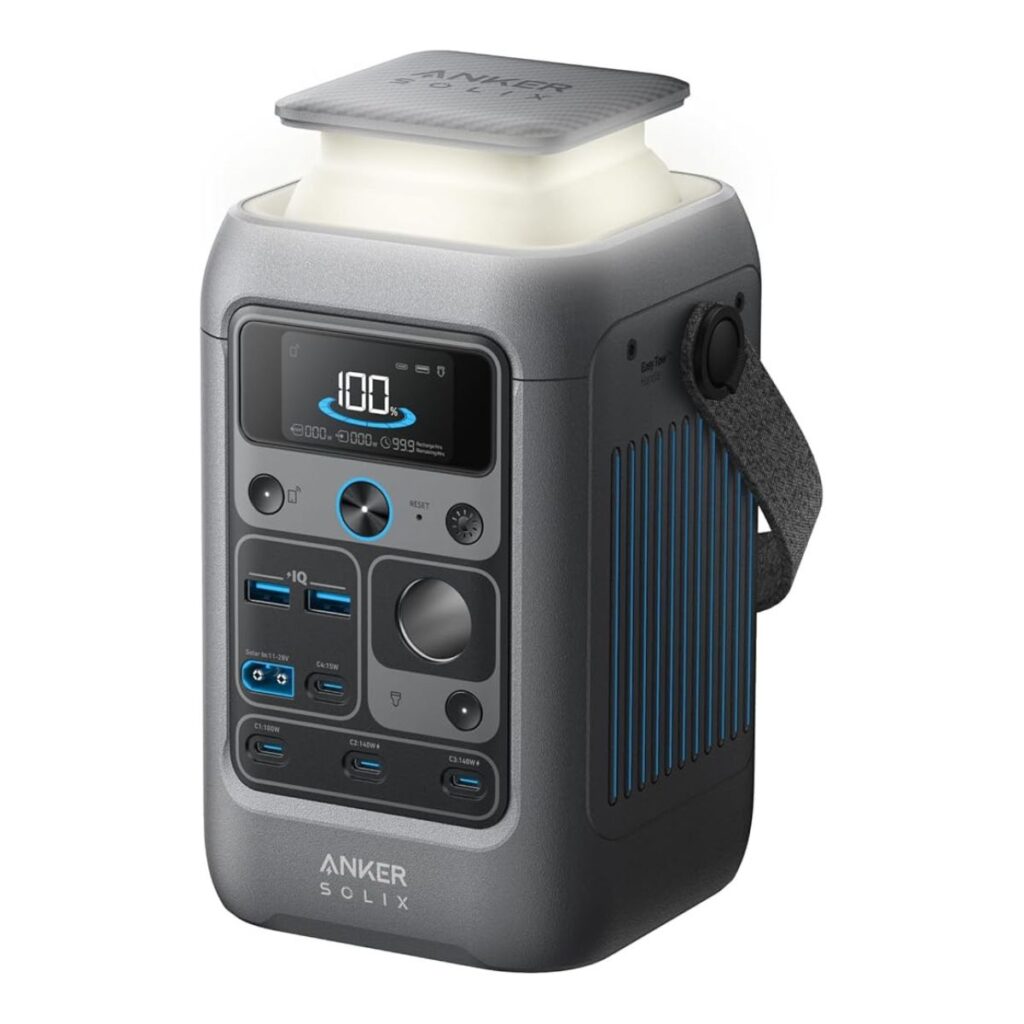
Transparency note:
This review is part of our independent buying guide. Buying links and live price checks may be added in the future once they’re available.
Quick Overview
✔ Battery capacity: 288Wh LiFePO4 battery (suitable for medium-length emergency power use)
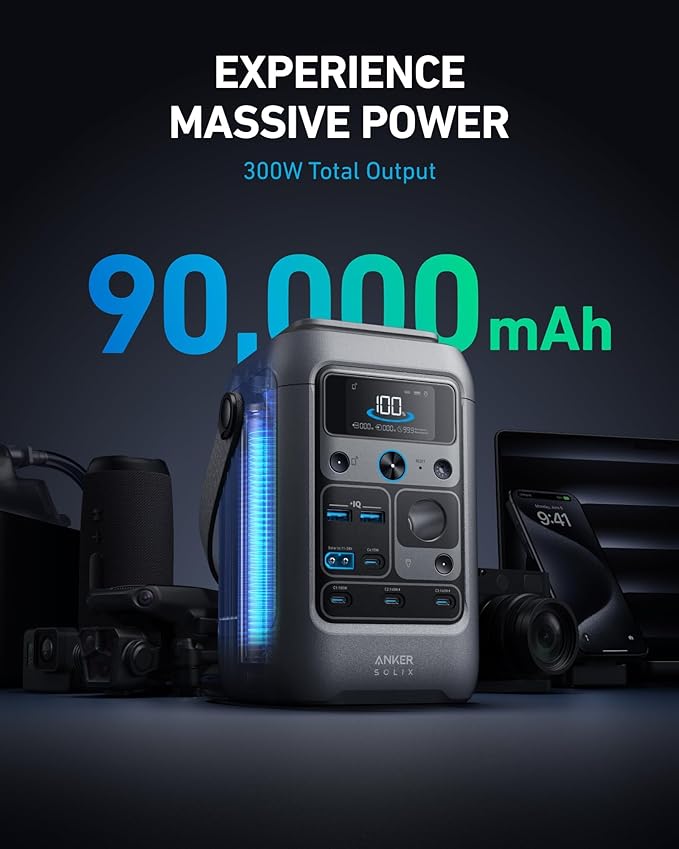
✔ Power output: up to 300W (supports essential and mid-power devices)
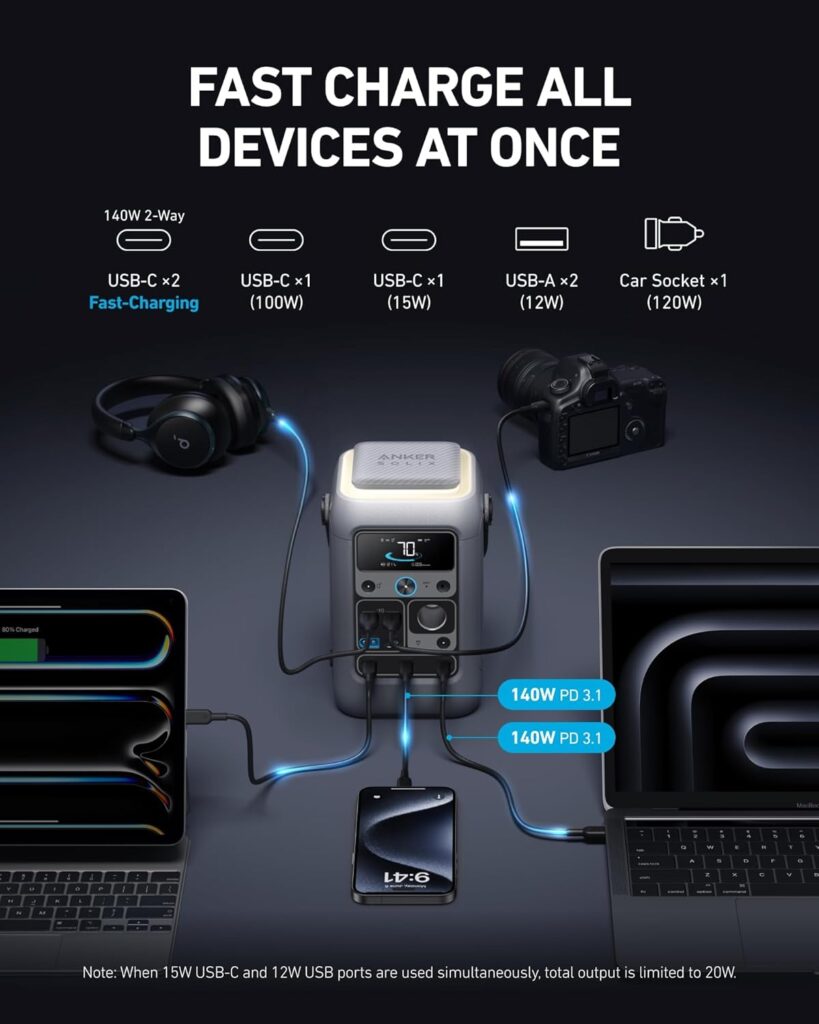
✔ Output options: AC outlet, USB-A, USB-C, DC output
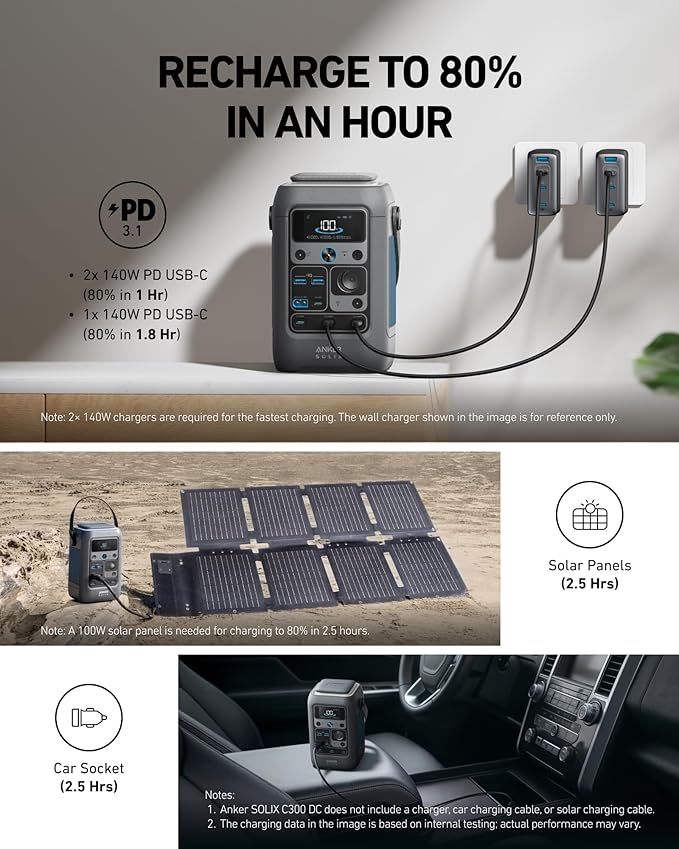
✔ Charging methods: USB-C input + solar-compatible charging
✔ Battery technology: LiFePO4 (long lifespan and improved safety)
✔ Typical use cases: home power cuts, router and communication backup, lighting, travel, emergency preparedness
Key Specifications and Features
The Anker SOLIX C300 Emergency Power Bank is a core-category emergency power solution designed for regular preparedness in typical UK households. It offers a clear performance upgrade over small entry-level emergency power banks, focusing on longer runtime, higher output, and broader device support for everyday power interruptions.
With a 288Wh battery capacity, it is well suited for maintaining essential devices such as home routers, smartphones, tablets, laptops, lighting, radios, and small electronics during power cuts. Unlike compact emergency power banks that only provide short bursts of charging, the C300 delivers more consistent and usable backup power, making it practical for real household disruptions rather than occasional top-ups.
The use of LiFePO4 battery technology improves long-term reliability, safety, and cycle life compared to standard lithium-ion batteries. This makes the unit more suitable for regular emergency readiness, where the power bank may be charged and discharged repeatedly over time without rapid battery degradation.
In terms of control and usability, the straightforward interface and clearly labelled outputs allow quick, intuitive operation without unnecessary complexity. Multiple output options make it easy to power different devices simultaneously, while USB-C charging support enables faster recharging and compatibility with modern charging setups.
Overall, the Anker SOLIX C300 is aimed at users who want reliable, everyday emergency power without stepping into large, heavy, or expensive backup systems. It strikes a practical balance between capacity, portability, and real-world performance — exactly what most households need from a core emergency power solution.
Who Is the Anker SOLIX C300 Emergency Power Bank Best For?
The Anker SOLIX C300 Emergency Power Bank is best suited for users who want reliable, everyday emergency power rather than basic short-term charging or full-scale home backup. It is designed for UK households that experience occasional to moderate power cuts, where maintaining essential devices for several hours is more important than running high-wattage appliances.
This model works particularly well for keeping routers, phones, tablets, laptops, lighting, radios, and small electronics powered during outages. Compared to entry-level emergency power banks, the larger 288Wh capacity delivers longer runtime and more stable output, making it far more practical for real household disruptions rather than quick top-ups.
It is a strong choice for homeowners, renters, and remote workers who want a balanced emergency power solution that combines meaningful capacity with manageable size and portability. The LiFePO4 battery technology adds confidence for users who plan to keep the unit charged and ready for regular emergency use over the long term.
Overall, the Anker SOLIX C300 is ideal for users stepping up from small emergency power banks to a core, all-round emergency power solution that can be used reliably during power cuts, travel disruptions, and everyday preparedness scenarios — without the bulk, cost, or complexity of large backup systems.
Who Should Consider a Different Emergency Power Solution?
The Anker SOLIX C300 Emergency Power Bank may not be the best choice for users who need long-duration backup power or whole-home coverage during extended outages. While it offers a meaningful step up from entry-level emergency power banks, it is not designed to run high-wattage household appliances such as kettles, heaters, microwaves, washing machines, or electric cookers.
Users who experience frequent or prolonged power cuts lasting many hours or days, or who need to power multiple devices simultaneously for extended periods, may find the 288Wh capacity limiting over time. In these situations, higher-capacity emergency power stations with larger batteries and higher continuous output will provide longer runtime and greater flexibility.
This model may also be less suitable for households looking to build a comprehensive home backup system, including expandable battery capacity, high continuous AC output, or integration with multiple power sources for sustained off-grid operation. Larger emergency power solutions are better suited for these more demanding scenarios.
For short to moderate outages, everyday emergency preparedness, and keeping essential devices running reliably, however, the Anker SOLIX C300 remains a well-balanced and practical core emergency power solution that delivers strong performance without the size, cost, or complexity of premium backup systems.
Performance and Real-World Use
The Anker SOLIX C300 Emergency Power Bank is designed to deliver reliable, stable power for everyday emergency scenarios, rather than extreme off-grid living or whole-home backup. In real-world UK use, it performs best during short to moderate power cuts, travel disruptions, or temporary loss of mains electricity where maintaining essential devices is the priority.
In practical situations such as keeping a home router online, charging phones and laptops, powering lights, radios, or small electronics, the 288Wh battery capacity provides a noticeable step up from entry-level emergency power banks. Users can expect several hours of dependable runtime for low- to mid-power devices, depending on load and usage patterns.
For emergency preparedness, the C300 is particularly effective at supporting communication, lighting, and productivity devices rather than attempting to run high-wattage appliances. The 300W output allows it to handle more demanding electronics than basic power banks, making it suitable for laptops, networking equipment, and small AC-powered devices during outages.
In everyday use, power delivery remains stable and predictable. Switching between AC, USB, and DC outputs is straightforward, allowing flexible use across different device types without configuration or setup. Recharging via mains power is simple, while solar compatibility adds resilience for extended outages or off-grid situations, with recharge speed dependent on panel size and conditions.
Overall, real-world performance aligns well with what users should expect from a core emergency power solution. The Anker SOLIX C300 delivers a practical balance of runtime, output, and portability, making it well suited for everyday emergency use without the bulk, noise, or cost associated with larger premium backup systems.
Day-to-Day Use and Everyday Convenience
One of the key strengths of the Anker SOLIX C300 Emergency Power Bank is how easily it fits into everyday emergency preparedness without requiring technical knowledge or complex setup. Unlike entry-level emergency power banks, it offers greater output, longer runtime, and more flexibility, while remaining simple enough for regular, hands-off use.
For day-to-day readiness, the clearly laid-out ports and intuitive controls allow users to connect devices quickly via AC, USB, or DC outputs. There is no configuration process — once charged, the unit is ready to use whenever a power cut or disruption occurs. This simplicity is especially valuable during unexpected outages, when speed and reliability matter more than advanced settings.
Practical safety features such as overload protection, temperature control, and automatic power management allow the C300 to operate safely during extended sessions without constant supervision. The stable LiFePO4 battery chemistry also supports frequent charging and discharging, making it suitable for regular preparedness rather than occasional, one-off use.
Despite offering significantly more capacity than entry-level emergency power banks, the Anker SOLIX C300 remains compact and manageable. Its portable design makes it easy to store in a cupboard, keep in a home office, or move between rooms as needed — whether powering a router in the hallway, a laptop in a workspace, or lighting in a living area.
Overall, everyday convenience is a major advantage of this model. It delivers a strong balance between power, portability, and ease of use, making it ideal for users who want a core emergency power solution that is ready when needed, but unobtrusive when not in use.
What the Anker SOLIX C300 Emergency Power Bank Is Suitable For
The Anker SOLIX C300 Emergency Power Bank is best viewed as a core, everyday emergency power solution rather than a system designed for whole-home backup or long-duration blackouts. It performs most effectively in typical UK scenarios where power cuts are temporary and the priority is keeping essential devices running reliably.
In real-world use, it is well suited for situations such as:
short to medium-length power cuts affecting home internet and communication devices
charging phones, tablets, laptops, and small electronics during outages
powering home routers, modems, radios, and basic networking equipment
running LED lighting, small desk lamps, and low-power accessories
travel, remote working, and temporary off-grid or backup situations
In these scenarios, the 288Wh capacity provides a clear step up from entry-level emergency power banks. It allows users to maintain communication, basic productivity, and lighting for several hours, depending on device load, without the noise or complexity of larger generator-style systems.
Where its limitations become more noticeable is when users attempt to power high-wattage or continuous-load appliances such as kettles, heaters, microwaves, or multiple household devices at the same time. While the 300W output supports more devices than basic power banks, it is not intended for heavy-duty household appliances or full-room power coverage.
If your needs include extended runtime across many hours, powering large appliances, or providing backup electricity for multiple rooms simultaneously, a higher-capacity emergency power unit or full-size portable power station will be a more appropriate long-term solution.
For everyday emergency preparedness, communication continuity, and essential device backup, however, the Anker SOLIX C300 offers a well-balanced and practical core emergency power solution.
Pros – What the Anker SOLIX C300 Emergency Power Bank Does Well
288Wh battery capacity suitable for everyday emergency power use
Noticeably longer runtime than entry-level emergency power banks
Reliable backup power for routers, laptops, phones, tablets, and lighting
300W output supports a wider range of low- to mid-power devices
Multiple outputs (AC, USB, DC) for flexible real-world use
LiFePO4 battery chemistry designed for long lifespan and regular use
Quiet, emission-free operation suitable for indoor use during power cuts
Compact and portable design easy to store and move between rooms
Plug-and-play operation with no setup or technical configuration
Strong balance of power, portability, and value for a core emergency power solution
Cons – Where the Anker SOLIX C300 Emergency Power Bank Has Limitations
Not suitable for powering high-wattage household appliances such as kettles, heaters, or microwaves
Limited runtime for continuous use when multiple devices are connected at the same time
300W output may be restrictive for users with more demanding power needs
Not designed for whole-home backup or long-duration power outages
No expandable battery capacity for scaling up emergency power coverage
Lacks advanced smart features such as app control or detailed power monitoring
Requires manual recharging once depleted, which can limit use during extended outages
Comparison with Similar Emergency Power Devices in the Core Category
The Anker SOLIX C300 Emergency Power Bank sits firmly in the core emergency power segment, offering a clear step up from entry-level power banks while avoiding the size, cost, and complexity of high-capacity portable power stations. This category is designed for users who need reliable, everyday emergency power rather than basic phone charging or full home backup.
When compared to entry-level emergency power banks, the difference in real-world usability is immediately noticeable. Smaller units are typically limited to USB outputs and short runtimes, which restricts their usefulness during power cuts. With a 288Wh capacity and AC output, the C300 can power routers, laptops, lighting, and multiple devices simultaneously, making it far more effective for maintaining communication and basic home functionality during outages.
Compared to simple USB power banks or emergency gadgets, the Anker SOLIX C300 provides active, flexible power delivery rather than single-purpose support. Standard power banks are suitable for phones and small electronics, but they cannot handle AC-powered devices or sustained multi-device use. A core emergency power unit like the C300 offers broader compatibility and more predictable performance in real emergency scenarios.
When set against higher-capacity emergency power stations (500Wh and above), the trade-offs become clearer. Larger units offer longer runtime and higher output, capable of powering more demanding appliances for extended periods. However, they are also heavier, more expensive, and less convenient to store or move. For many households, that level of capacity is unnecessary for typical UK power cuts or short-term outages.
This positions the Anker SOLIX C300 as a balanced, all-round emergency power solution. It delivers enough capacity and output to cover essential household needs during outages, while remaining compact, portable, and cost-effective. For users who want dependable emergency power without overinvesting in size or capacity they may rarely need, a core emergency power device like the C300 represents one of the most practical choices available.
Frequently Asked Questions – Anker SOLIX C300 Emergency Power Bank
How long can the Anker SOLIX C300 power devices during a power cut?
The runtime of the Anker SOLIX C300 depends on the power consumption of the devices being used. With a 288Wh battery, it can typically power a home router, phone chargers, or LED lighting for several hours during a power cut. Low-power devices such as phones and tablets can be recharged multiple times, while laptops or routers may run for a few hours continuously. It is designed to maintain essential communication and basic comfort during short to medium-length outages rather than provide all-day power for high-wattage appliances.
Can the Anker SOLIX C300 run household appliances like kettles or heaters?
No, the Anker SOLIX C300 is not intended to power high-wattage household appliances such as kettles, heaters, microwaves, or electric cookers. Its 300W output is best suited for low- to mid-power electronics, including routers, laptops, monitors, phones, lights, and small devices. Attempting to run appliances that exceed its output rating will either fail or trigger safety protection. It is designed for essential power rather than heavy-duty use.
Is the Anker SOLIX C300 safe to use indoors during power cuts?
Yes, the Anker SOLIX C300 is completely safe for indoor use. It produces no fumes, noise, or emissions, unlike petrol or diesel generators. The LiFePO4 battery chemistry is known for stability and long lifespan, and built-in safety systems protect against overload, overheating, and short circuits. This makes it suitable for use in living rooms, bedrooms, or home offices during power outages.
How can the Anker SOLIX C300 be recharged?
The Anker SOLIX C300 can be recharged via mains electricity and is also compatible with portable solar panels. Mains charging is the fastest and most convenient method for everyday readiness. Solar charging provides additional resilience during extended outages or off-grid use, although charging times will depend on panel size and weather conditions. This flexibility makes it suitable for both home emergency use and outdoor or travel scenarios.
Is the Anker SOLIX C300 suitable for regular use or only emergencies?
While designed primarily for emergency power, the Anker SOLIX C300 can also be used regularly for everyday situations such as working remotely, charging devices in different rooms, travel, or camping. The durable LiFePO4 battery supports frequent charging cycles, making it practical beyond occasional emergencies. Many users treat it as both a backup power solution and a portable energy source for flexible use.
How does the Anker SOLIX C300 compare to larger emergency power stations?
Compared to larger emergency power stations, the Anker SOLIX C300 offers less runtime and lower output but gains portability, simplicity, and affordability. Larger units are better suited for extended outages or powering multiple appliances, but they are heavier, more expensive, and less convenient to store. For typical UK households dealing with short power cuts, the C300 provides a well-balanced core solution that covers essential needs without unnecessary complexity.
Final Verdict – Is the Anker SOLIX C300 Emergency Power Bank Worth It?
The Anker SOLIX C300 Emergency Power Bank is a well-balanced core-category emergency power solution for UK households that need reliable backup for essential devices during power cuts, travel disruptions, or temporary loss of mains electricity, without investing in bulky or expensive high-capacity systems. It is designed to handle everyday emergency power needs rather than extended outages or whole-home backup.
Compared to entry-level emergency power banks, the 288Wh capacity delivers noticeably longer runtime and greater flexibility, making it far more suitable for powering routers, laptops, phones, lights, and small electronics during outages. It strikes a practical middle ground by offering enough power for real-world emergency use while remaining compact, portable, and easy to manage.
While it is not intended to run high-wattage appliances or provide long-duration power across an entire home, it performs exactly as a core emergency power device should. It provides dependable output, sensible portability, and features that support straightforward, hands-off use, such as stable power delivery and durable LiFePO4 battery technology.
For most households, this level of capacity is more than sufficient for maintaining communication, basic comfort, and device charging during typical UK power cuts. If you are deciding between entry-level power banks, core emergency power units, and larger portable power stations, exploring our full Emergency Power buying guide can help you compare options and choose the solution that best fits your preparedness needs.