Choosing a portable power station without understanding real power needs is one of the most common mistakes UK buyers make. Many households end up with units that struggle during power cuts, while others overspend on capacity they will rarely use.
This guide explains how much power you actually need, how watts and watt-hours work in practice, and how to choose the right portable power station for real UK home, work, and off-grid scenarios in 2026 — without guesswork or unnecessary cost.
Understanding how your everyday electricity usage looks in real life makes it far easier to choose a portable power station that delivers reliable performance, sensible runtimes, and long-term value.
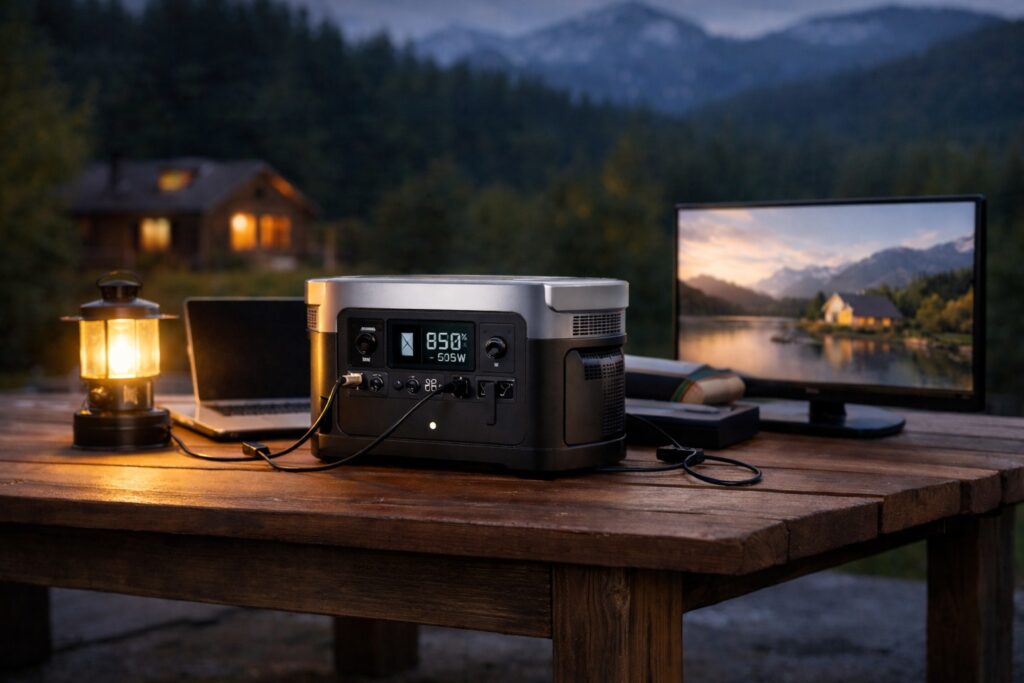
Why Most People Overestimate or Underestimate Their Portable Power Station Needs
When choosing a portable power station, many buyers rely on assumptions rather than real usage data. Some assume they need the largest battery available “just in case”, while others underestimate how quickly smaller units can be drained during a power cut or off-grid use.
In reality, most UK households fall somewhere in the middle. Essential devices such as Wi-Fi routers, laptops, phones, lighting, and small electronics consume far less power than people expect — but only when the portable power station is correctly matched to the load. Problems typically arise when multiple devices are used together or when runtime expectations do not align with battery capacity.
This gap between expectations and real-world usage is one of the main reasons buyers feel disappointed after purchase, even when the power station itself is technically capable.

Watts vs Watt-Hours – How to Understand Portable Power Station Capacity Properly
When comparing portable power stations, many buyers focus on battery size alone, ignoring how power output and energy capacity work together. This often leads to poor purchase decisions, especially for UK households looking for reliable home backup or off-grid power.
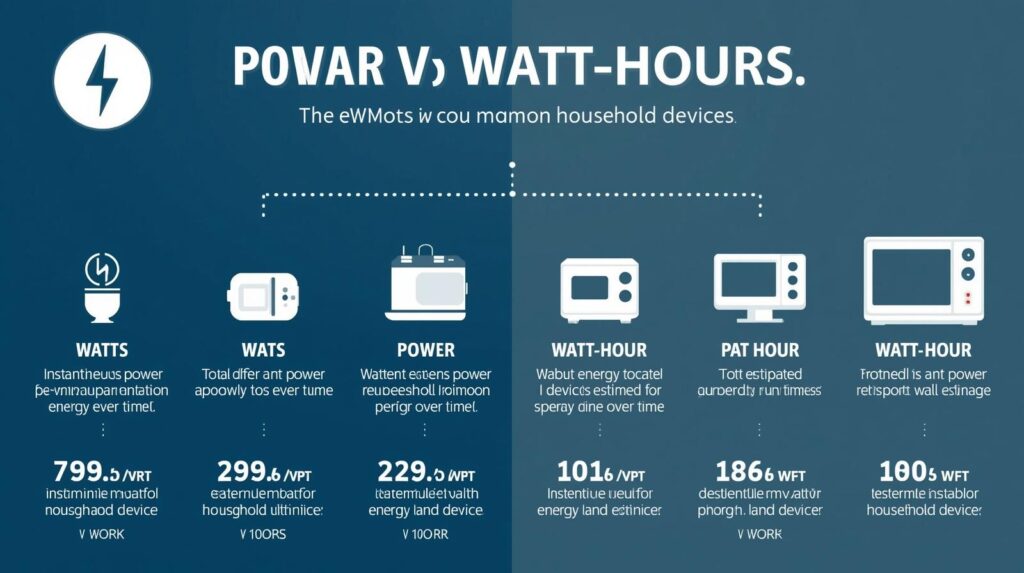
To choose the right portable power station, you need to understand the difference between watts (W) and watt-hours (Wh). These two values determine what devices a power station can run and how long it can realistically power them.
Ignoring either factor can result in a unit that looks impressive on paper but fails in real-world use.
Portable Power Station Output (Watts) – What Devices Can You Actually Run?
The watt rating of a portable power station defines its maximum output power. In simple terms, watts determine what devices you can plug in and use safely.
For example:
- Wi-Fi routers typically require 10–20W
- Laptop chargers usually draw 60–100W
- Televisions often use 80–150W
- Electric kettles, heaters, or power tools can demand 1,500–2,000W or more
If a device requires more watts than the power station can deliver, it will not run — regardless of how large the battery is. This is why output power is especially important for users planning to power appliances, tools, or multiple devices at the same time.
For UK home backup scenarios, insufficient output power is one of the most common reasons portable power stations fail to meet expectations.
Portable Power Station Battery Capacity (Watt-Hours) – How Long Will It Run?
While watts determine what you can run, watt-hours determine how long you can run it. Battery capacity defines the total amount of stored energy available inside the portable power station.
As a practical example:
- A 1,000Wh portable power station can power:
- a 100W device for around 9–10 hours
- a 50W device for around 18–20 hours
In real-world conditions, some energy is lost through inverter efficiency and heat, so actual runtimes are slightly lower. However, watt-hours remain the most accurate way to estimate realistic usage times.
For UK households preparing for power cuts or remote working, choosing the right battery capacity is crucial for maintaining internet access, lighting, and essential electronics over several hours.
Why Both Watts and Watt-Hours Matter When Choosing a Portable Power Station
Focusing on battery size alone can be misleading. A portable power station may offer a large battery but lack the output power to run essential appliances. Equally, a high-output model with limited battery capacity may run devices briefly but drain too quickly during outages.
The best portable power station balances:
- sufficient output power (W) for your devices
- enough battery capacity (Wh) for realistic runtimes
This balance is what separates a genuinely useful home backup solution from an expensive but impractical purchase.
How Much Power Do UK Homes Really Need from a Portable Power Station?
One of the most common questions UK buyers ask is how much power a portable power station actually needs to provide for everyday home use. The answer depends far more on what you want to keep running than on choosing the biggest battery available.
In most households, a portable power station is not intended to power the entire home, but to keep essential devices running during power cuts or off-grid situations. Understanding these real-world scenarios makes it much easier to choose the right capacity without overspending.
Essential Devices Most UK Homes Want to Power During an Outage
For the majority of UK households, essential backup power usually covers:
- Wi-Fi router and internet modem
- Laptop or desktop computer
- Mobile phones and tablets
- LED lighting
- Television or small monitor
- Phone chargers and small electronics
In practical terms, this setup typically requires between 100W and 300W of continuous power, which means many entry-level and mid-range portable power stations can handle it comfortably.
This is why choosing a well-balanced model from our Portable Power Stations buying guide often makes more sense than jumping straight to the highest-capacity option.
Typical Power Usage Examples for UK Households
To put this into perspective:
- Wi-Fi router: 10–20W
- Laptop in use: 60–100W
- LED lamp: 5–15W
- TV (medium size): 80–150W
Running these devices together usually stays below 250–300W, which means the main deciding factor becomes battery capacity (Wh) rather than raw output.
A 1,000Wh portable power station, for example, can realistically keep this setup running for several hours, making it suitable for short to medium-length power cuts.
When UK Homes Need Higher-Capacity Portable Power Stations
Higher-capacity portable power stations become necessary when users want to power:
- Fridges or freezers
- Medical devices
- Power tools or workshop equipment
- Multiple appliances simultaneously
- Extended backup during longer outages
In these cases, both higher output (W) and larger battery capacity (Wh) are required. This is where mid-range and premium models offer better long-term value, especially for users who rely on backup power regularly rather than occasionally.

Choosing the Right Portable Power Station Size for Your Use Case
Once you understand how much power your household actually needs, the next step is choosing the right portable power station size. This is where many buyers either overspend or end up with a unit that feels underpowered in real use.
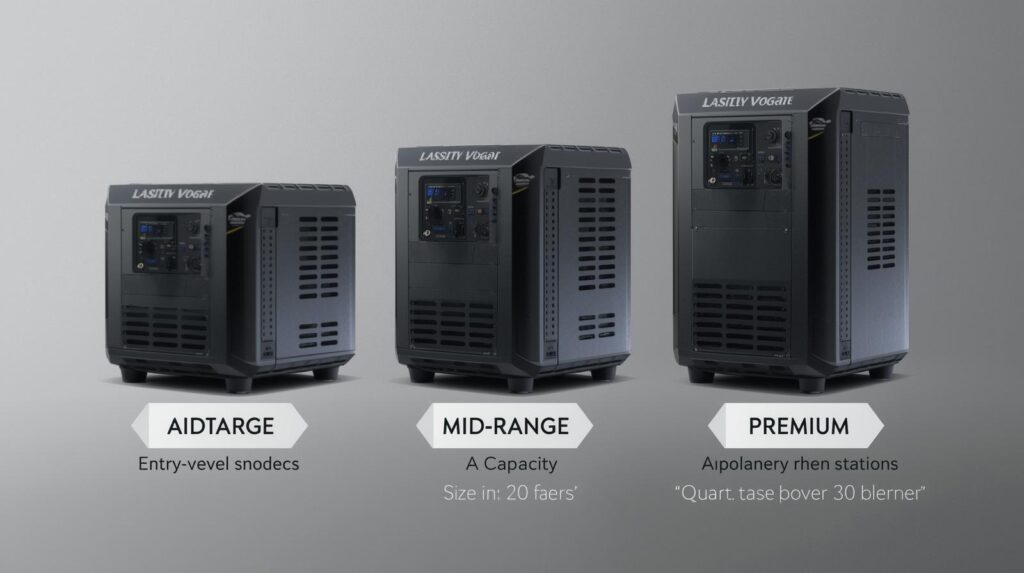
The most practical way to choose is by matching your needs to three clear categories: entry-level, mid-range, and premium portable power stations.
If you are still unsure whether a portable power station is the right solution for your needs, it is also worth comparing it with traditional alternatives. We break this down in detail in our guide on portable power stations vs generators in the UK, including noise, safety, running costs, and real-world usability.
Entry-Level Portable Power Stations – For Light Backup and Everyday Essentials
Entry-level portable power stations are designed for users who want basic backup power or a lightweight solution for travel, camping, or occasional power cuts.
They are best suited for:
- Wi-Fi routers and internet access
- Phones, tablets, and small electronics
- LED lighting
- Short laptop charging sessions
These models typically offer lower battery capacity but remain highly portable and easy to use. For many UK households, an entry-level option is enough to stay connected and productive during short outages.
Mid-Range Portable Power Stations – The Best Balance for Most UK Homes
Mid-range portable power stations offer the strongest balance between performance, runtime, and price. This category suits the majority of UK users looking for dependable home backup without excessive size or cost.
They can comfortably power:
- Multiple devices at the same time
- Home office setups
- TVs and entertainment systems
- Fridges for limited periods
For most households, mid-range models provide the best long-term value, which is why they feature prominently in our Portable Power Stations comparison guide.
Premium Portable Power Stations – For Extended Backup and High Power Demand
Premium portable power stations are designed for users who need longer runtimes or higher output for demanding scenarios.
They are ideal for:
- Extended power cuts
- Running essential appliances for hours
- Off-grid living or van life
- Users who rely on backup power regularly
While more expensive, premium models deliver greater capacity, faster charging, and higher sustained output, making them a sensible investment for users with serious power requirements.
Frequently Asked Questions – Portable Power Station Power Requirements
How much power does a UK home actually need during a power cut?
Most UK households do not need to power the entire home during an outage. In reality, keeping essential devices running — such as a Wi-Fi router, laptop, phone chargers, LED lights, and a TV — usually requires 100–300W of continuous power. The more important factor is battery capacity (Wh), which determines how long these devices can stay powered.
Is a bigger portable power station always better?
No. Choosing the biggest battery available often leads to unnecessary cost, added weight, and longer charging times. The best portable power station is one that matches your actual usage. For many UK homes, a mid-range model offers more than enough capacity without the downsides of oversized systems.
How do I calculate how long a portable power station will last?
To estimate runtime, divide the battery capacity (Wh) by the total power draw (W) of your devices.
For example, a 1,000Wh power station running a 200W setup can last around 4–5 hours in real-world conditions, accounting for efficiency losses.
Can a portable power station run appliances like fridges or freezers?
Yes, but only if the power station provides sufficient output and battery capacity. Small fridges may run on mid-range or premium portable power stations for limited periods. Startup surge power and total runtime must be considered before relying on a power station for refrigeration.
Do portable power stations work for remote work and home offices?
Absolutely. Portable power stations are well suited for home offices, allowing users to keep laptops, monitors, routers, and phones running during outages. This is one of the most common and practical use cases for UK buyers.
Is solar charging necessary for UK users?
Solar charging is optional rather than essential for most UK households. While it can extend runtime during longer outages or off-grid use, many users rely primarily on wall and car charging. Solar becomes more valuable for camping, van life, or repeated off-grid scenarios.
Final Thoughts – Choosing the Right Portable Power Station for Your Needs in 2026
Choosing the right portable power station is less about buying the biggest battery and more about understanding how you actually use electricity in everyday life. For most UK households, reliable backup power means keeping essential devices running — internet, work equipment, lighting, and communication — rather than powering the entire home.
By understanding watts, watt-hours, and realistic usage scenarios, it becomes much easier to select a portable power station that delivers dependable performance without unnecessary cost or complexity. Entry-level models suit light backup and travel, mid-range options offer the best balance for most homes, and premium systems make sense for extended outages or demanding use.
If you want to compare different capacities and see how entry-level, mid-range, and premium models perform in real-world UK scenarios, our Portable Power Stations buying guide provides a clear breakdown to help you choose with confidence.