Portable Power Stations Buying Guide – How to Choose the Right Solution for Camping, Off-Grid Living and Home Backup in the UK
Portable power stations have become an increasingly popular solution for people who need reliable electricity away from the grid or during unexpected power cuts at home. Whether you are planning camping trips, living the van life, working off-grid, or preparing for winter blackouts in the UK, choosing the right power station is a decision that deserves careful thought.
Unlike small power banks, portable power stations are designed to run everyday appliances such as fridges, laptops, lights, medical equipment or even small kitchen devices. At the same time, they are significantly quieter, cleaner and safer to use indoors than traditional petrol generators. However, these benefits also come with higher upfront costs, which means buying the wrong model can be an expensive mistake.
This buying guide is designed to help you understand what really matters when choosing a portable power station. We will break down power requirements, battery types, charging options and real-world use cases, so you can match the right capacity and features to your needs. By the end of this guide, you will know whether a portable power station makes sense for you and how to choose one that delivers long-term value rather than short-term disappointment.
This guide is especially useful if you:
- camp regularly or live off-grid in a van or motorhome
- need a quiet and safe backup power source for UK homes
- want a solar-ready solution for flexible, renewable charging
- are comparing different power sizes and price ranges
This page contains affiliate links. We may earn a commission if you make a purchase through these links, at no extra cost to you.
What Is a Portable Power Station and Who Is It Really For?
A portable power station is a battery-based device designed to store electricity and deliver it on demand wherever mains power is unavailable or unreliable. Unlike small power banks, it is capable of running everyday appliances such as fridges, laptops, lights, routers or medical equipment through AC and DC outputs. Unlike petrol generators, it produces no fumes, no noise pollution and can be safely used indoors, which makes it particularly suitable for UK homes and enclosed spaces like camper vans.
Portable power stations are best suited for people who need flexible, clean and quiet power. This includes campers and van-life users who want to stay off-grid without sacrificing comfort, as well as households looking for a reliable backup solution during winter power cuts or grid outages. Many modern units also support solar charging, allowing users to generate electricity during the day and store it for later use, even in less predictable UK weather conditions.
However, a portable power station is not the right choice for everyone. If you need to run heavy industrial equipment, power an entire house continuously for days, or operate high-demand tools without interruption, a fixed home battery system or a traditional generator may be more appropriate. Portable power stations are designed for short- to medium-term power needs, prioritising safety, portability and convenience over raw output.
Understanding whether a portable power station matches your actual needs is the first and most important step. Once you know what you want to power and for how long, choosing the right capacity and features becomes far easier.
Portable Power Stations vs Generators – What’s the Difference?
When comparing portable power stations with traditional generators, the key differences go far beyond price or power output. The most important factors are safety, noise, fuel dependency and how the device can be used in real-life situations, especially in UK homes and confined spaces.
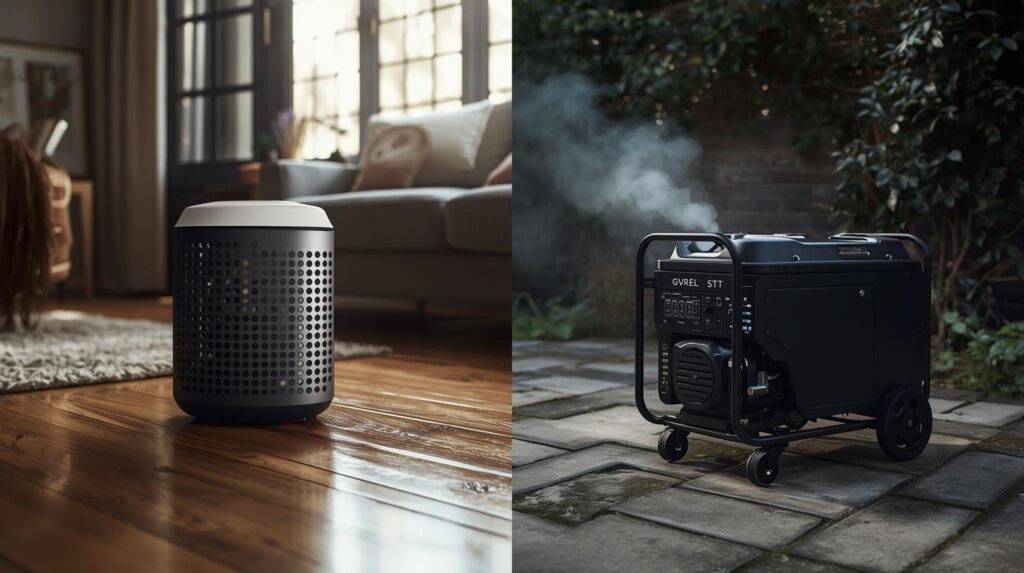
Portable power stations store electricity in an internal battery and deliver it silently through electrical outputs. Because they do not burn fuel, they produce no exhaust fumes and can be safely used indoors, including in living rooms, garages or camper vans. This makes them ideal for overnight use during power cuts, as well as for camping and off-grid living where noise and emissions are a concern.
Generators, on the other hand, rely on petrol or diesel engines to produce electricity. While they can deliver high power for extended periods, they are loud, require constant access to fuel and must always be operated outdoors due to the risk of carbon monoxide. In residential areas, especially in the UK, this can limit when and where generators can realistically be used.
Another key difference is convenience. Portable power stations can be charged in advance from the mains or topped up using solar panels, allowing for planned energy storage. Generators require manual operation, refuelling and regular maintenance, which makes them less suitable for occasional or emergency use.
For users who prioritise clean, quiet and flexible power rather than continuous heavy-duty output, portable power stations offer a safer and more practical alternative.
How Much Power Do You Really Need? (Watts vs Watt-Hours Explained)
One of the most common reasons people choose the wrong portable power station is misunderstanding how power and capacity actually work. Two figures matter most: watts (W) and watt-hours (Wh). While they sound similar, they describe very different things and both are equally important when choosing the right model.
Watts (W) describe how much power a device needs at any given moment. For example, a laptop may require around 60–100W, a fridge typically needs 100–200W while running, and a kettle can demand well over 1,500W for short periods. If a power station cannot deliver enough watts, the device simply will not run, no matter how large the battery is.
Watt-hours (Wh), on the other hand, describe how much energy the power station can store. This determines how long your devices can run. A 1,000Wh power station could theoretically power a 100W device for around ten hours, or a 50W device for roughly twenty hours. Real-world usage is always slightly lower due to energy losses, but Wh remains the best way to estimate runtime.
In practice, most users need to balance both figures. A power station with high output but low capacity may run appliances briefly but not for long. A large-capacity unit with low output may last many hours but fail to start higher-demand devices. Understanding what you want to power, and for how long, is the key to choosing the right size without overspending.
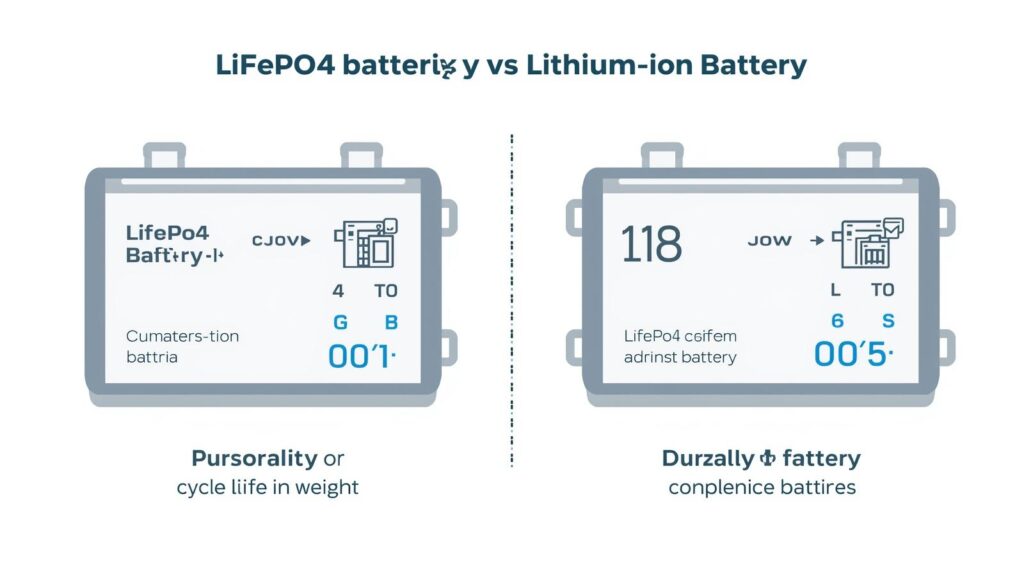
Battery Types Explained: LiFePO4 vs Li-ion
Choosing the right battery type is one of the most important decisions when buying a portable power station. While capacity and output determine what you can power, the battery chemistry affects how long the unit will last, how often it can be recharged and whether it represents good long-term value.
LiFePO4 Batteries – Built for Longevity and Heavy Use
LiFePO4 (lithium iron phosphate) batteries are known for their durability and long cycle life. They are designed to handle thousands of charge and discharge cycles with minimal capacity loss, which makes them particularly suitable for frequent use, off-grid living and home backup scenarios. These batteries are also more thermally stable, reducing the risk of overheating and improving overall safety.
The trade-off is weight and size. LiFePO4 batteries tend to be heavier than traditional lithium-ion alternatives, which can reduce portability. However, for users who value reliability and long service life over ultra-light design, this is often a worthwhile compromise.
Lithium-Ion Batteries – Lighter and More Portable
Lithium-ion batteries are commonly used in consumer electronics and offer a good balance between energy density and portability. They are typically lighter and more compact, making them easier to transport for camping or occasional outdoor use. For users who need a power station primarily for short trips or infrequent backup, lithium-ion can still be a practical option.
That said, lithium-ion batteries generally support fewer charge cycles and may degrade faster over time, especially if used heavily. This makes them less suitable for long-term or daily use compared to LiFePO4 alternatives.
Understanding how often you plan to use your portable power station, and over how many years, will help you decide which battery type offers the best value for your needs.
Solar-Ready Power Stations – What It Really Means
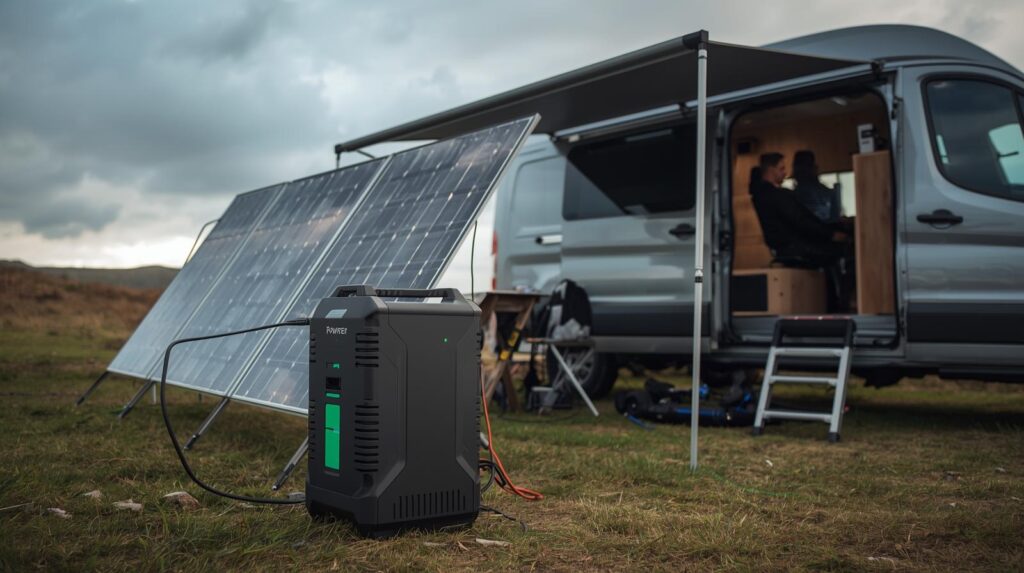
Many portable power stations are described as solar-ready, but this term is often misunderstood. In simple terms, a solar-ready power station is one that can be charged using external solar panels. This allows you to generate electricity during the day and store it for later use, which is particularly useful for camping, off-grid living and emergency home backup.
However, being solar-ready does not automatically mean fast or efficient solar charging. The actual performance depends on several technical factors, as well as realistic weather conditions in the UK, where sunlight levels can vary significantly throughout the year.
Solar Input, Charging Speed and Realistic Expectations
The most important specification to consider is the maximum solar input the power station can accept. This determines how many solar panels can be connected and how quickly the battery can be recharged. A higher input allows for faster charging, but only if the solar panels can actually deliver that power under real conditions.
In the UK, solar charging is most effective during late spring and summer, when daylight hours are longer. During autumn and winter, solar panels still generate power, but charging times can increase significantly due to shorter days and cloud cover. This makes solar an excellent supplementary charging method, but not always a complete replacement for mains electricity.
Solar Panels, Controllers and System Compatibility
Solar panels are usually sold separately, and not all panels are compatible with every power station. Voltage range, connector type and built-in charge controllers all affect whether a system works efficiently and safely. Many modern power stations include advanced charge controllers that optimise solar input, helping to maximise energy capture even in less-than-ideal conditions.
Before relying on solar charging, it is important to consider where and how you plan to use the system. For regular off-grid use, solar can dramatically extend runtime. For occasional emergency backup at home, it works best as part of a mixed charging approach.
Ports, Outputs and Expandability – What Really Matters
When choosing a portable power station, it is easy to focus on battery capacity and overlook the importance of ports and outputs. In practice, the type and number of available connections determine what you can power at the same time and how flexible the system will be in everyday use.
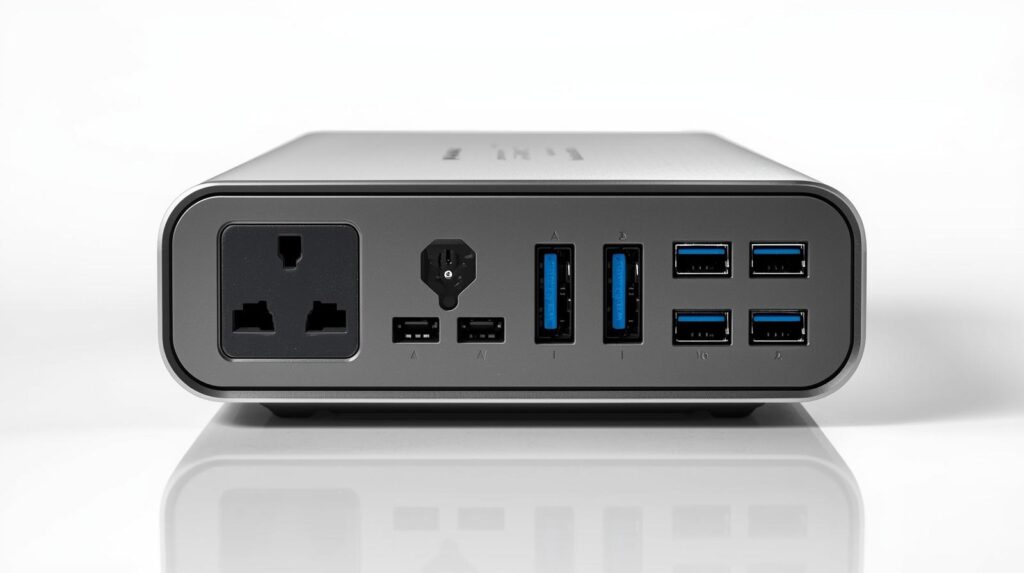
Modern portable power stations usually offer a mix of AC sockets, DC outputs and USB ports. AC outputs are essential for household appliances such as fridges, kettles or medical devices, while DC and USB ports are better suited for phones, laptops, routers and lighting. Having multiple output types allows you to power several devices simultaneously without relying on adapters or extension leads.
AC, DC and USB Outputs Explained
AC outputs deliver mains-style power and are typically the most demanding on the battery. Devices with motors or heating elements may also require higher surge power when starting up. DC outputs and USB ports are generally more energy-efficient and ideal for low-power electronics, helping to extend overall runtime.
When comparing models, it is important to check not only how many ports are available, but also how much power each output can deliver. A power station with many ports but limited output may still struggle to support multiple devices at once.
Surge Power and Expansion Options
Surge power refers to the temporary increase in power required when certain devices start up. Appliances such as fridges or pumps often need more power for a short moment than their rated running wattage. A power station that cannot handle this surge may shut down or fail to start the device.
Some portable power stations also support expandable battery systems, allowing additional capacity to be added later. While not essential for every user, this feature can be valuable for those planning to scale their setup over time, especially for off-grid use or extended power cuts at home.
Choosing the right combination of outputs and expansion options ensures your power station remains practical, adaptable and fit for purpose.
Real-World Use Cases: How Portable Power Stations Are Actually Used
Portable power stations are highly versatile, but the right setup depends entirely on how and where they are used. The same device can perform very differently when powering camping equipment compared to supporting essential appliances during a home power cut. Understanding these use cases helps avoid choosing a system that is either underpowered or unnecessarily expensive.
Camping, Off-Grid Living and Van Life
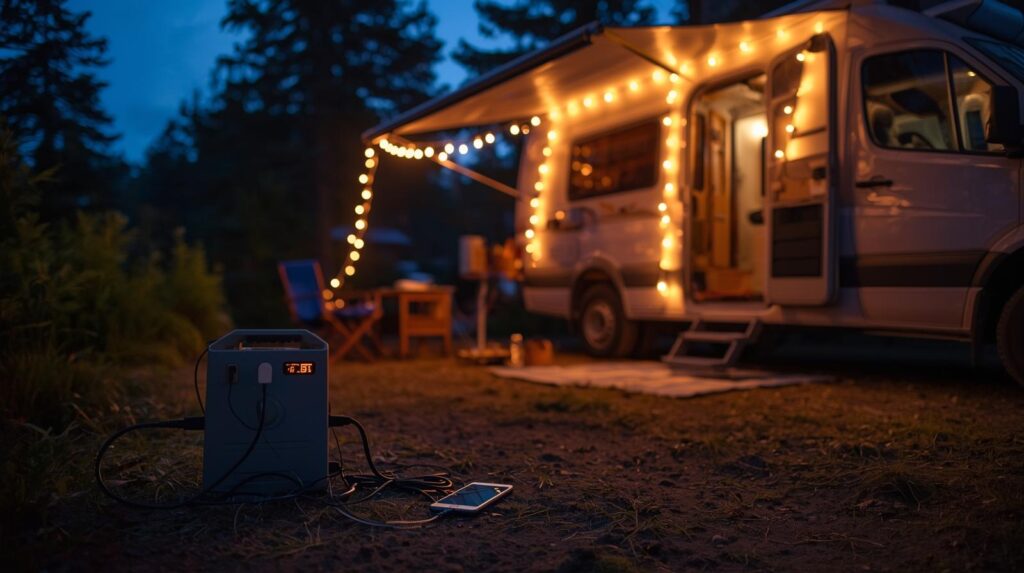
For camping and van life, portability, quiet operation and flexible charging options are key. A portable power station allows users to run lighting, charge phones and laptops, power small fridges or cooking appliances, and stay connected without relying on campsite hook-ups. Silent operation is particularly important in shared outdoor spaces, where noise from generators is often impractical or prohibited.
Solar charging plays a major role in off-grid use. During longer stays, solar panels can top up the battery during daylight hours, extending runtime without access to the mains. In these scenarios, balancing battery capacity with charging speed is more important than sheer output, as most devices used while camping have relatively low continuous power demands.
Home Backup Power During UK Blackouts
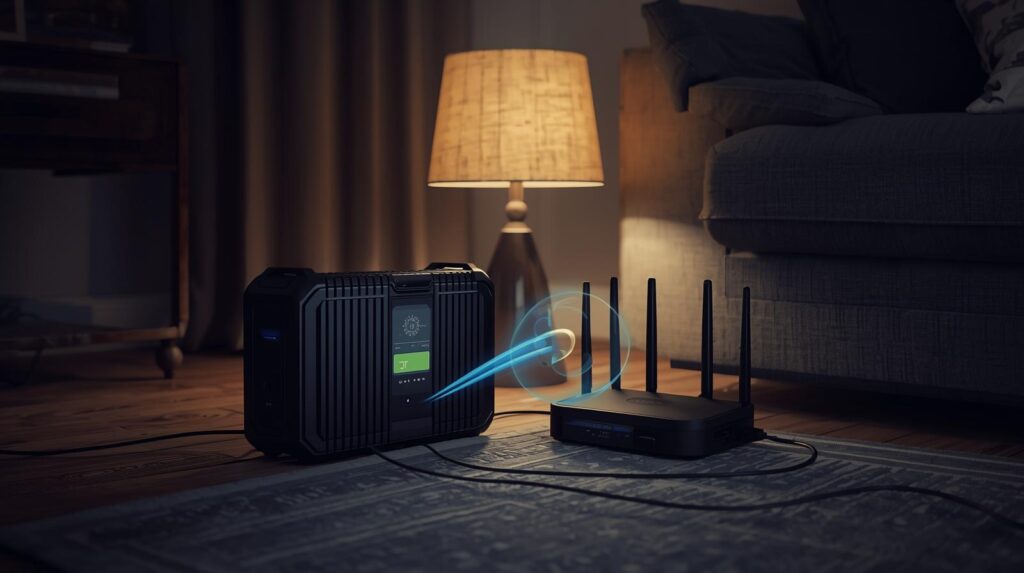
In a home setting, portable power stations are most often used as short-term backup power during outages. They can keep essential devices running, such as Wi-Fi routers, lights, medical equipment, phones or laptops, helping households stay functional and safe until mains power is restored.
Unlike generators, portable power stations can be used indoors without ventilation concerns, making them suitable for flats, terraced houses and other typical UK homes. For home backup, reliability and ease of use matter more than portability, and many users prefer higher capacity units that can run essential devices for several hours or overnight.
While a portable power station will not replace a full home battery system, it offers a practical and accessible solution for temporary outages, especially when combined with pre-charging from the mains and optional solar input.
Common Buying Mistakes to Avoid
Many buyers choose the wrong portable power station not because the product is bad, but because their expectations do not match real-world use. Understanding the most common mistakes can save both money and frustration, especially when investing in higher-priced models.
Overestimating or Underestimating Power Needs
One of the most frequent errors is buying a power station that is either too weak or far more powerful than necessary. Underpowered units may fail to run essential devices or shut down under load, while oversized models can add unnecessary cost and weight without providing practical benefits. Accurately assessing what you need to power and for how long is essential.
Ignoring Recharge Time and Charging Options
Capacity alone does not determine usability. A large battery that takes a very long time to recharge may be impractical during extended outages or off-grid use. Buyers often overlook how the unit can be recharged, whether from the mains, solar panels or a combination of both, and how long this process realistically takes in UK conditions.
Focusing on Marketing Features Instead of Specifications
LED screens, smart apps and additional ports can be useful, but they should never replace core performance factors such as output power, battery type and safety. Marketing features often look appealing but may have little impact on everyday usability if the fundamentals are lacking.
Not Considering Long-Term Value
A cheaper power station may seem attractive initially, but shorter battery lifespan and limited expandability can lead to higher costs over time. Considering durability, cycle life and overall build quality helps ensure the system remains useful for years rather than just a few seasons.
Avoiding these mistakes allows you to focus on practical performance and long-term reliability rather than short-term appeal.
How We Selected the Portable Power Stations Featured in This Guide
Selecting the right portable power stations for this guide was not about listing the most expensive or most heavily advertised options. Our goal was to identify solutions that offer genuine value, reliability and practical performance for real users in the UK.
Selection Criteria Focused on Real-World Use
Each power station included in this guide was assessed using a consistent set of criteria. We prioritised models that are readily available in the UK, support multiple charging methods and offer a balance between power output, battery capacity and long-term durability. Special attention was given to safety features, battery type and realistic charging performance rather than headline specifications alone.
We also considered how different models suit different budgets and use cases. This includes more affordable entry-level options for occasional use, balanced mid-range solutions for regular camping or backup needs, and higher-capacity systems designed for longer off-grid stays or extended power cuts.
Why These Options Cover Different Needs and Budgets
No single portable power station is perfect for everyone. Some users prioritise portability and compact size, while others value long runtime or future expandability. By selecting a range of options across different categories, this guide helps you compare alternatives and identify which type of power station best fits your situation rather than pushing a one-size-fits-all solution.
To explore the available options in more detail and compare different models by capacity, features and intended use, you can view the full range on our dedicated
Portable Power Stations category page