
Indoor air quality has become a growing concern for UK households, especially as homes become more energy-efficient, better insulated, and less naturally ventilated. While tighter buildings help reduce heat loss and energy bills, they can also trap pollutants indoors, making everyday air quality worse rather than better. In 2026, more people than ever are asking the same question: is opening windows enough, or do air purifiers offer a better solution?
The debate around air purifiers vs ventilation in the UK is no longer just theoretical. Rising allergy rates, seasonal pollen, traffic-related pollution, and increased time spent indoors have made air quality a practical, everyday issue. Many homes rely on traditional ventilation methods such as opening windows or using extractor fans, yet these approaches don’t always deliver consistent results — particularly during colder months, high-pollen seasons, or in urban environments.
At the same time, modern air purifiers have become more accessible, quieter, and more energy-efficient. What was once considered a specialist appliance is now a common addition to bedrooms, home offices, and living spaces. However, this raises an important question: are air purifiers genuinely more effective than ventilation, or do they simply solve a different problem?
In reality, both approaches address indoor air quality in very different ways. Ventilation focuses on exchanging indoor air with outdoor air, while air purifiers aim to clean the air already inside your home. Understanding how these two solutions perform under real UK conditions — including weather, housing types, and lifestyle factors — is essential for choosing the right approach in 2026.
This guide compares air purifiers vs ventilation from a practical UK perspective. Rather than relying on marketing claims or ideal conditions, it looks at how each solution performs in everyday homes, when one works better than the other, and why many households now benefit from combining both.

Ventilation in the UK – How Natural and Mechanical Ventilation Affects Indoor Air Quality
When comparing air purifiers vs ventilation in the UK, ventilation is often seen as the most traditional and “natural” way to improve indoor air quality. For decades, UK homes have relied on airflow through windows, vents, and extractor fans to remove stale air and replace it with fresh outdoor air. In theory, this process helps dilute indoor pollutants and regulate humidity levels.
However, how effective ventilation really is depends heavily on housing design, location, weather conditions, and how consistently it is used. In modern UK homes, ventilation behaves very differently than it did in older, draughtier properties.
Natural Ventilation in UK Homes – Opening Windows and Passive Airflow
Natural ventilation typically involves opening windows, trickle vents, or relying on air movement caused by temperature differences and wind. In older UK housing stock, this approach was often sufficient because buildings were less airtight and allowed air to circulate freely.
In newer or renovated homes, however, natural ventilation can be inconsistent. While opening a window may quickly refresh a room, the effect is often temporary. Once the window is closed — particularly during cold, wet, or polluted outdoor conditions — indoor air quality can decline again as pollutants slowly build up.
Natural ventilation also relies on outdoor air being clean. In urban areas or near busy roads, opening windows may introduce traffic pollution, fine particles, and allergens rather than remove them.
Mechanical Ventilation – Extractor Fans and Fixed Systems
Mechanical ventilation systems such as kitchen extractors, bathroom fans, and whole-house ventilation units provide more controlled airflow. These systems are designed to remove moisture, odours, and stale air at source, particularly in high-humidity areas.
While effective for managing condensation and damp, most mechanical ventilation systems are not designed to filter fine particles such as pollen, dust, or PM2.5 pollution. Their primary role is air exchange, not air cleaning. As a result, they reduce humidity and smells but do little to actively improve overall air purity.
In everyday use, many households only run these systems intermittently, which limits their long-term impact on indoor air quality.
Limitations of Ventilation Under Real UK Conditions
Ventilation works best when outdoor air is clean, temperatures are mild, and airflow can be maintained consistently. In the UK, these conditions are not always present. Cold winters, high pollen seasons, rain, and urban pollution often discourage regular window opening.
This creates a practical gap between how ventilation is expected to work and how it performs in real homes. During long periods with windows closed, indoor air can become stale even in well-ventilated buildings, especially in bedrooms and home offices used for many hours each day.
For these reasons, ventilation alone is not always enough to maintain stable indoor air quality — which is why the comparison between air purifiers vs ventilation in the UK has become increasingly relevant in 2026.
Air Purifiers in the UK – How Air Purifiers Improve Indoor Air Quality
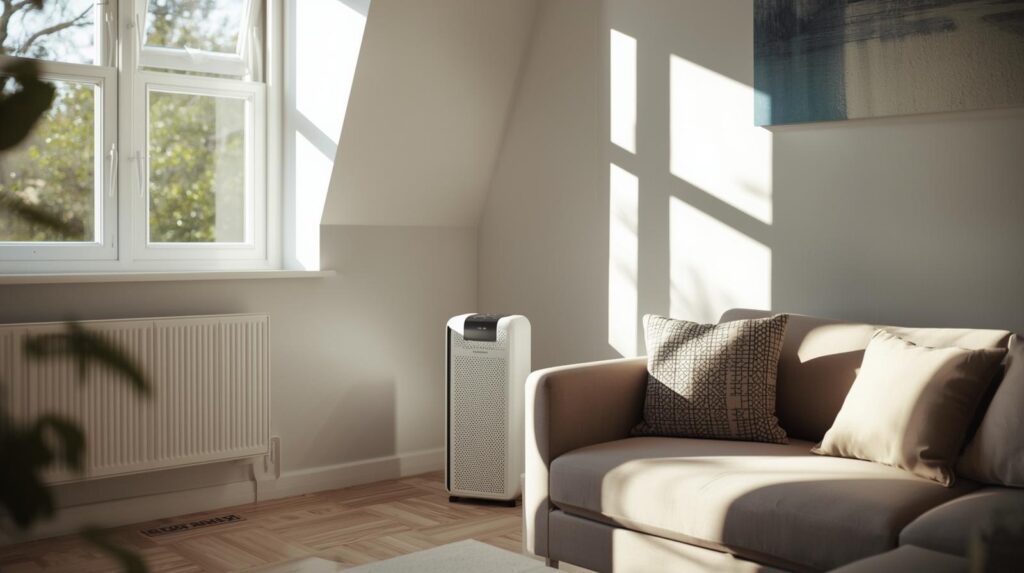
In the discussion around air purifiers vs ventilation in the UK, air purifiers represent a fundamentally different approach to managing indoor air quality. Rather than replacing indoor air with outdoor air, air purifiers focus on actively cleaning the air that is already inside the home.
This distinction is important in UK conditions, where outdoor air quality, weather, and housing design often limit how effective ventilation alone can be. Air purifiers are designed to operate continuously, providing consistent filtration regardless of what is happening outside.
How Air Purifiers Work – Filtration Rather Than Air Exchange
Most modern air purifiers used in UK homes rely on multi-stage filtration systems. These typically combine a pre-filter for larger particles, a HEPA filter for fine particulate matter, and in many cases an activated carbon filter for odours and gases.
Instead of moving air in and out of the building, air purifiers draw indoor air through these filters and recirculate it back into the room. This allows them to remove dust, pollen, pet dander, smoke particles, and fine pollution such as PM2.5 that often enters homes through ventilation or open windows.
Because this process is continuous, air quality can remain stable even when windows are closed for long periods — something that is common during UK winters, high pollen seasons, or in noisy urban environments.
Air Purifiers vs Ventilation – Control and Consistency
One of the key advantages of air purifiers in the air purifiers vs ventilation UK comparison is control. Air purifiers operate independently of weather conditions, time of day, or outdoor air quality. Once switched on, they provide predictable performance based on room size and filter capacity.
Ventilation effectiveness, by contrast, fluctuates constantly. Opening windows for a short time may provide a burst of fresh air, but indoor pollutants can quickly accumulate again once airflow stops. Air purifiers address this issue by maintaining a consistent cleaning cycle throughout the day and night.
This makes them particularly useful in bedrooms, home offices, nurseries, and living spaces where people spend extended periods of time and where stable air quality matters more than occasional air changes.
When Air Purifiers Are Most Effective in UK Homes
Air purifiers are most effective when used in enclosed spaces where air quality tends to deteriorate gradually rather than suddenly. UK homes with limited ventilation, modern insulation, or higher occupancy benefit most from continuous filtration.
They are also valuable during periods when ventilation is impractical, such as cold weather, high outdoor pollution levels, or peak pollen seasons. In these situations, air purifiers can reduce exposure to airborne irritants without relying on open windows or external airflow.
Rather than replacing ventilation entirely, air purifiers function as a complementary solution — filling the gap where ventilation alone cannot reliably maintain clean indoor air.
Air Purifiers vs Ventilation in the UK – Key Differences in Real-World Use (2026)
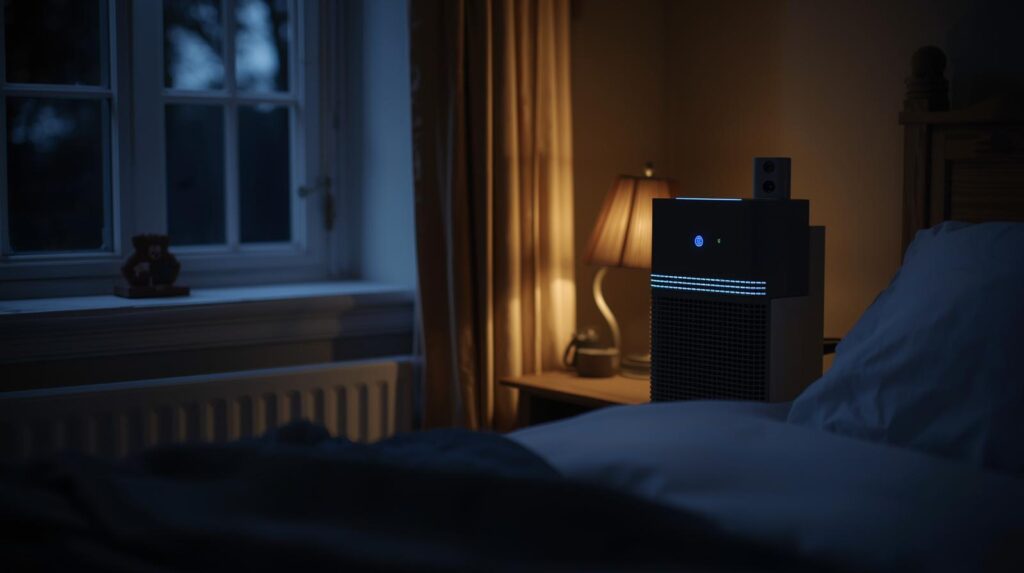
When comparing air purifiers vs ventilation in the UK, the biggest differences appear not in theory, but in everyday, real-world use. While both approaches aim to improve indoor air quality, they behave very differently once factors such as weather, lifestyle, housing type, and consistency come into play.
In 2026, UK households are no longer choosing between “fresh air” and “clean air” in isolation. Instead, they are weighing how each solution performs across an entire year — including winter months, allergy seasons, urban pollution peaks, and modern work-from-home routines.
Consistency vs Intermittent Improvement
Ventilation provides intermittent improvement. Opening windows or running extractor fans can quickly refresh indoor air, but the effect is often short-lived. Once airflow stops, pollutants generated indoors — dust, pet dander, cooking particles, or fine pollution — begin to accumulate again.
Air purifiers, by contrast, focus on consistency. They operate continuously, filtering air multiple times per hour and maintaining a more stable indoor environment. This difference is especially noticeable in bedrooms, home offices, and shared living spaces where people spend long, uninterrupted periods indoors.
In practical terms, ventilation delivers spikes of freshness, while air purifiers deliver sustained cleanliness.
Weather and Outdoor Conditions in the UK
UK weather plays a major role in the air purifiers vs ventilation UK debate. During warmer months, ventilation is easier and often more effective. However, during winter, heavy rain, high winds, or cold temperatures make window ventilation impractical for long periods.
Outdoor air quality also varies significantly across the UK. In urban areas or near busy roads, opening windows may introduce traffic pollution rather than reduce it. Air purifiers are unaffected by these conditions, as they work independently of outdoor air quality.
This makes air purifiers particularly valuable during times when ventilation is either uncomfortable or counterproductive.
Energy Efficiency and Comfort Trade-Offs
Ventilation can increase heat loss during colder months, forcing heating systems to work harder. While occasional airing is necessary, relying heavily on open windows throughout winter can negatively affect energy efficiency and comfort.
Air purifiers avoid this trade-off by cleaning indoor air without changing indoor temperature. This allows homes to remain sealed and energy-efficient while still maintaining acceptable air quality.
For many UK households in 2026, this balance between comfort, energy use, and air quality has become a deciding factor.
Noise, Control, and Day-to-Day Practicality
Ventilation often depends on external factors that cannot be controlled — traffic noise, neighbours, weather, or security concerns. Air purifiers offer greater control, with adjustable fan speeds, timers, and increasingly smart automation features.
In real-world use, this control allows air purifiers to integrate more smoothly into daily routines, particularly overnight or during working hours when open windows may not be practical.
Which Works Better in UK Homes – Air Purifiers, Ventilation, or Both?
For most households in 2026, the question is no longer air purifiers vs ventilation in the UK, but how the two solutions work together in real homes. While each approach has strengths, neither is a complete solution on its own under typical UK living conditions.
Ventilation remains essential for replacing stale indoor air and managing moisture, particularly in kitchens, bathrooms, and during mild weather. Opening windows or using extractor fans helps remove excess humidity and refresh indoor spaces, but its effectiveness depends heavily on timing, weather, and outdoor air quality.
Air purifiers, on the other hand, excel at maintaining consistent indoor air quality. They work continuously to reduce airborne particles such as pollen, dust, pet dander, and fine pollution — especially when windows are closed. This makes them particularly valuable during colder months, allergy seasons, or in urban environments where outdoor air is not always clean.
Why Combining Air Purifiers and Ventilation Works Best
In practical UK home setups, the most effective strategy is often a balanced combination of both. Ventilation is used strategically — short, controlled airing periods when conditions allow — while air purifiers handle day-to-day filtration and stability.
This approach reduces reliance on constant window opening, helps maintain indoor temperature, and limits the reintroduction of outdoor pollutants. It also allows households to adapt air quality management to different seasons rather than relying on a single method year-round.
Choosing the Right Air Purifier for Your Home
The effectiveness of this combined strategy depends largely on choosing an air purifier that matches room size, usage patterns, and household needs. A compact bedroom purifier will not deliver the same results as a medium-room or large-room model, just as a high-capacity unit may be unnecessary in small spaces.
To explore different purifier types, room sizes, and use cases in one place, you can browse our Home Air Quality category, where air purifiers are grouped by entry-level, core, and advanced performance to make comparisons easier.
By treating ventilation as a supportive habit and air purifiers as a continuous solution, UK households can achieve better indoor air quality without sacrificing comfort, energy efficiency, or control.
When Ventilation Alone Is Not Enough in UK Homes
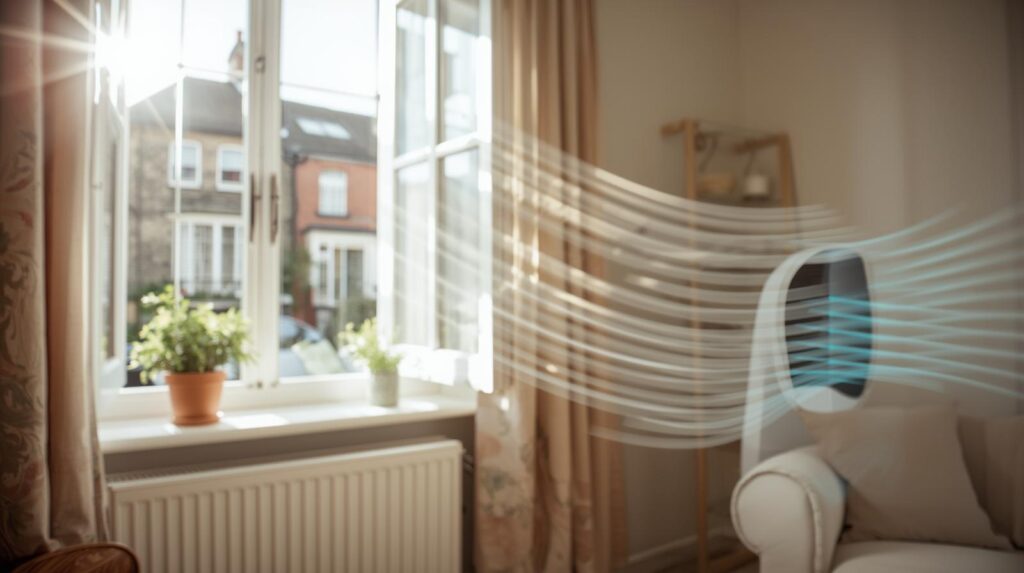
Although ventilation plays an important role in maintaining indoor air quality, there are many real-life situations in UK homes where ventilation alone is simply not enough. This is where the air purifiers vs ventilation UK discussion becomes particularly relevant, as everyday conditions often limit how effective ventilation can realistically be.
Modern UK homes are increasingly airtight, designed to retain heat and improve energy efficiency. While this reduces heating costs, it also means airborne particles remain trapped indoors for longer periods. In these environments, opening windows occasionally does not provide sufficient or lasting improvement to air quality.
Allergy Seasons and Outdoor Pollution
During spring and summer, ventilation can actively worsen indoor air quality for allergy sufferers. Opening windows allows pollen, fine dust, and traffic-related pollution to enter the home, especially in urban or suburban areas close to roads.
In these situations, ventilation introduces new irritants faster than they can be removed. Air purifiers help address this imbalance by filtering airborne particles continuously, reducing exposure even when outdoor conditions are poor.
Cold Weather and Energy Efficiency in the UK
UK winters present a practical challenge for ventilation. Cold temperatures, wind, and rain make frequent window opening uncomfortable and inefficient. Heat loss increases energy consumption, and many households limit ventilation to avoid higher heating bills.
As a result, indoor air quality often declines during winter months. Air purifiers provide a way to maintain cleaner indoor air without relying on prolonged ventilation, allowing homes to stay warm while still reducing airborne pollutants.
Urban Living and Noise Constraints
In cities and built-up areas, ventilation is often restricted by external noise, security concerns, or air quality itself. Traffic noise, construction, and street pollution discourage residents from opening windows for extended periods, particularly at night.
Air purifiers operate independently of these factors. They offer a controlled, predictable solution that does not rely on external conditions, making them especially useful in flats, rented accommodation, and homes near busy roads.
High Occupancy and Everyday Indoor Pollution
Homes with pets, frequent cooking, multiple occupants, or home working generate airborne particles throughout the day. Ventilation may temporarily reduce these pollutants, but air quality can deteriorate quickly once airflow stops.
Air purifiers address this issue by continuously removing particles as they are generated, providing a more stable indoor environment over time rather than short-lived improvements.
How to Choose Between Air Purifiers and Ventilation in the UK
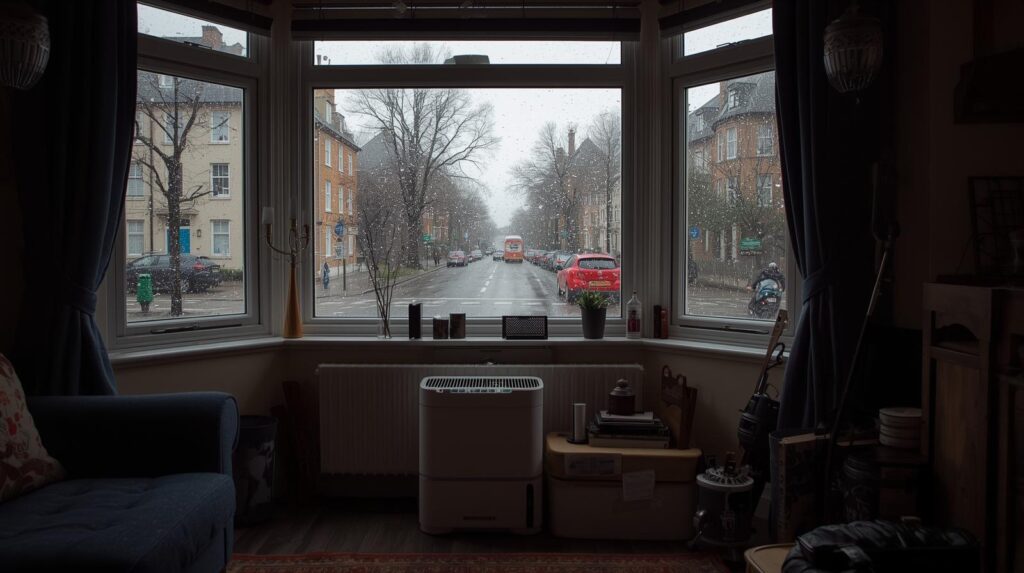
Choosing between air purifiers and ventilation in the UK is rarely about picking one solution and ignoring the other. In practice, the right choice depends on a combination of room size, household lifestyle, local conditions, and budget. Understanding how these factors interact helps avoid overbuying or relying on a solution that won’t perform well in everyday use.
Rather than asking which is better, most UK households benefit more from asking which approach works best in this specific space and situation.
Room Size and Layout – Small Rooms vs Open-Plan Living
Room size plays a major role in determining effectiveness. In small, enclosed spaces such as bedrooms or home offices, air purifiers are often more impactful than ventilation alone. These rooms accumulate airborne particles quickly, and continuous filtration can noticeably improve air quality without relying on open windows.
In larger rooms or open-plan living areas, ventilation helps refresh air volume, but its effect can be inconsistent. In these spaces, higher-capacity air purifiers or a combined approach are often more effective than ventilation alone, particularly when windows cannot remain open for long periods.
Lifestyle Factors – Pets, Cooking, Home Working
Everyday activities significantly affect indoor air quality. Homes with pets, frequent cooking, or multiple occupants generate airborne particles throughout the day. Ventilation can reduce these temporarily, but pollutants often return quickly once airflow stops.
Air purifiers are better suited to these lifestyles because they work continuously in the background. For people working from home or spending long hours indoors, this consistency becomes more valuable than short bursts of fresh air.
Outdoor Environment and Location
Location matters more in the UK than many people realise. Homes near busy roads, industrial areas, or high-traffic zones may experience poorer outdoor air quality. In these cases, ventilation can introduce pollutants rather than remove them.
Air purifiers offer more control in such environments, as they do not depend on outdoor conditions. This makes them particularly useful in urban flats, city centres, and areas where opening windows is limited by noise or pollution.
Budget and Running Costs
Ventilation has no direct cost, but it can increase heating expenses during colder months. Air purifiers involve an upfront purchase and ongoing filter replacement, but they allow homes to remain sealed and energy-efficient.
For many households, the long-term balance favours air purifiers in frequently used rooms, supported by strategic ventilation rather than constant window opening.

Air Purifiers vs Ventilation in the UK – Frequently Asked Questions
Looking at air purifiers vs ventilation in the UK from a real-world perspective, the most effective approach for 2026 is not choosing one over the other, but understanding how each fits into everyday home life. UK housing, weather conditions, and modern lifestyles make it increasingly difficult for ventilation alone to deliver consistent indoor air quality throughout the year.
Ventilation remains essential for managing moisture and refreshing indoor air, particularly in kitchens, bathrooms, and during mild weather. However, its effectiveness is highly variable and often limited by cold temperatures, outdoor pollution, noise, and energy efficiency concerns. Relying on ventilation alone frequently leads to fluctuating air quality rather than stable improvement.
Air purifiers address these limitations by providing continuous, controlled filtration regardless of external conditions. They are especially effective in bedrooms, living rooms, and home offices where people spend long periods indoors and where consistent air quality matters more than occasional air exchange.
For most UK households in 2026, the best results come from combining both approaches. Strategic ventilation is used when conditions allow, while air purifiers handle day-to-day air cleaning and stability. This balanced setup improves comfort, supports energy efficiency, and reduces exposure to airborne particles across different seasons.
Choosing the right solution ultimately depends on room size, household activity, and location. Small rooms benefit most from compact purifiers, medium spaces from core models, and large or open-plan homes from high-capacity units. Ventilation supports these systems rather than replacing them.
If your goal is practical, long-term indoor air quality rather than short bursts of freshness, air purifiers play a central role in modern UK homes — with ventilation acting as a supportive habit rather than the sole solution.
Emergency Power – Air Purifiers vs Ventilation in the UK
Do air purifiers replace ventilation in UK homes?
No, air purifiers do not replace ventilation, and they are not designed to do so. Ventilation is still necessary for managing moisture, removing stale air, and supporting healthy airflow. Air purifiers focus on cleaning indoor air rather than exchanging it. In UK homes, the most effective approach is using both together rather than relying on one alone.
Are air purifiers effective when windows are closed?
Yes, air purifiers are specifically designed to work when windows are closed. This is one of their main advantages in the UK, where cold weather, noise, or outdoor pollution often make ventilation impractical. By continuously filtering indoor air, purifiers help maintain cleaner conditions even when airflow from outside is limited.
Is opening windows enough to improve indoor air quality?
Opening windows can improve air quality temporarily, but the effect is often short-lived. Once windows are closed, airborne particles generated indoors quickly accumulate again. In addition, outdoor air quality in the UK is not always clean, meaning ventilation can sometimes introduce pollutants rather than remove them.
Which is better for allergies: air purifiers or ventilation?
For allergy sufferers, air purifiers are generally more effective than ventilation alone. During pollen season, opening windows often increases indoor allergen levels. Air purifiers help remove pollen, dust, and fine particles continuously, providing more stable conditions for people sensitive to airborne allergens.
Do air purifiers increase electricity costs significantly?
Most modern air purifiers are energy efficient and designed for continuous use. While they do consume electricity and require filter replacements, the overall running cost is usually modest — especially compared to the increased heating costs caused by frequent window ventilation during winter months.
Should every room have an air purifier?
Not necessarily. Air purifiers are most beneficial in rooms where people spend the most time, such as bedrooms, living rooms, and home offices. Other areas, like hallways or storage rooms, may not need dedicated filtration. Choosing purifiers based on room usage and size delivers better value than trying to cover the entire home indiscriminately.