Rising energy costs and changing household routines have made heating efficiency a priority for many UK homes. While insulation and boiler upgrades are often discussed, one area is still widely misunderstood: how heating is controlled. Terms like smart thermostat and heating controller are frequently used interchangeably, even though they work in very different ways and can lead to very different results.
In recent years, more households have started paying closer attention to when heating is used, how long it runs, and which rooms actually need warmth. This shift has highlighted a key issue — energy waste is often caused not by outdated heating systems, but by poor control and lack of visibility over consumption.
As we move into 2026, the question is no longer whether heating controls matter, but which type delivers better real-world energy savings. Smart thermostats promise automation and insight, while heating controllers focus on structured scheduling and simplicity. Both approaches can reduce unnecessary usage, but they suit different homes and lifestyles.
This guide compares smart thermostats and heating controllers from a practical UK perspective, focusing on energy efficiency, daily use and long-term savings — without marketing hype or price assumptions.
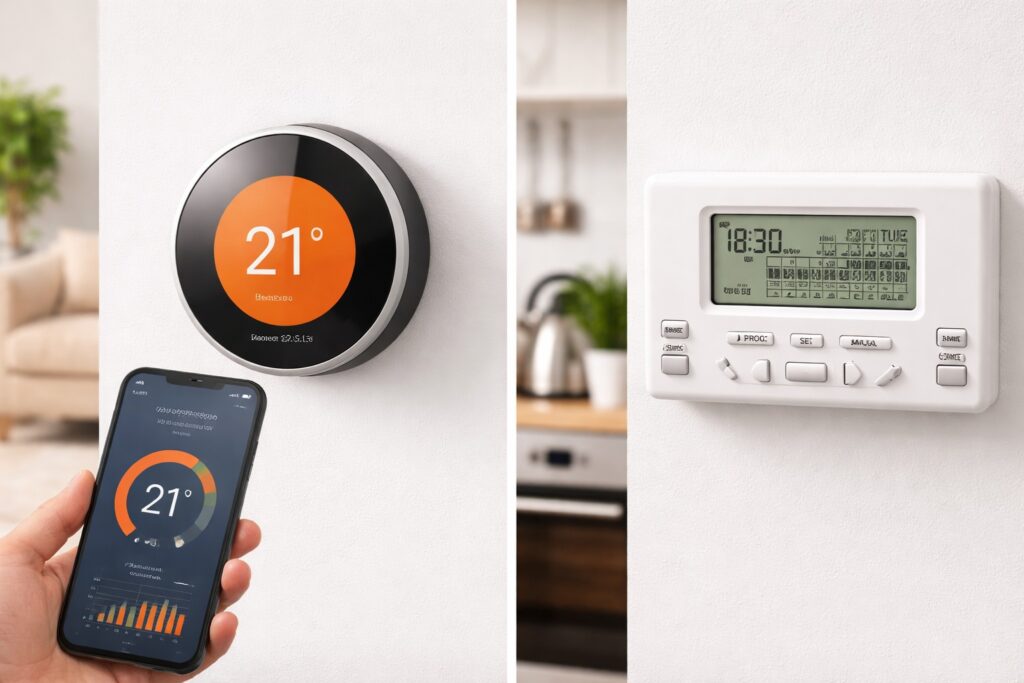
Why Heating Control Has a Bigger Impact Than People Think
In most UK households, heating accounts for the largest share of energy consumption throughout the year. Even in relatively efficient homes, a significant amount of energy is wasted simply because heating runs longer than necessary, warms unused spaces, or fails to adapt to real daily routines. This is where heating control becomes far more important than many people realise.
Traditional heating setups often rely on fixed schedules or manual adjustments that do not reflect how homes are actually used. Rooms are heated while empty, temperatures remain high during mild weather, and small changes in routine lead to unnecessary energy use. Over time, these inefficiencies add up, driving higher bills without improving comfort.
Better heating control shifts the focus from constant output to intentional use. Knowing when heating is active, how long it runs, and how changes affect overall consumption allows households to identify waste quickly. Even small adjustments — such as delaying heating start times, reducing overheating, or responding to daily occupancy — can make a noticeable difference.
Rather than upgrading heating hardware, improving control is often the fastest way to reduce unnecessary energy use. In many cases, the ability to see and manage heating behaviour has a greater impact on efficiency than the system generating the heat itself.

What Is a Smart Thermostat and How Does It Actually Work?
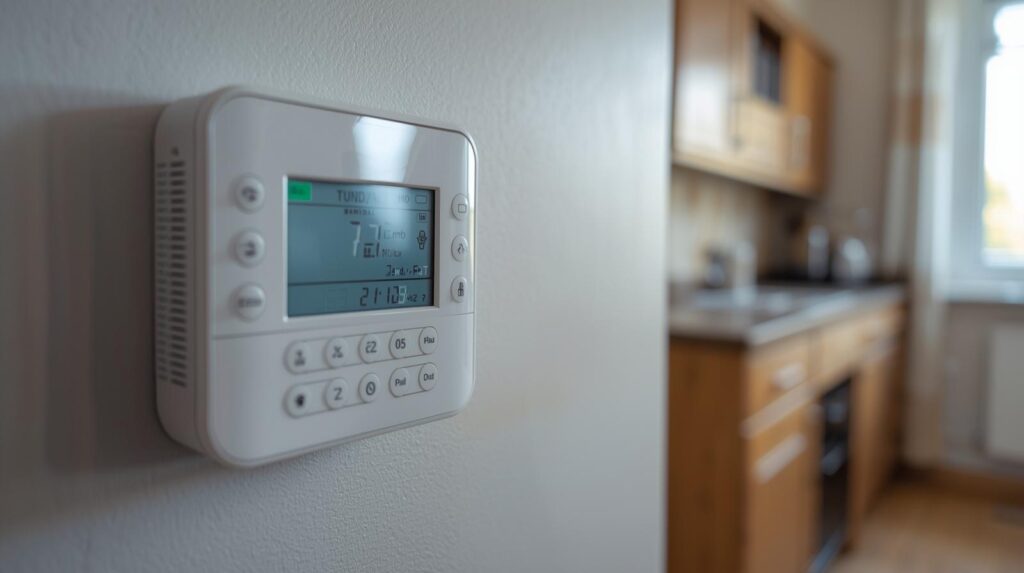
A smart thermostat is designed to go beyond basic temperature control by adapting heating behaviour to how a home is actually used. Instead of relying solely on fixed schedules, it focuses on patterns, adjustments and feedback that help reduce unnecessary energy consumption over time.
In practical terms, a smart thermostat allows households to monitor when heating is running, make quick changes remotely and respond to daily routine shifts. This visibility is a key difference. Being able to see heating activity in real time helps identify situations where energy is being wasted, such as heating rooms longer than needed or maintaining higher temperatures than necessary.
Many smart thermostats also introduce a degree of automation. Rather than heating following the same routine every day, the system can adapt based on repeated behaviour, helping align heating output with actual occupancy. This does not mean heating decisions are taken away from the user, but that adjustments become easier and more responsive.
However, smart thermostats are not a universal solution. Their effectiveness depends on how actively households engage with the information provided. The biggest efficiency gains usually come from awareness and informed adjustments, rather than automation alone.

What Is a Heating Controller and When Is It Used?
A heating controller is a more traditional approach to managing central heating, focusing primarily on structured scheduling and manual control. Instead of adapting dynamically to daily behaviour, it allows users to define when heating should turn on and off based on predictable routines.
In many UK homes, heating controllers are used to set consistent time blocks for heating, such as mornings and evenings, ensuring warmth is available at expected times. This approach works well in households with stable schedules, where daily routines rarely change and heating demand follows a regular pattern.
Unlike smart thermostats, heating controllers typically do not provide detailed insight into energy usage. They concentrate on execution rather than feedback, meaning households often rely on trial and error to fine-tune their settings. While this can still reduce unnecessary heating, it requires more manual attention to avoid energy waste.
Heating controllers are commonly found in properties where simplicity is prioritised. They offer a clear and predictable way to manage heating without the need for continuous monitoring, making them a practical option for users who prefer straightforward control over automation.
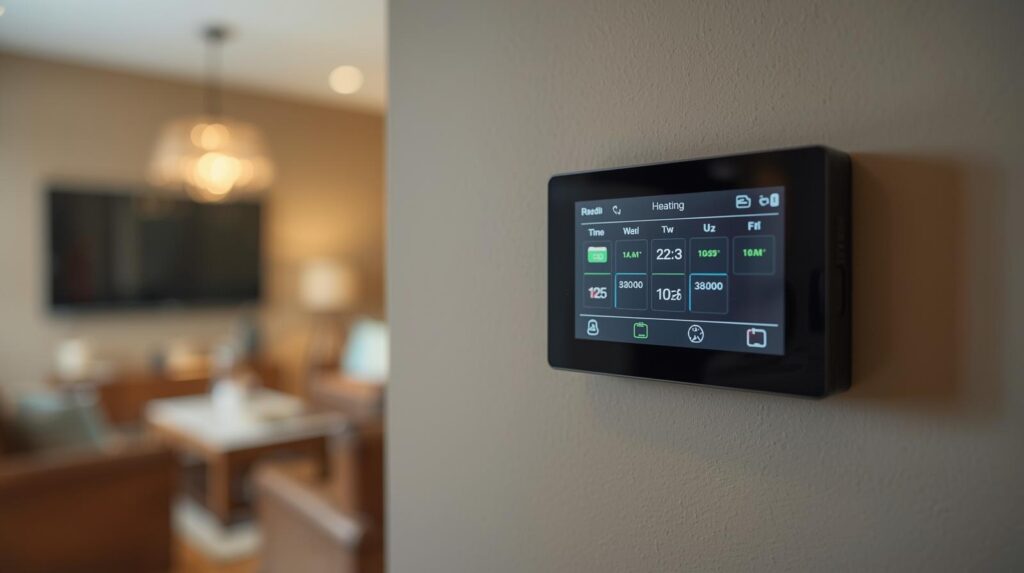
Smart Thermostats vs Heating Controllers: Core Differences That Matter
The key difference between smart thermostats and heating controllers lies in how they influence heating behaviour, not just how they switch heating on and off. While both aim to reduce unnecessary energy use, they approach the problem from very different angles.
Heating controllers rely on predefined schedules. Once set, heating follows the same routine regardless of changes in daily activity, weather conditions or occupancy. This can be effective in homes with consistent habits, but it leaves little room for adaptation when routines shift. Any improvement in efficiency depends on how accurately schedules reflect real usage.
Smart thermostats, by contrast, focus on responsiveness and insight. Rather than simply executing a fixed plan, they help users understand how heating is actually being used. Access to heating data and quick adjustment options makes it easier to spot patterns such as overheating, extended run times or unnecessary heating during quiet periods.
Another important distinction is how each system supports decision-making. Heating controllers prioritise predictability, while smart thermostats encourage active engagement. In practice, this means smart thermostats often help households reduce waste by making inefficiencies visible, whereas controllers rely on discipline and regular manual refinement to achieve similar results.
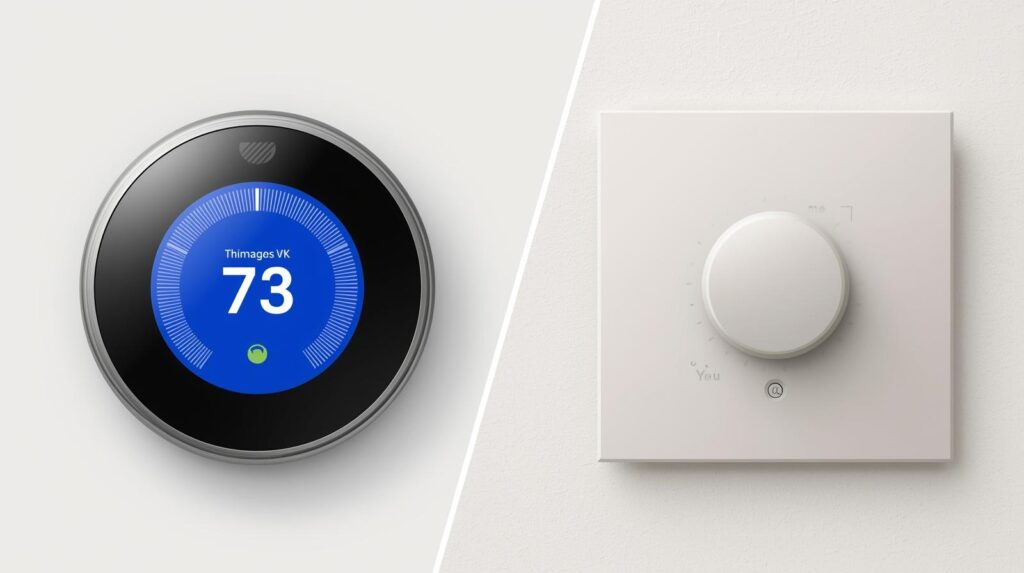
Which Option Helps Reduce Energy Waste More Effectively?
Reducing energy waste is less about the heating system itself and more about how accurately heating aligns with real household behaviour. Both smart thermostats and heating controllers can lower unnecessary usage, but they do so in fundamentally different ways.
Visibility and Awareness of Energy Use
One of the main advantages of smart thermostats is the visibility they provide. Being able to see when heating is active and how long it runs helps households identify inefficient patterns quickly. This awareness often leads to faster adjustments, such as reducing heating duration or avoiding unnecessary temperature increases.
Heating controllers offer less feedback. While they can prevent heating from running continuously, they rely on users noticing inefficiencies through trial and error rather than clear usage data.
Behavioural Change vs Fixed Scheduling
Smart thermostats encourage behavioural change by making energy use visible and adjustable in real time. This can be especially effective in homes where routines change frequently, as heating can adapt without constant reprogramming.
Heating controllers depend on fixed schedules. When routines remain stable, this can still reduce waste, but unexpected changes often lead to heating running when it is not needed.
Identifying Hidden Energy Loss
By highlighting patterns such as prolonged heating cycles or frequent manual overrides, smart thermostats can expose hidden energy loss that might otherwise go unnoticed. Heating controllers can reduce waste when set accurately, but they offer fewer tools to identify where energy is being lost over time.
Overall, systems that help households understand and react to their heating behaviour tend to reduce energy waste more consistently than systems that rely purely on static schedules.
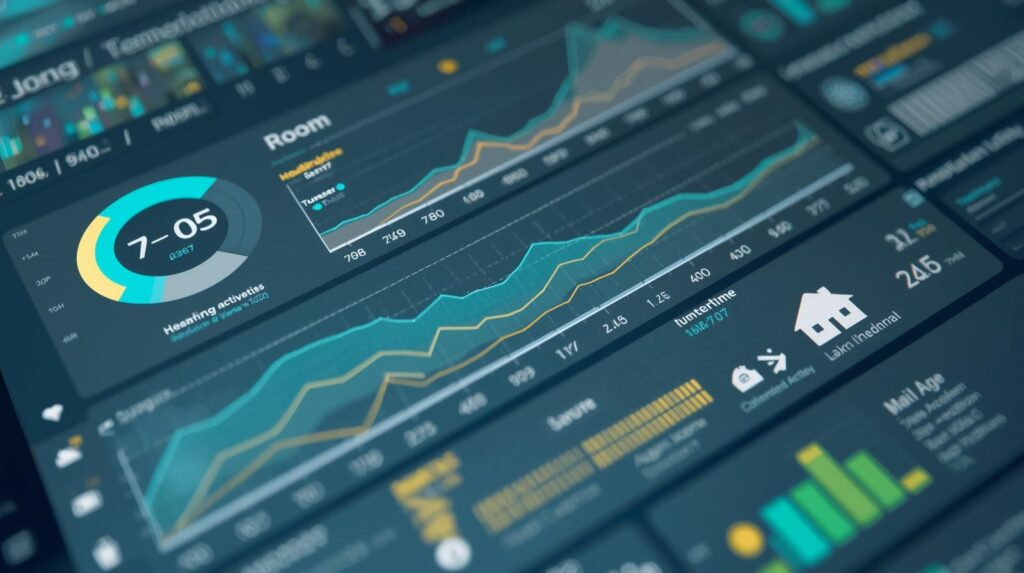
Real UK Home Scenarios: Families, Remote Work and Daily Routines
Heating efficiency is strongly influenced by how a home is used on a daily basis. In the UK, household routines vary widely, and the effectiveness of heating controls often depends on how well they match real-life behaviour rather than technical capability alone.
Family Homes With Changing Schedules
In households with families, heating demand often fluctuates throughout the day. School runs, after-school activities and varying occupancy mean that fixed heating schedules can quickly become inefficient. Smart thermostats can help adjust heating in response to these shifts, reducing energy use during quiet periods while maintaining comfort when the home is occupied.
Heating controllers can still work well in family homes, but they require careful scheduling and regular updates to avoid heating empty rooms or extending heating cycles unnecessarily.
Remote and Hybrid Working Patterns
With more people working from home, traditional morning-and-evening heating schedules are often no longer sufficient. Homes may need warmth in specific rooms for shorter periods during the day rather than full-house heating. Systems that allow quick adjustments and visibility into heating activity can help prevent energy waste in these scenarios.
Mixed-Use Homes and Irregular Routines
Many UK homes do not follow consistent daily patterns. Irregular work hours, shared households or part-time occupancy can make heating control more challenging. In these cases, flexibility becomes more important than strict scheduling, as heating needs can change from one day to the next.
Understanding how a household uses its space is essential when deciding which heating control approach is most effective for long-term energy efficiency.

When Smart Thermostats Make More Sense
Smart thermostats tend to deliver the greatest benefits in homes where heating demand changes frequently and where users are willing to engage with how energy is being used. Their strength lies not in complex features, but in the ability to adapt heating behaviour to real-world conditions.
Homes With Variable Daily Patterns
In households where routines shift from day to day, fixed heating schedules can quickly become inefficient. Smart thermostats make it easier to adjust heating without reprogramming entire schedules, helping reduce unnecessary heating during unoccupied periods while maintaining comfort when it is needed.
Households Focused on Reducing Energy Waste
Access to clear information about heating activity allows users to identify when energy is being wasted. Seeing how long heating runs or how often it is adjusted encourages more informed decisions, which can lead to gradual but consistent reductions in energy use over time.
Users Who Value Visibility and Control
Smart thermostats are particularly effective for users who want to understand their energy habits rather than rely on assumptions. While they do not eliminate the need for user input, they support better decision-making by making heating behaviour transparent and easier to manage.
That said, smart thermostats are not a universal solution. Without engagement or willingness to act on the information provided, their potential impact on efficiency can be limited.

When Heating Controllers Are the Better and Simpler Choice
While smart thermostats offer flexibility and insight, heating controllers remain a practical and effective option for many UK households. Their strength lies in simplicity, predictability and ease of use, particularly in homes with stable routines.
Homes With Consistent Daily Schedules
In households where heating needs follow a regular pattern, fixed scheduling can work very well. Heating controllers allow users to define clear time blocks for heating, ensuring comfort without the need for constant monitoring or adjustment. When schedules closely match daily routines, unnecessary energy use can still be kept under control.
Users Who Prefer Straightforward Control
Not everyone wants to analyse energy data or make frequent changes. Heating controllers suit users who value a simple system that does exactly what it is programmed to do. Once set correctly, they can operate reliably with minimal intervention, reducing the risk of accidental overuse caused by frequent manual overrides.
Stable Heating Demand and Predictable Usage
In homes where occupancy and heating demand rarely change, advanced automation may offer limited additional benefit. Heating controllers provide a clear and dependable way to manage heating output without introducing unnecessary complexity, making them a sensible choice for households focused on consistency rather than optimisation.
For many users, the best results come not from advanced features, but from a system that aligns closely with how the home is actually used.
How Heating Controls Fit Into a Broader Home Energy Efficiency Strategy
Heating controls play an important role in reducing unnecessary energy use, but they work best when viewed as part of a wider approach to household efficiency. Improving how heating is managed often delivers faster results than upgrading major systems, yet long-term savings come from combining control with awareness and smart decision-making.
In many UK homes, energy waste is caused by a lack of visibility rather than inefficient equipment. Better heating control helps highlight when energy is being used unnecessarily, making it easier to adjust habits over time. However, heating is only one part of overall household energy consumption.
A broader efficiency strategy looks at how different systems interact — heating, electricity use, daily routines and occupancy patterns. Monitoring energy behaviour, understanding where consumption is highest and making incremental improvements can significantly reduce waste without major disruption.
For households aiming to improve efficiency gradually, heating controls often act as the starting point. Once behaviour becomes more intentional and informed, it becomes easier to optimise other areas of energy use as part of a long-term home energy efficiency approach rather than relying on isolated upgrades.

Frequently Asked Questions About Smart Thermostats and Heating Controllers
Are smart thermostats worth using in UK homes?
Smart thermostats can be worthwhile for UK households that want greater control over heating behaviour and energy use. Their main value lies in improving awareness of when heating is running and how changes in routine affect consumption. By making heating activity visible, they help users identify waste, such as overheating or heating empty spaces. In homes with changing daily schedules, this flexibility can support more efficient energy use over time. However, their effectiveness depends on engagement. Smart thermostats work best when households actively respond to the information provided rather than relying on automation alone. For users willing to adjust habits and monitor usage, they can support long-term reductions in unnecessary energy consumption.
Do heating controllers really help reduce energy waste?
Heating controllers can reduce energy waste when schedules closely match how a home is used. By limiting heating to defined time periods, they prevent systems from running continuously throughout the day. In homes with predictable routines, this structured approach can be effective in avoiding unnecessary heating. However, controllers rely on accurate setup and regular review. If routines change or schedules are not updated, heating may still run when it is not needed. While they offer fewer insights into energy use than smart thermostats, heating controllers can still support efficiency by encouraging disciplined and consistent heating behaviour.
Which option is easier for families to manage day to day?
Ease of use depends largely on household routines and preferences. Heating controllers are often simpler for families with consistent schedules, as once programmed they require minimal attention. Smart thermostats, on the other hand, offer greater flexibility but may require more interaction. For families with changing routines, school activities or remote working patterns, the ability to adjust heating quickly can prevent waste. Families that prefer straightforward systems may find controllers easier to manage, while those willing to engage with heating behaviour often benefit more from the visibility provided by smart thermostats.
Can heating controls help identify high energy usage?
Heating controls can help identify high energy usage, but the level of insight varies. Smart thermostats are particularly effective at highlighting when heating runs longer than expected or responds poorly to changes in routine. This visibility allows households to recognise inefficient patterns and make informed adjustments. Heating controllers offer less direct feedback, meaning inefficiencies may only become apparent over time through comfort issues or higher energy usage. Systems that provide clear information about heating activity tend to support quicker identification of waste and encourage more efficient behaviour.
Bathrooms and kitchens require moisture management at source, but improving overall air quality in nearby rooms helps prevent humidity and odours from spreading.
Do smart thermostats replace heating controllers completely?
Smart thermostats do not always replace heating controllers entirely. In many setups, they work alongside existing control systems rather than removing them. While smart thermostats introduce automation and insight, basic scheduling functions often remain part of the wider heating setup. The key difference lies in how heating decisions are made. Smart thermostats enhance control by adding responsiveness and visibility, but structured scheduling may still play a role in maintaining baseline comfort. The two approaches are not always mutually exclusive and can complement each other depending on household needs.
Is upgrading heating controls more effective than upgrading the boiler?
Improving heating controls can often deliver faster efficiency gains than upgrading the boiler itself. Many UK homes already have functional heating systems, but energy is wasted through poor control and inefficient usage. Better heating control helps align output with actual demand, reducing unnecessary run time. While boiler upgrades may improve performance, they do not address behavioural inefficiencies. For households focused on reducing energy waste, improving how heating is managed is often a more practical first step than replacing major equipment.