
Choosing between a 12L and 20L dehumidifier can be confusing because both sizes are commonly used in UK homes, but they are designed for different levels of moisture control. A 12L dehumidifier is often enough for bedrooms, flats, smaller living spaces and everyday condensation, while a 20L model is usually better suited to larger rooms, heavier humidity, indoor laundry drying and homes where moisture builds up quickly.
The right choice is not always the biggest model. A 20L dehumidifier can remove more moisture in suitable conditions, but it may also cost more to buy, take up more space and use more energy if the room does not need that level of capacity. On the other hand, choosing a 12L model for a room with heavy condensation or regular laundry drying may mean the unit has to run for longer to keep up.
In this guide, we compare 12L and 20L dehumidifiers for UK homes, including room size, condensation control, laundry drying, running costs, daily use and common buying mistakes. By the end, you should have a clearer idea of whether a 12L model is enough or whether stepping up to 20L makes more sense for your home.
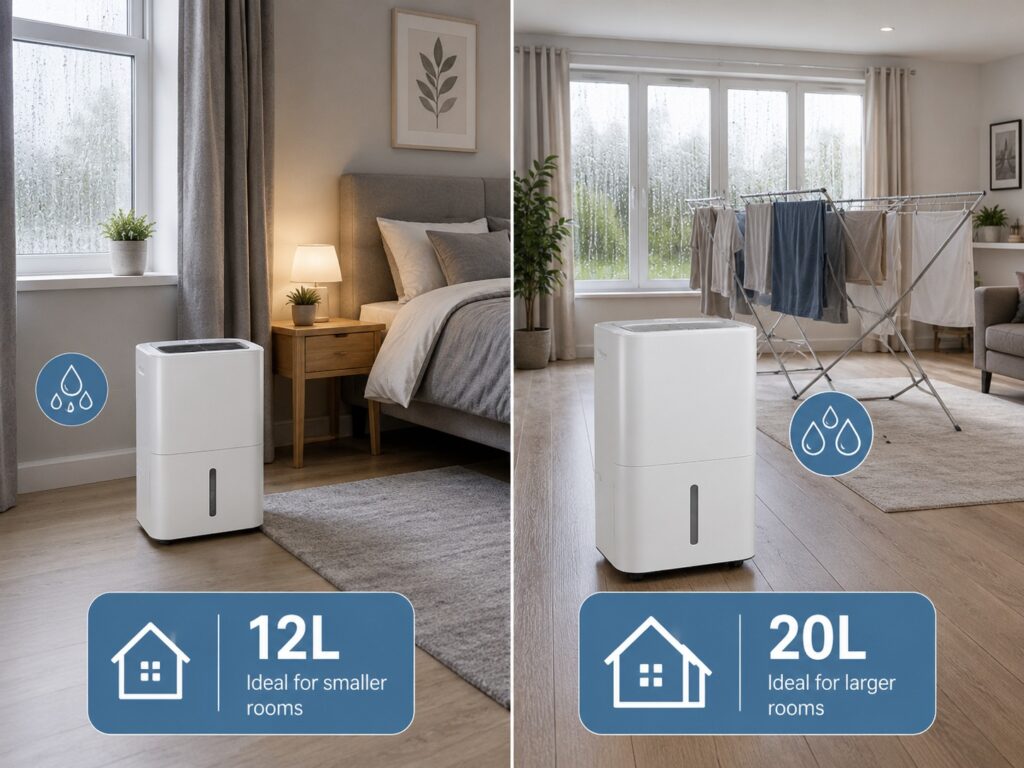
What Does 12L or 20L Mean on a Dehumidifier?
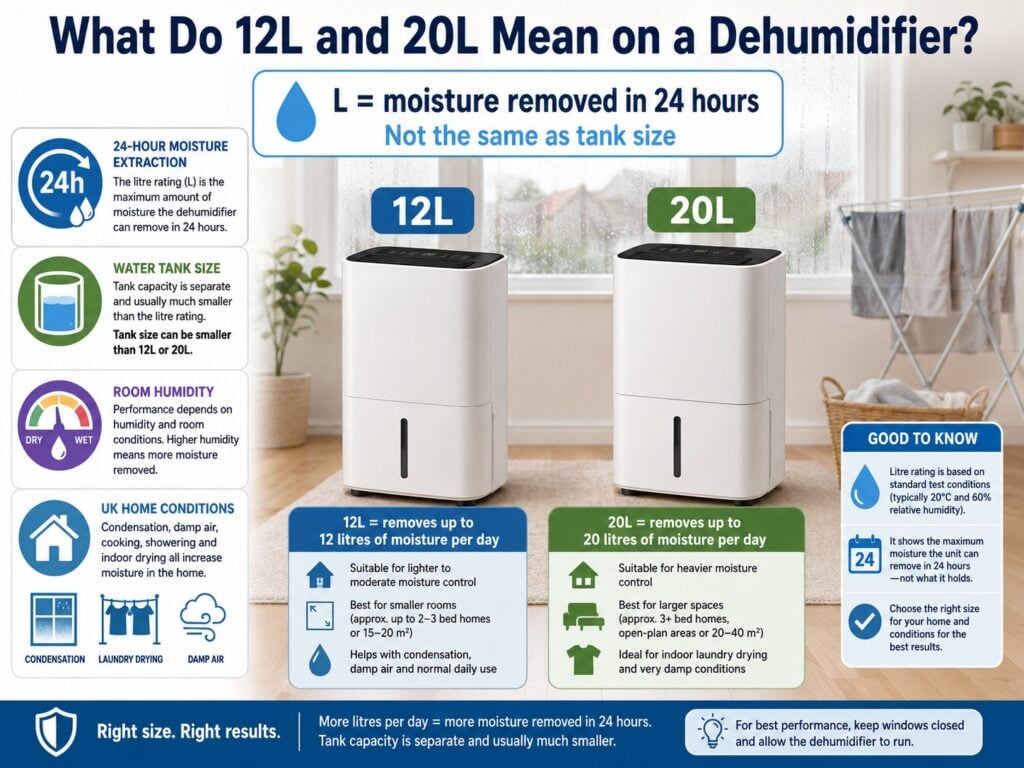
When a dehumidifier is described as 12L or 20L, this usually refers to how much moisture it can remove from the air over a 24-hour period under controlled test conditions. It does not usually mean that the water tank holds 12 or 20 litres. In most models, the tank is much smaller and may need emptying before the unit reaches its maximum daily extraction figure.
This is important because real UK homes rarely match ideal test conditions. Extraction performance depends on room temperature, humidity level, ventilation, moisture sources and how long the dehumidifier runs each day. A 20L dehumidifier may be capable of removing more moisture than a 12L model, but the actual amount collected will depend on the room where it is used.
A 12L dehumidifier is usually designed for everyday moisture control in small to medium rooms. It can be a sensible choice for bedrooms, flats, bathrooms, home offices and moderate condensation problems. A 20L dehumidifier gives more extraction capacity and is usually better suited to larger rooms, heavier humidity, regular indoor laundry drying or homes where damp air builds up quickly.
The litre rating is useful for comparison, but it should not be the only factor in your decision. Room size, moisture severity, temperature, running time and how often you dry laundry indoors are just as important when choosing between 12L and 20L.
When Is a 12L Dehumidifier Enough?
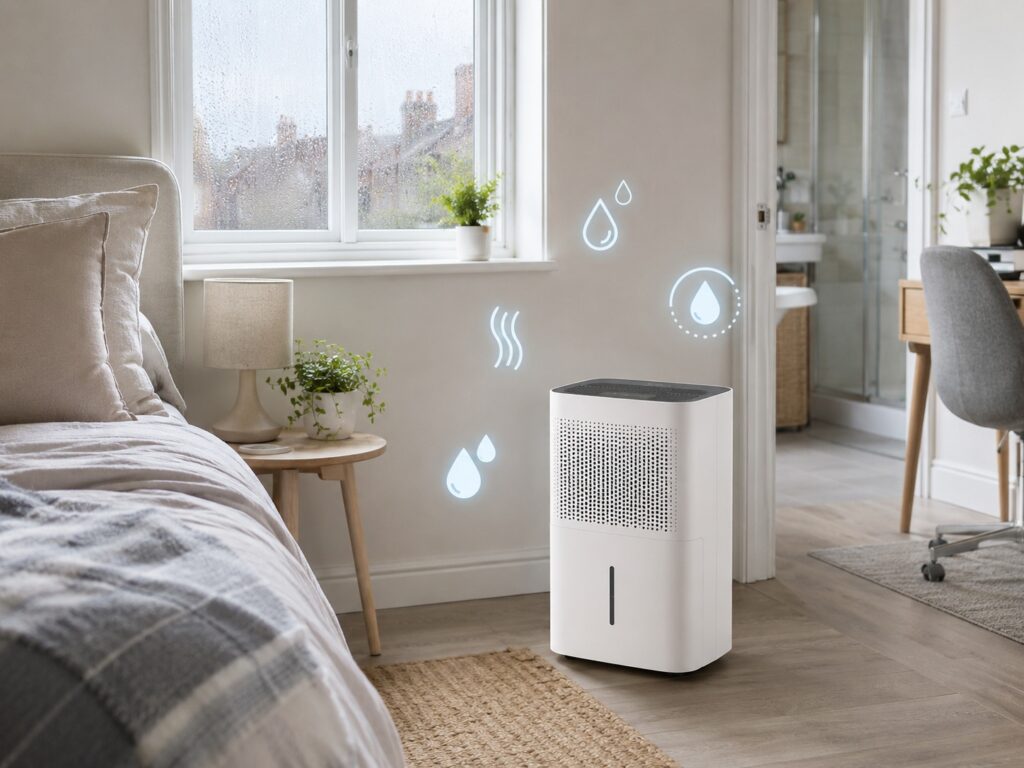
A 12L dehumidifier is often enough for everyday moisture control in smaller UK homes, especially where the main problems are window condensation, damp air, musty smells or occasional indoor laundry drying. It is usually a practical choice for bedrooms, bathrooms, small flats, home offices and medium rooms where humidity is noticeable but not severe.
This size can make sense when you want a dehumidifier that is stronger than a compact 10L model, but still easy to move, store and use regularly. For many households, 12L offers a good balance between moisture removal, running cost, noise and size. It can help manage daily condensation without moving into the larger, heavier and often more expensive 20L category.
A 12L model is especially useful if your room has regular condensation but the problem is mostly limited to one area. For example, if bedroom windows are wet in the morning, bathroom humidity lingers after showers or a small flat feels damp during colder months, a 12L unit may provide enough capacity for consistent control.
It can also help with occasional indoor laundry drying, especially in a small or medium room with the door closed. However, if you dry clothes indoors several times a week, deal with heavy condensation across multiple windows or need faster moisture removal in a larger living space, a 20L model may be more suitable.
For buyers comparing this size in more detail, our Devola 12L dehumidifier review explains how a typical 12L model fits into everyday UK home use.
When Is a 20L Dehumidifier the Better Choice?
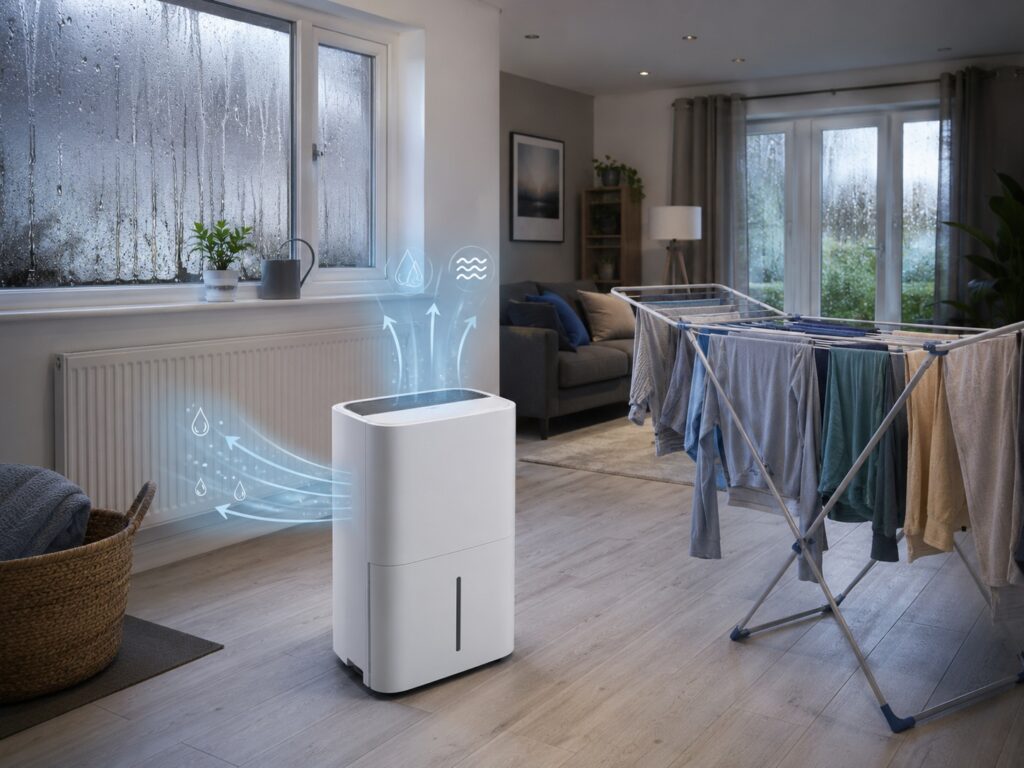
A 20L dehumidifier is usually the better choice when moisture levels are higher, the room is larger or the dehumidifier needs to deal with regular indoor laundry drying. While a 12L model can work well for everyday condensation in smaller spaces, a 20L unit gives more extraction capacity and can usually manage heavier humidity more comfortably.
This size often makes sense in larger living rooms, open-plan spaces, utility rooms, busy family homes and areas where condensation appears on several windows. It can also be useful in homes where damp air builds up quickly after cooking, showering or drying clothes indoors. In these situations, a smaller 12L model may still help, but it may need to run for longer to achieve the same result.
A 20L dehumidifier can be especially useful for indoor laundry. Wet clothes release a large amount of moisture into the air, and a larger unit can remove that moisture more quickly than a smaller model in suitable conditions. This can help reduce drying time and limit the amount of humidity spreading through the home.
The main trade-off is that 20L dehumidifiers are usually larger, heavier and more expensive than 12L models. They may also use more electricity per hour, although this depends on the model, settings and how long it needs to run. For small bedrooms or light condensation, 20L may be more capacity than you really need. For larger rooms, frequent laundry drying or heavier moisture, it can be the more practical option.
For a closer look at this size category, our Pro Breeze 20L dehumidifier review explains how a larger 20L model can fit into UK homes with heavier condensation, laundry drying and bigger room requirements.
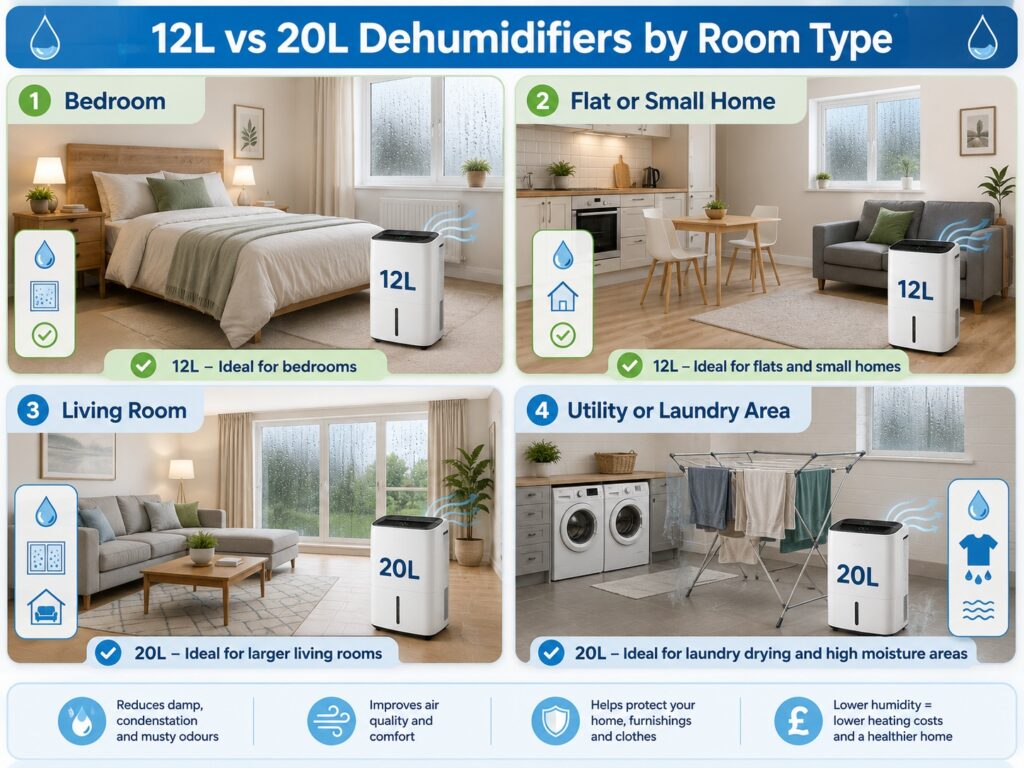
12L vs 20L Dehumidifier by Room Type
The best dehumidifier size depends heavily on where you plan to use it. A 12L and 20L dehumidifier can both be useful in UK homes, but they are not aimed at exactly the same situations. The right choice depends on room size, ventilation, temperature and how much moisture is produced in that space each day.
Bedrooms and Small Rooms
For most bedrooms, spare rooms, box rooms and home offices, a 12L dehumidifier is usually enough. These rooms often suffer from morning window condensation, damp-feeling air or musty smells, but they do not normally need the extraction capacity of a larger 20L model.
A 20L dehumidifier may still work in a bedroom, but it can be more capacity than necessary if the problem is only light or moderate condensation. It may also take up more space and cost more to buy. For smaller rooms, the better choice is usually the model that can control moisture comfortably without being oversized.
Flats and Smaller Homes
In flats and smaller homes, a 12L dehumidifier can be a sensible starting point if moisture is mostly limited to bedrooms, bathrooms or one main living space. It can help manage everyday humidity from cooking, showering and normal household use.
However, a 20L dehumidifier may be more practical if the flat has poor ventilation, regular indoor laundry drying or condensation across several windows. In these situations, the extra capacity can help manage moisture more effectively, especially during colder months when opening windows is less practical.
If your space is smaller and you are not sure whether even 12L is necessary, our 10L vs 12L dehumidifier guide explains when a smaller unit may be enough for bedrooms, flats and lighter condensation.
Living Rooms and Larger Spaces
For medium to large living rooms, open-plan areas or busier family spaces, a 20L dehumidifier is often the stronger option. Larger rooms contain more air, and moisture can build up from several sources throughout the day. A 12L model may still help, but it may need to run for longer to bring humidity down.
A 20L unit gives more headroom, especially if the room is used heavily, connected to a kitchen or affected by regular condensation. It can be a better choice when you want faster moisture control in a larger space rather than slow, gradual reduction.
Utility Rooms and Laundry Areas
For utility rooms and indoor laundry drying areas, a 20L dehumidifier is usually the better choice. Wet clothes release a lot of moisture into the air, and a larger unit can usually remove that moisture more effectively than a 12L model.
A 12L dehumidifier can still help with occasional laundry drying in a smaller room, especially if the door is closed and the space is warm. But if laundry drying is part of your regular weekly routine, a 20L model usually gives more practical drying support and better moisture control.
12L vs 20L Dehumidifier for Condensation, Damp and Laundry
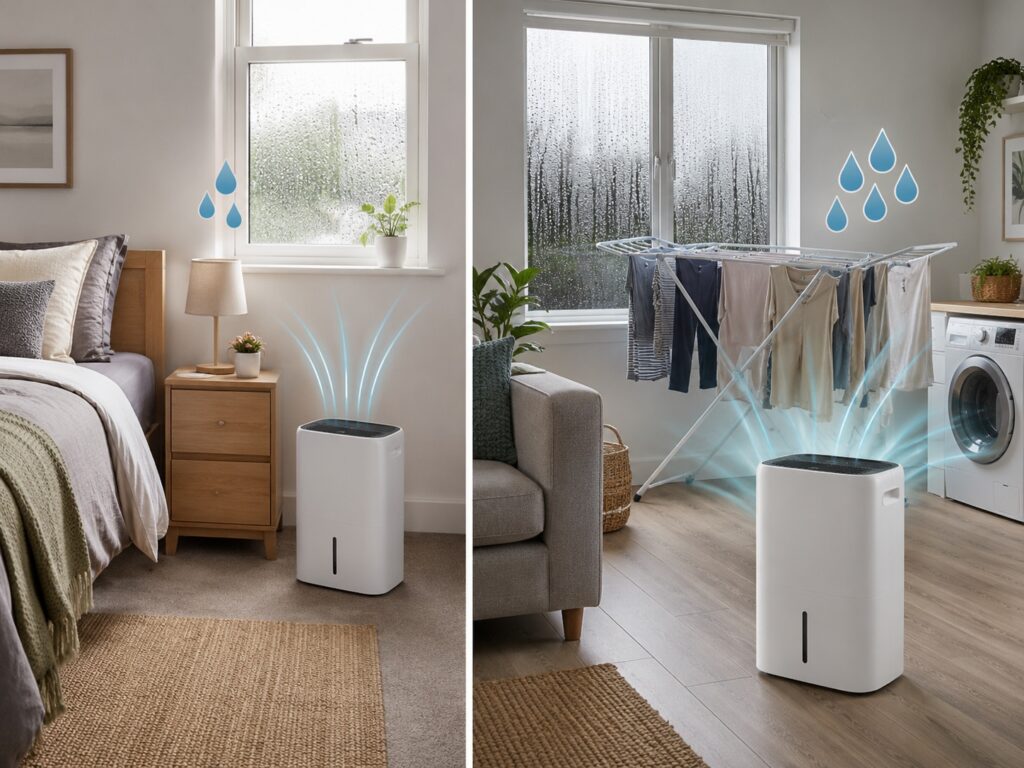
The right size also depends on the type of moisture problem you are trying to control. A 12L dehumidifier may be enough for everyday window condensation and mild damp air, while a 20L model can be more suitable when moisture is heavier, more frequent or linked to regular indoor laundry drying.
Window Condensation
For light to moderate window condensation in a bedroom, bathroom or small flat, a 12L dehumidifier is often enough. It can help lower indoor humidity and reduce the amount of moisture settling on cold glass overnight, especially when used regularly.
If condensation appears on several windows, forms heavily every morning or returns quickly after wiping, a 20L dehumidifier may be more practical. The extra extraction capacity can help the unit keep up better in homes where moisture builds quickly, ventilation is limited or several rooms are affected.
Mild Damp and Musty Air
A 12L dehumidifier can be a sensible choice for mild damp smells, humid bedrooms or rooms that feel slightly cold and damp during autumn and winter. It can help maintain a more comfortable humidity level when the problem is manageable and mostly limited to one space.
A 20L model may be better if the damp feeling affects a larger room, hallway, utility space or several connected areas. However, neither size should be treated as a fix for serious damp, leaks, water ingress or structural moisture problems. A dehumidifier can reduce moisture in the air, but it cannot repair the cause of damp.
Indoor Laundry Drying
Indoor laundry drying is one of the clearest reasons to choose a 20L dehumidifier. Wet clothes release a lot of moisture into the air, and a larger unit can usually remove that moisture more effectively than a 12L model in suitable room conditions.
A 12L dehumidifier can still help if you only dry laundry indoors occasionally or use it in a smaller room with the door closed. But if you dry clothes inside several times per week, especially during colder months, a 20L model usually gives better drying support and stronger moisture control.
If condensation is your main problem, our guide to the best dehumidifier for condensation in the UK explains what to look for when choosing a model for window moisture, damp air and everyday humidity control.
12L vs 20L Dehumidifier Running Costs and Energy Use
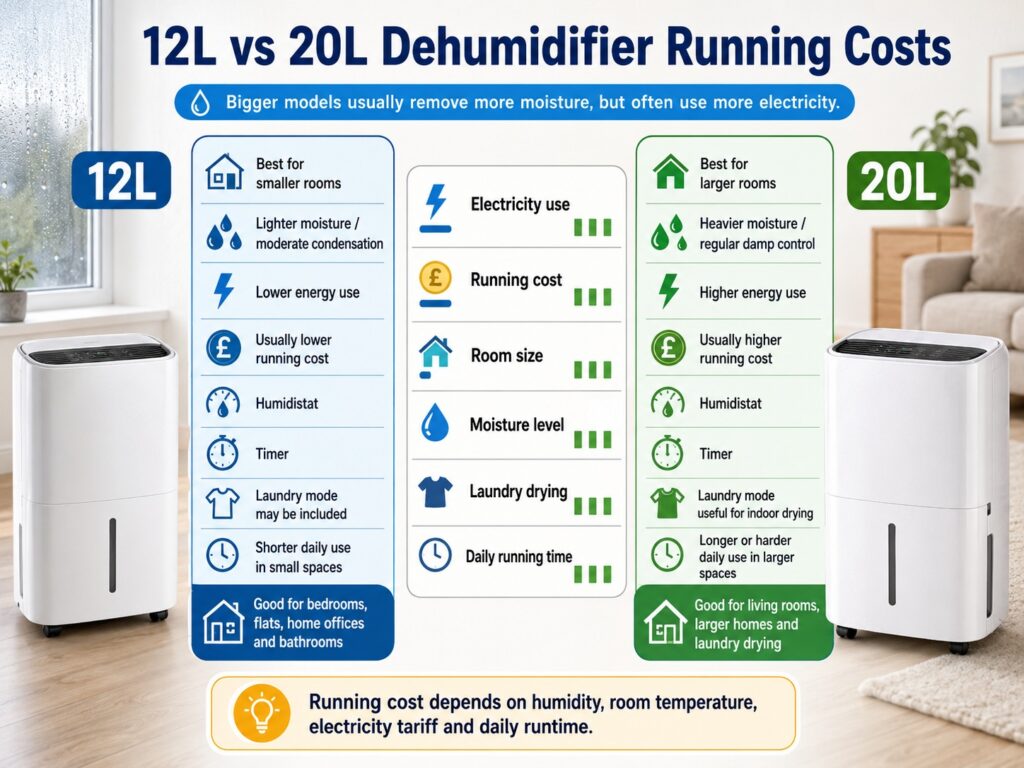
Running cost is one of the biggest differences buyers think about when comparing 12L and 20L dehumidifiers. A 20L model usually has a higher power draw than a 12L model, but that does not always mean it will cost dramatically more to use in every situation. The real running cost depends on the model, room conditions, humidity level and how long the dehumidifier needs to run.
A 12L dehumidifier can be more energy-conscious in smaller rooms because it is usually designed for moderate daily moisture control. If the room is not too large and the condensation problem is manageable, a 12L unit may reach the target humidity without using unnecessary extra power.
A 20L dehumidifier may use more electricity per hour, but it can also remove moisture faster in larger or more humid spaces. In the right room, this may reduce the total running time compared with using a smaller unit that struggles to keep up. This is why the most efficient choice is not always the smallest model, but the one that matches the moisture load properly.
For bedrooms, small flats and light condensation, a 12L model will usually be the more sensible option. For larger rooms, regular indoor laundry drying or heavier humidity, a 20L model may be more efficient in practical use because it has enough capacity to control moisture without running endlessly.
Useful features can also make a big difference. Look for a humidistat, timer, laundry mode, auto shut-off and clear humidity settings. These help the dehumidifier run only when needed, rather than wasting electricity. If you are comparing running costs beyond just 12L and 20L, our guide to the most energy efficient dehumidifier size explains how mini, 10L, 12L and 20L units compare for UK homes.
How to Choose Between a 12L and 20L Dehumidifier
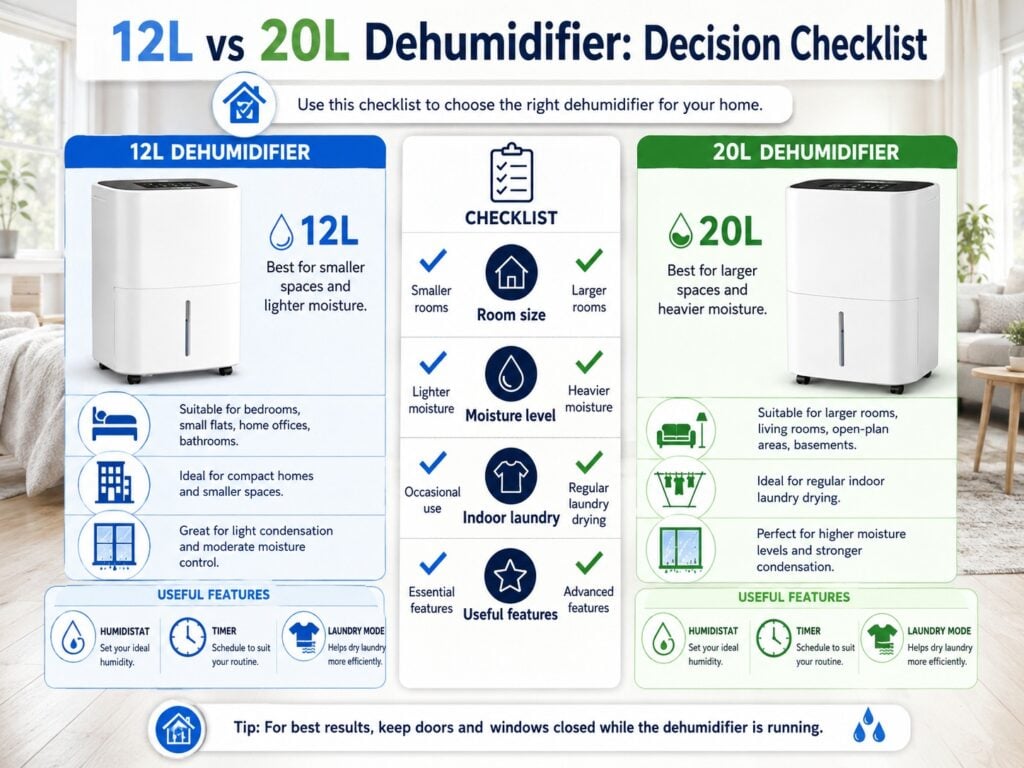
Choosing between a 12L and 20L dehumidifier is easiest when you look at how your home actually behaves day to day. The right size depends on the room, how often condensation appears, whether you dry laundry indoors and how quickly moisture builds up.
Start with the Room Size
For bedrooms, box rooms, home offices and small flats, a 12L dehumidifier is usually enough. It can manage everyday moisture without taking up too much space or using more capacity than necessary.
For larger living rooms, open-plan areas, utility rooms or busier family homes, a 20L model may be the better choice. Larger rooms contain more air, so a smaller unit may need to run for longer to bring humidity down.
Look at the Moisture Level
If condensation is light to moderate and mostly appears on one or two windows, a 12L model may be sufficient. It can help keep humidity under control when the problem is regular but not severe.
If windows are wet every morning, condensation appears across several rooms or the air feels damp most of the time, a 20L dehumidifier may give more useful capacity. The extra extraction power can help the unit keep up with heavier moisture loads.
Think About Indoor Laundry
If you only dry laundry indoors occasionally, a 12L dehumidifier can still help, especially in a smaller warm room with the door closed.
If you dry clothes indoors several times per week, a 20L model is usually more practical. Laundry adds a lot of moisture to the air, and a larger unit can usually remove it faster and more effectively.
Check the Practical Features
Capacity matters, but features also make a big difference. Look for a humidistat, timer, laundry mode, auto shut-off, washable filter, clear humidity display and continuous drainage option if you plan to use the dehumidifier often.
The best model is not simply the largest one. It is the one that matches your room size, moisture level and daily routine. If you want a wider explanation of choosing by capacity, room type and real-world use, our guide on how to choose the right dehumidifier in the UK explains the main buying factors in more detail.
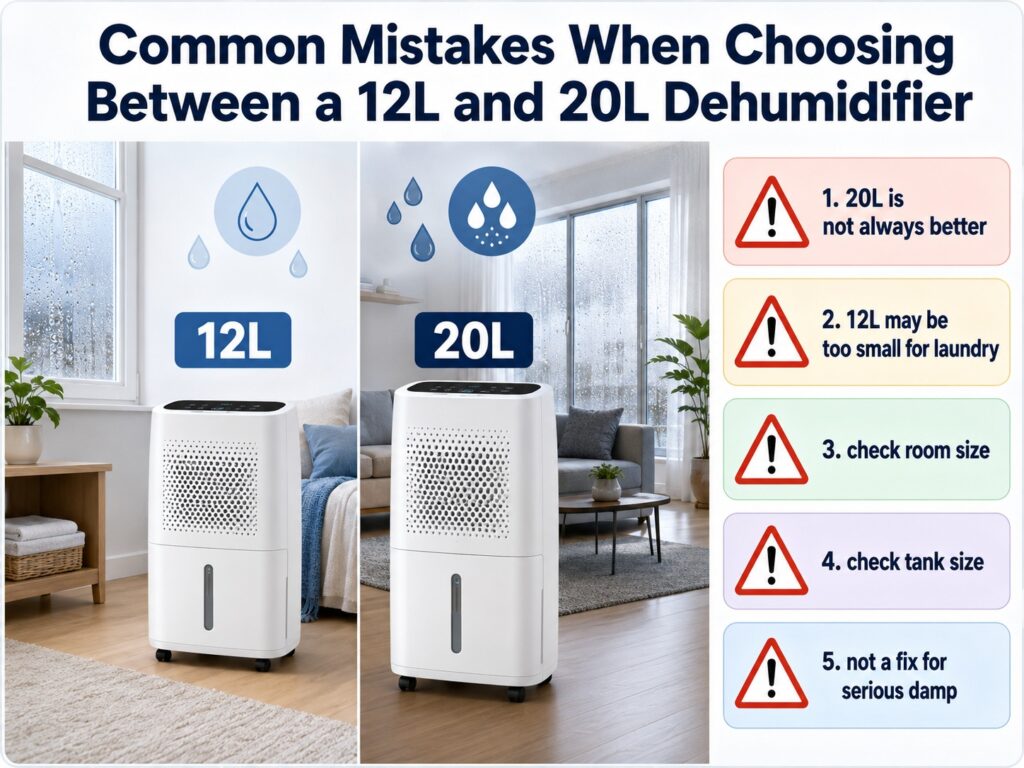
Common Mistakes When Choosing Between 12L and 20L Dehumidifiers
Choosing between a 12L and 20L dehumidifier should be based on real home conditions, not only on the number printed on the product page. Many buyers choose the wrong size because they focus on extraction capacity alone and ignore room size, moisture source, running time and daily use.
Assuming 20L Is Always Better
A 20L dehumidifier offers more extraction capacity, but that does not mean it is always the better choice. In a small bedroom, home office or compact flat with moderate condensation, a 12L model may be enough and easier to live with.
Choosing a larger unit than necessary can mean paying more upfront, using more space and potentially consuming more electricity than needed. A 20L model is most useful when the room or moisture problem genuinely needs the extra capacity.
Choosing 12L for Heavy Laundry Drying
A 12L dehumidifier can help with occasional indoor laundry drying, but it may not be the best choice if you dry clothes indoors several times per week. Wet laundry releases a lot of moisture into the air, and a smaller unit may need to run for much longer to keep up.
For regular laundry drying, especially in winter, a 20L dehumidifier is usually more practical. It gives more moisture removal capacity and can help reduce humidity faster in a suitable enclosed room.
Ignoring Room Size and Layout
Room size matters, but layout matters too. A 12L dehumidifier may work well in a closed bedroom or small flat, but it may struggle in a larger open-plan space where air moves between several areas.
A 20L model can be better for larger living rooms, utility rooms or spaces connected to kitchens, especially if moisture is produced throughout the day. The more open and active the space is, the more important capacity becomes.
Confusing Extraction Capacity with Tank Size
The 12L or 20L rating usually refers to how much moisture the dehumidifier can remove in 24 hours under test conditions. It does not usually mean the water tank holds 12 or 20 litres.
This is important because a model with strong extraction capacity may still have a relatively small tank. If you plan to use the dehumidifier for laundry drying or heavy condensation, check the tank size, auto shut-off and whether continuous drainage is available.
Treating a Dehumidifier as a Fix for Serious Damp
A dehumidifier can help reduce moisture in the air, but it cannot fix leaks, rising damp, penetrating damp or structural ventilation problems. If there are damp patches, crumbling plaster, water stains or mould that keeps returning quickly, the underlying cause should be investigated.
For everyday condensation, damp air and laundry moisture, choosing between 12L and 20L can make a real difference. For serious damp, the dehumidifier may only reduce symptoms while the main problem remains.
12L vs 20L Dehumidifier: Quick Buying Verdict
A 12L dehumidifier is usually the better choice if you need everyday moisture control in a bedroom, bathroom, compact flat, home office or small to medium room. It makes sense when condensation is mild to moderate, the room is not too large and you want a unit that is practical, easier to move and more energy-conscious for regular use.
A 20L dehumidifier is usually the better choice if the room is larger, condensation appears more heavily or you regularly dry laundry indoors. The extra capacity can give more breathing room, especially in busy UK homes where moisture builds quickly from cooking, showering, laundry drying or poor ventilation during colder months.
The most important point is that neither size is automatically better. A 12L model can be the smarter option for smaller rooms and everyday condensation, while a 20L model can be more practical for larger spaces, heavier humidity and regular laundry drying. If your damp problem is severe, spreads across several rooms or keeps returning despite regular use, you may need a larger dehumidifier or to investigate the underlying cause of moisture.
For most UK households choosing between these two sizes, the decision is simple: choose 12L for bedrooms, flats, smaller rooms and moderate daily moisture, and choose 20L when you need extra capacity for larger rooms, frequent condensation, indoor laundry or heavier damp air.
Frequently Asked Questions About 12L and 20L Dehumidifiers
Is a 12L dehumidifier enough for a bedroom?
A 12L dehumidifier is usually enough for a bedroom if the room is small to medium-sized and the main problem is everyday condensation, damp air or a musty smell. It can help reduce moisture overnight and keep humidity at a more comfortable level when used regularly.
However, if the bedroom is large, very cold, poorly ventilated or affected by heavy condensation every morning, a 20L dehumidifier may offer more useful capacity. The right choice depends on how quickly moisture builds up and how often the unit needs to run.
Is a 20L dehumidifier too big for a small room?
A 20L dehumidifier can be too much for a small room if the moisture problem is only light or moderate. It may take up more space, cost more to buy and use more electricity than necessary. For bedrooms, home offices and compact flats, a 12L model is often the more practical choice.
A 20L model makes more sense if the small room is used for regular laundry drying, has heavy condensation or needs faster moisture removal. Capacity should match the moisture load, not just the room size.
Which is better for drying clothes indoors: 12L or 20L?
A 20L dehumidifier is usually better for regular indoor laundry drying because wet clothes release a lot of moisture into the air. The extra extraction capacity can help remove moisture faster and reduce humidity spreading through the home.
A 12L dehumidifier can still help with occasional laundry drying in a smaller warm room, especially if the door is closed. But if you dry clothes indoors several times per week, a 20L model is usually the stronger and more practical option.
Does a 20L dehumidifier cost more to run than a 12L model?
A 20L dehumidifier usually uses more electricity per hour than a 12L model, but real running cost depends on how long it runs and how effectively it controls moisture. In a large or very humid room, a 20L model may reach the target humidity faster than a smaller unit that has to run for longer.
For small rooms and light condensation, a 12L model is usually more cost-effective. For larger spaces, heavy moisture or regular laundry drying, a 20L model may be more efficient in real daily use because it has enough capacity for the job.
Which size is better for window condensation?
For light to moderate condensation on bedroom or bathroom windows, a 12L dehumidifier is often enough. It can help lower indoor humidity and reduce moisture settling on cold glass overnight.
If condensation appears heavily every morning, affects several windows or comes back quickly after wiping, a 20L dehumidifier may be a better choice. The extra capacity can help manage higher moisture levels, especially in colder UK homes with limited ventilation.
Should I buy a 12L, 20L or larger dehumidifier?
Choose a 12L dehumidifier for bedrooms, flats, bathrooms, home offices and moderate condensation. Choose a 20L dehumidifier for larger rooms, regular indoor laundry drying, heavier humidity or busier households.
If damp affects several rooms, mould keeps returning quickly or the home feels humid most of the time, you may need a larger unit or a professional check for leaks, ventilation problems or structural damp. A dehumidifier can help manage moisture in the air, but it cannot repair the underlying cause of serious damp.
Final Verdict: Should You Choose a 12L or 20L Dehumidifier?
A 12L dehumidifier is usually the best choice for smaller UK homes, bedrooms, bathrooms, flats and everyday condensation problems. It gives enough capacity for regular moisture control without being unnecessarily large, expensive or power-hungry for spaces that only need moderate humidity management.
A 20L dehumidifier is usually the better option for larger rooms, heavier condensation, regular indoor laundry drying and homes where moisture builds up quickly. The extra extraction capacity can make daily use more practical, especially in colder months when ventilation is limited and damp air can linger indoors.
The best choice depends on your room size, moisture level and how often you plan to use the unit. For light to moderate condensation in one main room, 12L is usually enough. For laundry drying, larger spaces or frequent damp air, 20L gives more useful headroom.
If your home has severe damp, spreading mould, water stains or moisture that keeps returning despite regular dehumidifier use, the issue may need more than choosing between 12L and 20L. In that case, it is worth checking for leaks, poor ventilation or structural damp before relying only on a dehumidifier.