
Choosing the right emergency power solution in the UK has become far more important than it was just a few years ago. Power cuts caused by extreme weather, local grid faults, planned maintenance, and increasing demand on the energy network are no longer rare or unexpected events. For many households, the real challenge is no longer whether a power cut will happen, but how prepared they are when it does.
At the same time, the emergency power market has become increasingly confusing. Battery capacity numbers, output ratings, charging speeds, and marketing claims often make it difficult to understand what actually matters in real-world UK conditions. Many people end up choosing emergency power solutions that are either far larger than they need, or too limited to be genuinely useful during an outage.
In reality, selecting the right emergency power solution is not about chasing the biggest battery or the highest wattage. It is about understanding capacity, runtime, and real-world performance, and how these factors translate into everyday use during short and medium-length power cuts. A well-chosen emergency power setup can keep you connected, productive, and comfortable without unnecessary cost or complexity.
This guide explains how to choose the right emergency power solution for UK homes in 2026. We break down what capacity numbers really mean, how runtime is affected by real device usage, and which performance factors matter most when the mains power goes out. By the end, you will be able to match emergency power solutions to realistic UK scenarios — and avoid the most common mistakes people make when buying backup power.
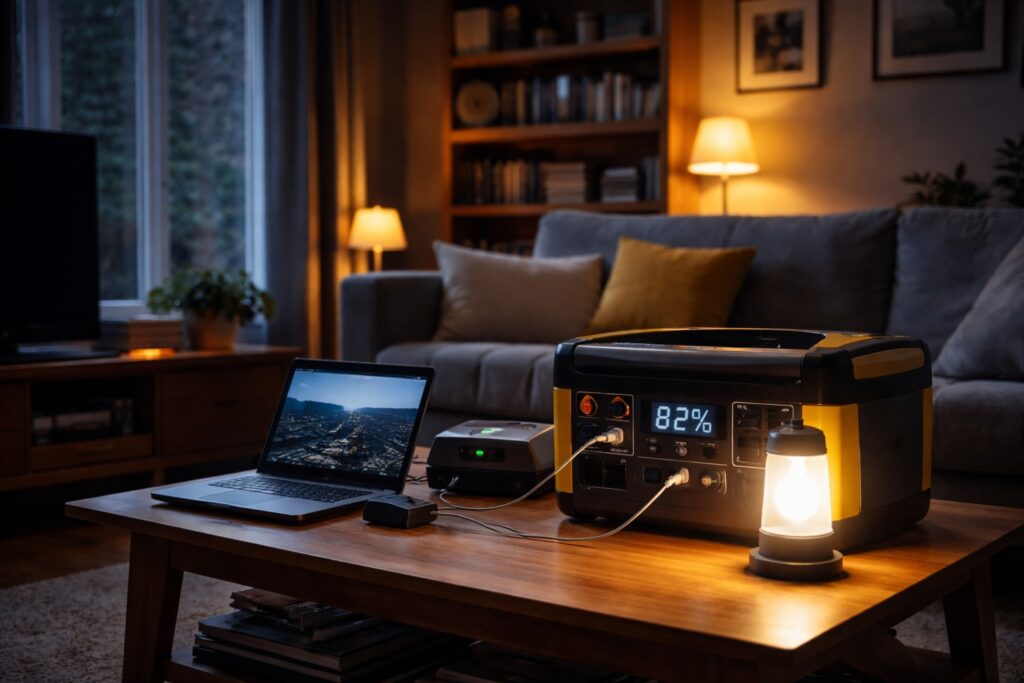
What “Emergency Power” Really Means for UK Households in 2026
Understanding what emergency power really means in the UK requires looking beyond marketing slogans and headline battery numbers. In 2026, emergency power is no longer a niche solution for extreme situations — it has become a practical layer of everyday resilience for households dealing with short, unpredictable, and increasingly frequent power disruptions.
At its core, emergency power is about maintaining continuity when the mains electricity fails. That continuity may mean staying connected to the internet, keeping essential devices charged, or avoiding disruption to work, communication, or daily routines. Crucially, emergency power is not a single product category — it is a range of solutions designed for different scenarios, each with its own strengths and limitations.
Emergency Power vs Backup Power – Understanding the Difference
One of the most common points of confusion for UK households is the difference between emergency power and backup power. While the terms are often used interchangeably, they describe two fundamentally different approaches to dealing with power cuts.
Backup power systems, such as UPS units, are designed for instant response. They switch on automatically the moment mains power is lost and are typically used to protect always-on devices like routers, modems, or networking equipment. Their strength lies in preventing interruption, but they usually offer limited runtime and device flexibility.
Emergency power solutions work differently. They are active systems that are switched on when needed and provide portable, flexible power for a wider range of devices. Emergency power stations and power banks are designed to support phones, laptops, lighting, radios, and other essential electronics for longer periods during an outage.
If you want a deeper comparison between these two approaches, this distinction is explained in detail in our guide on emergency power vs backup batteries explained, which breaks down when each solution makes sense in real UK conditions.
Why Emergency Power Is About Scenarios, Not Marketing Claims
In real-world UK use, the effectiveness of emergency power depends far more on how and where it is used than on headline specifications. Marketing often focuses on maximum output or battery size, but these figures mean very little without context.
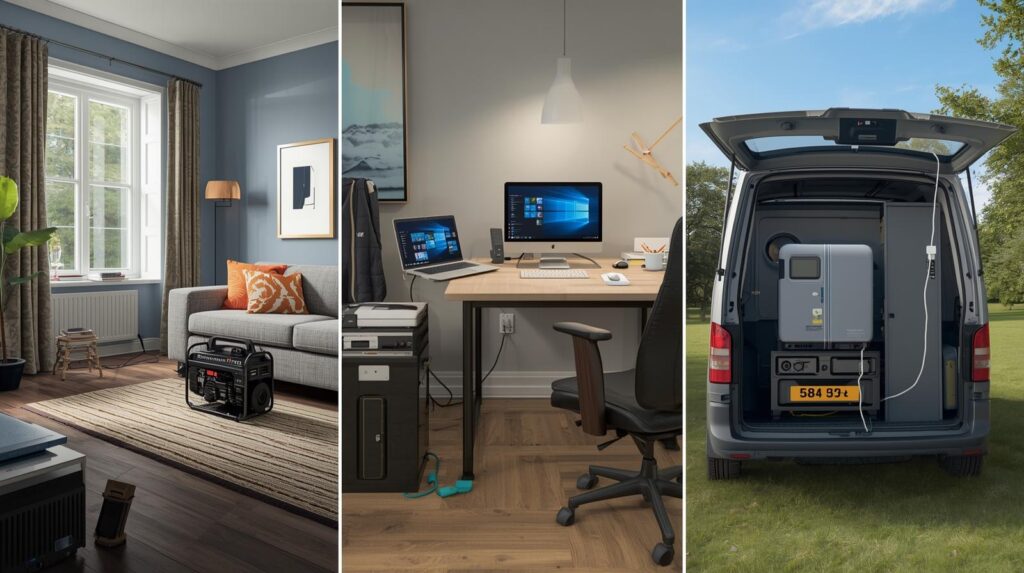
For example, the emergency power needs of a small flat are very different from those of a detached house with a home office. Similarly, powering a router and a laptop during a short outage requires a completely different solution than dealing with a vehicle-related emergency while travelling.
Typical UK emergency power scenarios include:
- flats and terraced houses needing basic connectivity and lighting
- houses requiring multi-device support during longer outages
- home offices where internet and productivity must remain online
- vehicles and travel situations where mobility and speed matter
Each scenario benefits from a different type of emergency power solution. Understanding your most likely use case helps avoid overspending on unnecessary capacity or choosing a device that is too limited to be useful when it matters.
How Much Emergency Power Capacity Do You Really Need?
One of the most confusing aspects of choosing emergency power in the UK is understanding how much capacity is actually needed for real-world use. Battery size is often presented as the most important factor, but in practice, capacity alone does not determine whether an emergency power solution will perform well during a power cut.
What matters far more is how capacity translates into runtime, which devices are prioritised, and how long typical UK power cuts actually last. Understanding these relationships helps avoid both underpowered setups and unnecessary overspending.
Emergency Power Capacity Explained – What Wh Numbers Actually Mean
Emergency power capacity is usually measured in watt-hours (Wh), but this number is often misunderstood. Watt-hours indicate how much energy a battery can store, not how much power it can deliver at once or how long it will last in every situation.
In real terms, Wh tells you:
- how long devices can run at a given load
- how many devices can be powered sequentially or simultaneously
- how much flexibility you have during an outage
A common mistake is assuming that higher Wh automatically guarantees better emergency power. In reality, inefficient usage, powering unnecessary devices, or misunderstanding device consumption can quickly drain even a large battery.
Another frequent error is ignoring conversion losses. Emergency power stations lose some energy when converting stored battery power into usable AC electricity. This means the usable runtime is always slightly lower than the headline capacity suggests.
Understanding Wh as a runtime resource, not a performance guarantee, is essential when choosing emergency power for UK homes.
For readers considering a portable power station as part of an emergency setup, our guide to choosing the right portable power station size explains how to match capacity and output to real devices.
Emergency Power Runtime vs Device Priority
When the mains power goes out, runtime becomes more important than peak output. Most UK households do not need to power high-wattage appliances during outages — they need to prioritise essential devices.
Typical emergency power priorities include:
- keeping the router and modem online
- charging phones and laptops
- running LED lighting for safety and comfort
These devices consume relatively little power, but they often need to run for several hours. This is why emergency power runtime, rather than maximum wattage, determines how effective a setup will be.
Many households make the mistake of focusing on maximum output instead of planning which devices matter most. A smaller emergency power unit used efficiently can outperform a larger system that is poorly managed or overloaded early in an outage.
Emergency Power for Short vs Longer UK Power Cuts
Emergency power needs vary significantly depending on how long power cuts typically last in your area. In the UK, most outages fall into a few common categories.
For short power cuts lasting 30–90 minutes, emergency power is often used to:
- keep internet connectivity active
- prevent work disruption
- maintain lighting and phone charging
In these cases, compact or core emergency power solutions are usually sufficient.
For longer outages lasting 3–6 hours, runtime becomes critical. Emergency power must support multiple devices over extended periods without constant monitoring or device rotation. Profit-level emergency power solutions often perform better here due to increased capacity and flexibility.
For areas experiencing repeated or unpredictable outages, the ability to recharge efficiently and manage power consumption becomes just as important as raw capacity. Households in these situations benefit from emergency power solutions that offer multiple charging options and predictable runtime behaviour.
Matching emergency power capacity to realistic outage patterns is one of the most effective ways to build a reliable and stress-free backup setup.
Real-World Emergency Power Performance – What Actually Matters
When choosing emergency power for a UK household, real-world performance matters far more than headline specifications. Output numbers, charging speeds, and feature lists often look impressive on paper, but only a few factors truly determine how useful an emergency power solution will be during an actual power cut.
In everyday UK conditions, the most effective emergency power setups are those that deliver predictable power, recharge reliably, and are easy to deploy quickly when the mains goes out. Understanding what genuinely matters helps avoid frustration and unrealistic expectations.
🔹 H3: Emergency Power Output and Device Compatibility
Emergency power output is often misunderstood. Many buyers focus on maximum wattage, assuming higher output automatically means better performance. In reality, device compatibility is far more important than raw power.
Most emergency power use cases in the UK involve:
- routers and modems
- laptops and monitors
- phones and tablets
- LED lighting and small electronics
These devices typically require stable, low-to-moderate power rather than high output. This is why AC and USB outputs play different roles. USB ports are ideal for phones and tablets, while AC outlets are necessary for routers, laptops, and office equipment.
A common mistake is expecting emergency power to run high-wattage appliances such as kettles, heaters, or microwaves. These devices draw far more power than portable emergency power solutions are designed to handle and can drain batteries rapidly or trigger overload protection. In practical terms, kettle ≠ emergency power, and planning around this limitation leads to far better results.
Emergency Power Charging and Recharging in the UK
How an emergency power solution is recharged is just as important as how it delivers power. During repeated or extended outages, recharging flexibility becomes a critical factor.
In the UK, the most common recharging methods include:
- mains charging, which is the fastest and most reliable between outages
- car charging, useful during travel or when home power is unavailable
- solar charging, which can extend runtime during longer disruptions
Solar charging, in particular, is often surrounded by unrealistic expectations. While it can be valuable for topping up batteries or extending runtime, UK weather conditions mean it should be viewed as a supporting option, not a guaranteed primary power source. Emergency power solutions perform best when solar input is treated as a bonus rather than a promise of full recharge during overcast days.
Emergency Power Portability and Everyday Usability
Portability is one of the most overlooked aspects of emergency power performance. A powerful device that is difficult to move, slow to deploy, or awkward to store often ends up being underused.
In real UK households, effective emergency power should be:
- light enough to move between rooms
- compact enough to store in cupboards or home offices
- quick to switch on without setup or configuration
Emergency power is often needed unexpectedly and under mild stress. Devices that require minimal handling and intuitive operation are far more likely to be used efficiently during an outage. Everyday usability — not just technical performance — plays a major role in whether emergency power actually delivers value when it matters.

Choosing the Right Emergency Power Solution for Your Needs
Choosing the right emergency power solution is not about finding a single “best” device — it is about matching the solution to how you actually experience power cuts in the UK. Different households face different risks, outage lengths, and priorities, which is why emergency power works best when it is selected by use case, not by headline specifications.
When exploring different Emergency Power solutions, it helps to think in terms of practical tiers rather than brands or marketing labels. These tiers reflect how much runtime, flexibility, and resilience you realistically need during power cuts.
🔹 Core Emergency Power – Everyday Preparedness
Core emergency power solutions are designed for short to moderate power cuts where the priority is maintaining connectivity, charging devices, and providing basic lighting. This category suits most UK households, particularly flats and terraced homes, where outages are typically limited in duration.
Core emergency power works best for:
- keeping routers and modems online
- charging phones, tablets, and laptops
- powering LED lighting and small electronics
These solutions strike a balance between portability, runtime, and cost, making them ideal for everyday preparedness without unnecessary complexity.
🔹 Profit Emergency Power – Longer Runtime and Multi-Device Support
Profit-level emergency power solutions are intended for households that experience longer or more disruptive power cuts, or where multiple essential devices must remain powered at the same time. This includes home offices, remote workers, and households that want fewer compromises during outages.
Profit emergency power is best suited for:
- extended outages lasting several hours
- running multiple devices simultaneously
- maintaining productivity and communication during longer disruptions
These solutions offer greater capacity and flexibility while remaining portable and practical for home use, without stepping into full whole-home backup systems.
Emergency Power Alternatives – Specific Use Cases
Not every emergency power need requires a full power station. In some scenarios, alternative solutions provide better results when used alongside core or profit emergency power.
Common alternatives include:
- backup batteries (UPS) for instant router and network protection
- vehicle emergency power for roadside and travel-related situations
- high-capacity power banks for personal devices and mobility
These alternatives work best as targeted tools rather than complete emergency power solutions. Many UK households achieve the most reliable results by combining one of these alternatives with a core or profit emergency power setup.
By choosing emergency power based on realistic scenarios — rather than maximum capacity or marketing claims — households can build a setup that delivers reliable performance, manageable cost, and genuine peace of mind during power cuts.
Emergency Power – UK Buyer – Frequently Asked Questions
How do I know which emergency power solution is right for my UK home?
The right emergency power solution depends on how you experience power cuts, not on technical specifications alone. Start by identifying what you actually need to keep running during an outage. For most UK households, this includes internet connectivity, phones, laptops, and basic lighting rather than high-wattage appliances.
If you live in a flat or terraced house and usually experience short power cuts, a core emergency power solution is often sufficient. For longer outages, home offices, or situations where multiple devices must stay powered at the same time, profit-level emergency power provides greater flexibility and runtime. Matching the solution to your most likely scenario is far more effective than buying the largest battery available.
Is emergency power safe to use indoors in UK homes?
Yes. Modern emergency power solutions are designed specifically for safe indoor use. Unlike petrol or diesel generators, emergency power stations and power banks produce no fumes, no emissions, and no carbon monoxide, making them suitable for use in living rooms, bedrooms, and home offices.
Quality emergency power devices include built-in safety systems such as overload protection, temperature control, and short-circuit protection. As long as the device is used according to manufacturer guidelines, emergency power is one of the safest backup options available for UK households during power cuts.
How long will emergency power actually last during a power cut?
Emergency power runtime depends on three main factors: battery capacity, the number of devices connected, and how much power those devices consume. In real-world UK use, powering a router, charging phones, and running LED lighting can often be sustained for several hours even with modest emergency power capacity.
Short outages of 30–90 minutes are easily covered by most core emergency power solutions. Longer outages lasting 3–6 hours benefit from higher-capacity or profit-level emergency power, which reduces the need to rotate devices or shut down non-essential equipment. Planning device priority has a bigger impact on runtime than raw battery size alone.
Can emergency power replace a backup battery (UPS)?
Emergency power and backup batteries serve different purposes and work best together rather than as replacements. A backup battery (UPS) provides instant switchover for always-on devices like routers and modems, preventing even a brief interruption. However, UPS systems usually offer limited runtime and device support.
Emergency power solutions are designed for flexibility and longer runtime, allowing you to power multiple devices during extended outages. Many UK households combine a UPS for instant protection with emergency power for sustained backup, creating a more resilient and stress-free setup.
Is solar charging realistic for emergency power in the UK?
Solar charging can be a useful supplement for emergency power in the UK, but it should be viewed realistically. While solar panels can help extend runtime or recharge batteries during longer outages, UK weather conditions mean solar input is often inconsistent.
Emergency power solutions perform best when solar charging is treated as a supporting option rather than a guaranteed primary power source. For most households, mains charging remains the most reliable method, with car and solar charging providing additional flexibility when needed.
Is emergency power worth it if power cuts in my area are rare?
Yes — because emergency power is increasingly used for convenience and continuity, not just rare emergencies. Even infrequent power cuts can disrupt work, communication, smart home systems, or medical and accessibility devices.
In 2026, many UK households use emergency power to stay connected during brief outages, protect home office productivity, and reduce stress when the mains power fails unexpectedly. A modest emergency power setup often pays for itself in reliability and peace of mind long before a major outage ever occurs.
Conclusion: Choosing Emergency Power That Actually Works for Your Situation
Choosing the right emergency power solution in the UK is ultimately about understanding your own situation, not chasing the biggest battery or the most impressive specifications. As this guide has shown, real-world performance depends far more on how long power cuts last, which devices you need to keep running, and how quickly and easily a solution can be deployed when the mains power goes out.
For many households, emergency power is not about extreme blackouts or powering household appliances. It is about staying connected, keeping essential devices running, and reducing disruption during short to medium-length outages that are becoming increasingly common across the UK. Matching capacity, runtime, and portability to realistic scenarios leads to better reliability, lower cost, and far less frustration during actual power cuts.
Whether you need a compact solution for basic connectivity, a higher-capacity option for longer outages and home office use, or targeted alternatives such as backup batteries or vehicle emergency power, the key is choosing with intention rather than assumptions.
If you are ready to compare options and find a setup that fits how you actually live and work, exploring different Emergency Power solutions by real-world use case is the most effective next step.