Heating Solutions for UK Homes – Efficient Electric Heaters Compared
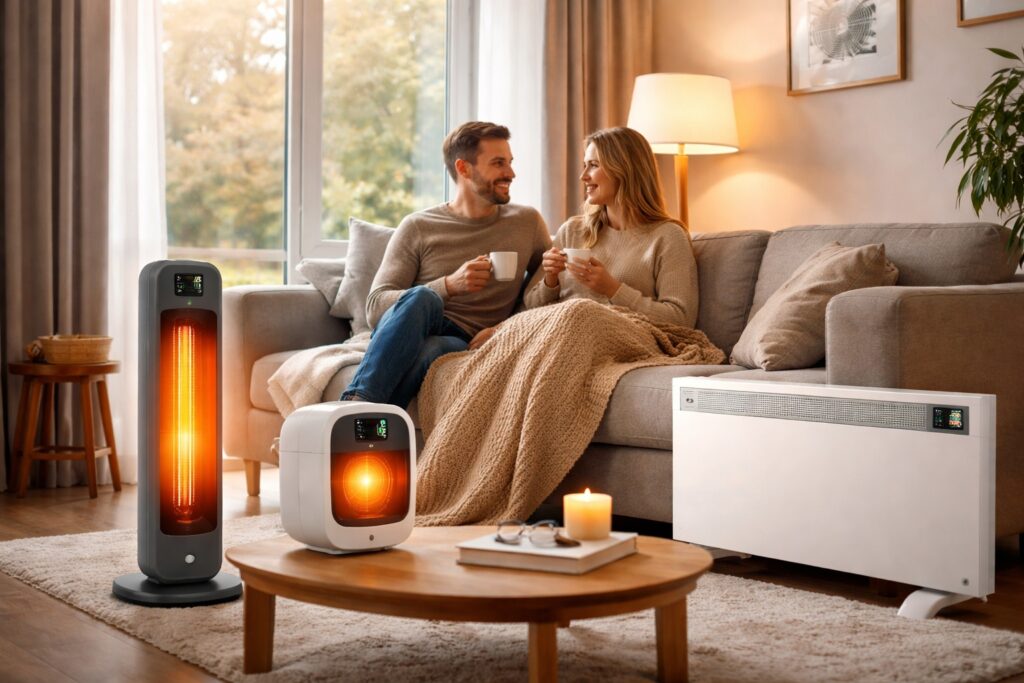
Heating solutions have become an increasingly important consideration for UK households, particularly as colder seasons place greater demands on comfort, convenience and household energy usage. While central heating remains the primary source of warmth in most homes, it is not always the most practical or cost-effective way to maintain comfortable temperatures throughout an entire property. Many UK homes experience uneven heat distribution, with certain rooms feeling cold while others are heated unnecessarily, especially when daily routines vary or only part of the home is in regular use. As a result, electric heating solutions are commonly used to supplement central heating, allowing households to focus warmth where it is actually needed — whether that is a bedroom, home office, living space or a rented property with limited heating control.
This page contains affiliate links. We may earn a commission if you make a purchase through these links, at no extra cost to you.
Below, you’ll find a side-by-side comparison of carefully selected heating solutions available in the UK, designed to suit different room sizes, property types and everyday supplementary heating needs. The products on this page are grouped into entry-level heaters for small spaces, balanced all-round options for regular use, and more advanced solutions designed for comfort-focused or higher-demand scenarios, making it easier to compare heaters based on real household use rather than marketing claims.
If you’re unsure which type of heater is best for a specific room or how supplementary heating should be used alongside central heating, our Heating Solutions Buying Guide explains how to choose the right option for UK family homes and everyday comfort needs.
Detailed Comparison of Heating Solutions for Different UK Home Heating Needs
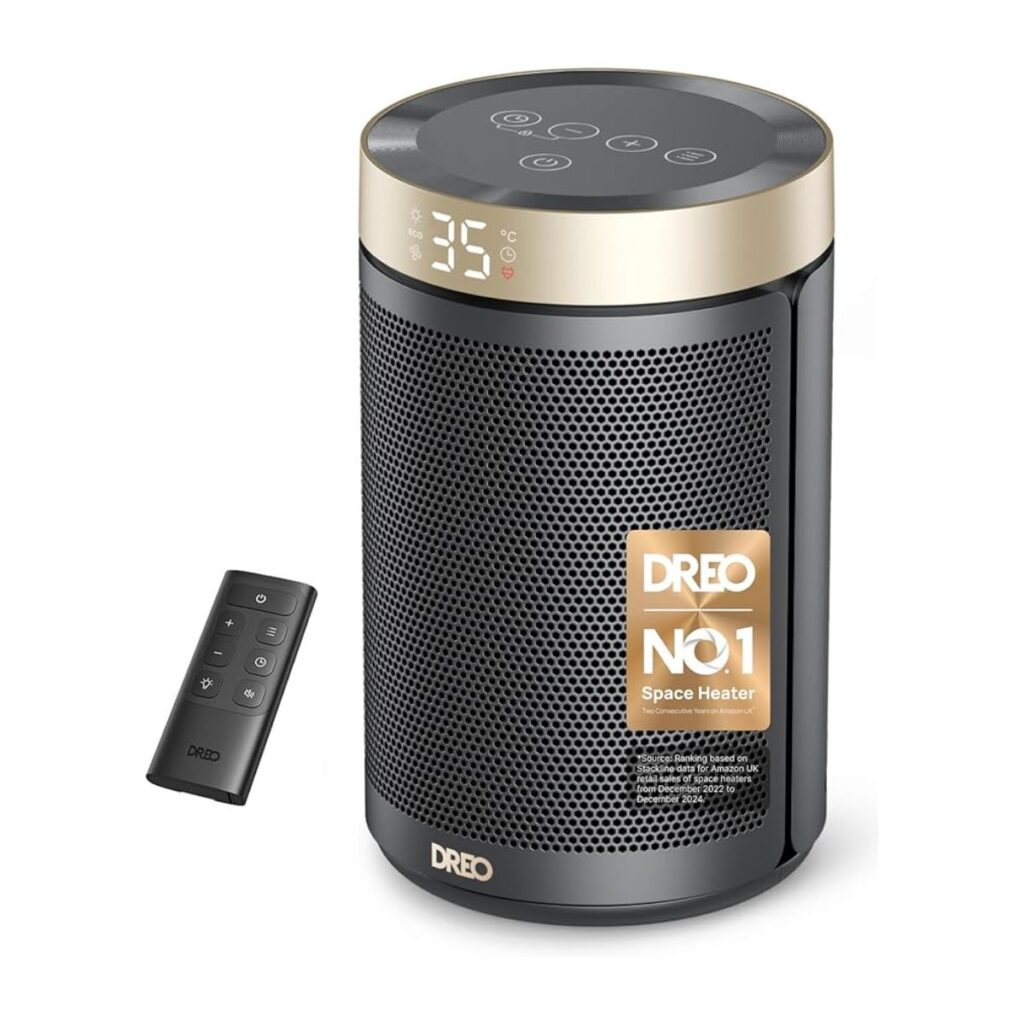
Dreo Atom 316 Electric Ceramic Heater (1500W)
Best for providing quick, targeted warmth in bedrooms, home offices, and other small rooms where flexible, on-demand electric heating is needed.
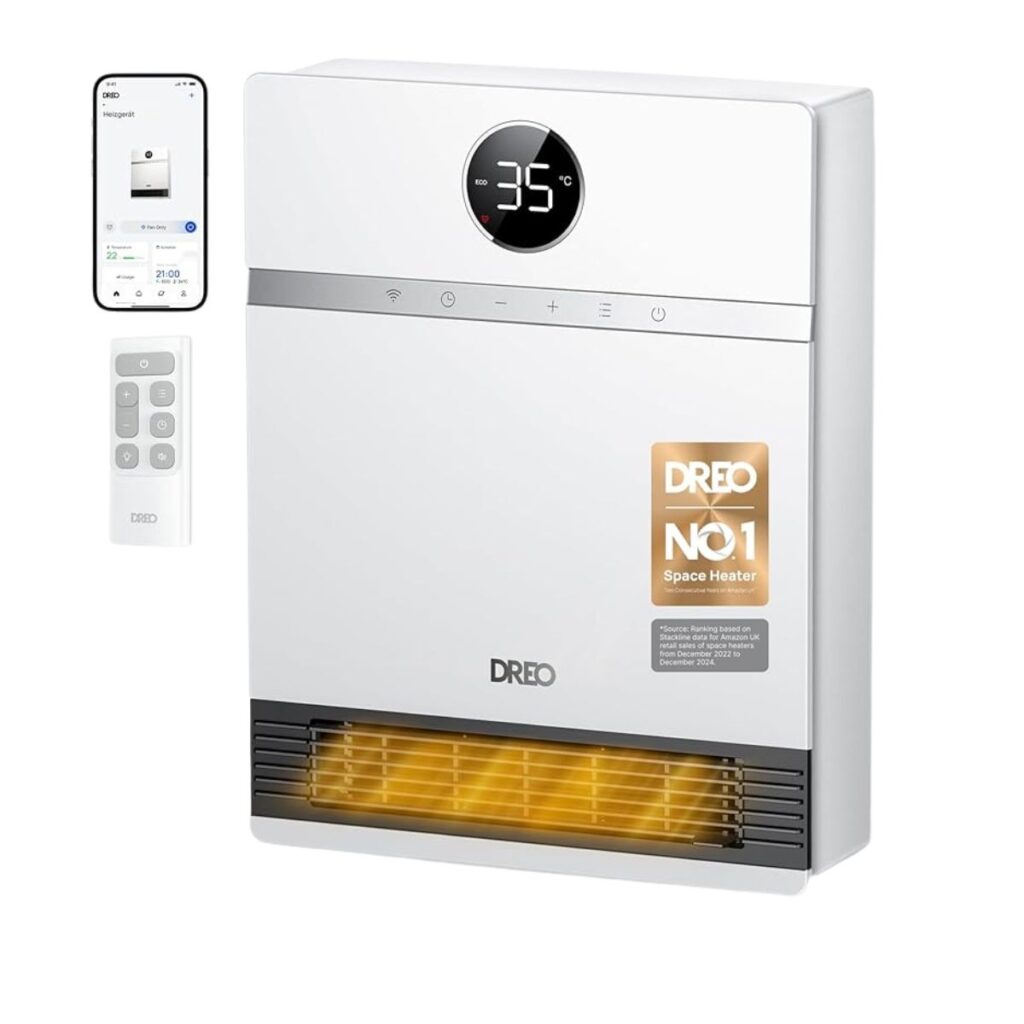
Dreo Smart Wall Mounted Electric Heater
Best for consistent, space-saving room heating in bedrooms, home offices, and living spaces where stable temperatures and everyday comfort matter.

Devola Smart WiFi Glass Panel Electric Heater (2500W)
Best for powerful, room-specific electric heating with smart control, offering steady warmth, precise temperature management and a premium wall-mounted design for modern UK homes.
Why Heating Solutions Matter in UK Homes
Heating solutions are no longer just a seasonal consideration for UK households, but an essential part of maintaining comfort and control throughout the year. With energy prices remaining high and many homes relying on a combination of central heating and electric heaters, inefficient or inflexible heating has become a common challenge rather than an exception. Poorly managed heating can affect not only household bills, but also day-to-day comfort, productivity and how well a home adapts to changing routines.
From older properties with uneven heat distribution to modern homes where only certain rooms are regularly used, many UK households struggle to maintain consistent indoor temperatures. Effective heating solutions help address these issues by allowing warmth to be applied where and when it is actually needed, reducing unnecessary heating and improving overall living conditions without relying solely on whole-house systems.
Common heating challenges in UK households
Heating-related issues in UK homes often arise from everyday usage patterns rather than obvious faults. Common problems include heating rooms that are rarely used, cold spots caused by poor heat circulation, slow warm-up times, and a lack of control over individual spaces. These challenges become especially noticeable during colder months when heating demand increases and homes remain closed for longer periods.
Without flexible heating options, energy usage can rise quickly without delivering a corresponding improvement in comfort. Supplementary electric heating solutions help address these challenges by providing targeted warmth, faster response times and greater control over specific rooms, making heating more efficient in real-life household scenarios.
Comfort, control, and everyday living conditions
Heating has a direct impact on how comfortable and manageable a home feels on a daily basis. Inconsistent temperatures can make some rooms unpleasant to use, while limited heating control can lead to overheating or unnecessary energy use. This is particularly relevant in homes with varied schedules, home offices or shared living spaces where heating needs change throughout the day.
By using appropriate heating solutions for different rooms and situations, households can achieve more stable indoor temperatures, improved comfort and better control over energy use. Whether it is maintaining warmth in a bedroom overnight or keeping a workspace comfortable during working hours, flexible heating plays a key role in supporting everyday routines.
Who benefits most from modern heating solutions
Heating solutions are suitable for a wide range of UK households and property types. Homeowners often use them to complement central heating and improve comfort in specific areas, while renters benefit from portable options that require no permanent installation. They are particularly useful for families, remote workers and households where different rooms are used at different times of the day.
These solutions are also well suited to older homes with uneven heating, properties with limited heating zones, and households looking for practical ways to improve comfort without major upgrades. From compact entry-level heaters to more advanced options designed for steady, long-lasting warmth, heating solutions can be adapted to different living situations, room sizes and budgets.
How to Choose the Right Heating Solution for Your Needs
Choosing the right heating solution involves more than simply picking the most powerful heater or the lowest-priced option. The best choice depends on how and where heating is actually needed in your home, the size and layout of the space, and how often individual rooms are used. Factors such as warm-up time, heat distribution and level of control all play a role in determining whether a heater will provide real comfort in everyday use.
Understanding these considerations early helps avoid selecting heaters that are either unsuitable for the room size, inefficient for regular use or overly complex for simple heating needs. A targeted approach leads to more consistent temperatures, better comfort and heating that aligns with real household routines rather than theoretical specifications.
Room size, usage patterns, and heating requirements
Different heating solutions are designed to suit different environments and usage patterns. Compact fan or convector heaters are often suitable for small rooms or occasional use, while oil-filled radiators and panel heaters provide steadier, longer-lasting warmth for spaces used over extended periods. Some heaters are better suited to quick heat, while others focus on maintaining a stable temperature throughout the day.
Room size, insulation levels and how frequently the space is occupied all influence which type of heater will work best. A heater that performs well in a bedroom may not be suitable for a larger living area or home office. Matching the heater type to both the room and how it is used ensures more effective heating and a better overall experience.
Ease of use, control options, and running costs
Practical usability is a key consideration for heating solutions used on a daily basis. Clear controls, adjustable thermostats and simple timer functions make it easier to manage warmth without constant manual adjustments. For some households, advanced features such as remote control or programmable schedules add convenience, while others may prefer straightforward, manual operation.
Running costs depend on heater type, wattage and usage duration rather than headline efficiency claims alone. Choosing a heater that matches the room size and intended use helps avoid unnecessary electricity consumption, particularly during colder months when heating demand is highest.
Safety features, reliability, and long-term value
Safety and build quality are essential factors when selecting a heating solution for the home. Features such as overheat protection, tip-over shut-off and stable construction contribute to safer everyday use, especially in households with children or pets. Reliability also plays a major role in long-term satisfaction.
Rather than focusing solely on power output or design, it is worth considering how consistently a heater performs over time, how well it is supported, and how suitable it is for typical UK home environments. Well-designed heating solutions offer dependable performance, practical controls and long-term value beyond the first heating season.
Detailed Comparison of the Best Heating Solutions
When comparing heating solutions, it’s important to focus on real-world performance rather than headline power ratings or feature lists alone. Factors such as how quickly a heater warms a room, how evenly heat is distributed, ease of control, noise levels and long-term reliability all play a key role in delivering genuine comfort in a typical UK home.
On paper, many electric heaters may appear similar, but their everyday performance can differ significantly. Variations in heat output consistency, thermostat accuracy, warm-up time and suitability for different room sizes often determine whether a heater feels practical and comfortable to use, or frustrating and inefficient over time.
Some heating solutions are designed for short, targeted use, such as quickly warming a small room, while others are better suited to maintaining steady temperatures over longer periods. Certain heaters prioritise portability and quick response, while others focus on silent operation and consistent background warmth. Rather than ranking products based purely on specifications or brand recognition, this comparison looks at how well each heating solution fits realistic household needs.
By comparing entry-level, balanced all-round and more advanced heating solutions side by side, it becomes easier to identify which options offer the best balance of comfort, control and value for different room types, usage patterns and living situations commonly found in UK homes.
Which Heating Solution Offers the Best Value for Money?
Value for money in heating solutions does not simply mean choosing the cheapest heater available. A well-balanced option should provide suitable heat output for the room size, operate efficiently in everyday conditions, be easy to control, and deliver reliable performance over time — without paying extra for features that offer little practical benefit in real use.
The best value choice depends on how heating is used in the home. Some households need quick, occasional warmth in a single room, while others rely on steady heating for spaces used throughout the day. Understanding whether the goal is short-term comfort, regular everyday heating, or maintaining consistent temperatures over longer periods helps identify which type of heater offers the best overall return.
Best entry-level heating solutions for simple, targeted warmth
Entry-level heating solutions are ideal for households looking to improve comfort in a specific area without a large upfront cost. These heaters are typically compact, affordable and easy to move between rooms, making them suitable for occasional use or smaller spaces.
They work best in bedrooms, small living areas or rented properties where flexibility and simplicity matter most. While they may not be designed for continuous operation in larger rooms, entry-level heaters offer good value for short heating sessions and targeted warmth when needed.
Best all-round heating solutions for everyday use
All-round heating solutions usually provide the strongest balance between comfort, control and running costs. These heaters are designed for regular use, offering more consistent heat output, improved temperature control and quieter operation compared to basic models.
For many UK households, this category represents the most practical long-term option. All-round heaters are well suited to living rooms, home offices and frequently used spaces, delivering dependable warmth without excessive energy use or unnecessary complexity.
Advanced heating solutions for steady comfort and larger spaces
Advanced heating solutions are designed for households that require longer-lasting, consistent warmth or greater control over room temperature. These heaters often focus on maintaining stable heat levels rather than rapid warm-up, making them suitable for extended use in larger rooms or throughout the day.
Although they typically involve a higher initial cost, advanced heaters can offer better comfort, quieter operation and more predictable performance over time. For users who prioritise steady warmth, improved control and long-term usability, this category often delivers the best overall value despite the higher upfront investment.
Are There Better Heating Alternatives for Specific Home Heating Needs?
While general heating solutions work well for many UK households, certain situations benefit from more targeted types of electric heaters designed for specific rooms or usage patterns. Understanding these differences makes it easier to match the right heating solution to real household needs and avoid choosing heaters that are either unsuitable for the space or unnecessarily complex.
Not every home requires a single, all-purpose heater. Selecting heating solutions based on how individual rooms are used improves comfort, keeps running costs under control and leads to more reliable, long-term results.
Heating solutions for bedrooms and low-usage rooms
Bedrooms and rooms that are not used continuously often benefit from simple, targeted heating solutions rather than powerful heaters designed for large spaces. Compact electric heaters can provide quick warmth when needed without running for long periods.
These options are particularly suitable for occasional evening or overnight use, where quiet operation, basic temperature control and ease of use matter more than high output or advanced features.
Heating solutions for homes with higher heating demand
Homes with higher heating requirements, especially during colder months, often need heaters capable of maintaining consistent warmth over longer periods. Oil-filled radiators and panel heaters are well suited to this type of use, as they provide steady heat rather than rapid bursts of warmth.
These solutions work best in living rooms, shared spaces and homes where maintaining a stable temperature throughout the day is more important than fast warm-up times.
Heating solutions for rented properties
Renters typically need portable heating solutions that do not require permanent installation or modifications to existing systems. Freestanding electric heaters offer flexibility, allowing warmth to be added where needed without affecting the property.
These options are easy to move between rooms and can be taken along when moving home, making them a practical choice for tenants who want improved comfort without committing to fixed heating upgrades.
Heating solutions for home offices and daytime use
Home offices often require consistent heating during working hours, which can increase daytime energy use if entire homes are heated unnecessarily. Room-specific heaters provide a practical way to keep a workspace comfortable without relying on whole-house heating.
Heaters designed for steady operation and precise temperature control are particularly effective for home offices, helping maintain comfort throughout the day while avoiding excess heat in unused rooms.
Heating solutions for quick warmth and short heating sessions
Some situations call for fast, temporary heating rather than continuous warmth. Portable fan or convector heaters are well suited to providing quick heat in small spaces, such as bathrooms before use or rooms that are only occupied briefly.
These heating alternatives offer immediate comfort without the need for long running times, making them a useful option for short heating sessions where speed and convenience are the priority.
Frequently Asked Questions About Heating Solutions in the UK
What type of electric heater is best for a typical UK home?
The best type of electric heater for a UK home depends largely on how the space is used rather than on headline power ratings alone. For small rooms or occasional use, compact fan or convector heaters can provide quick warmth without long running times. These are often chosen for bedrooms, guest rooms or spaces that are only used for short periods.
For rooms that are used regularly throughout the day, such as living rooms or home offices, oil-filled radiators and panel heaters are generally more suitable. They provide steadier, more consistent heat and are designed to run for longer periods without sharp temperature fluctuations. Choosing the right heater involves matching the heater type to room size, usage duration and the level of comfort required rather than simply selecting the most powerful model.
Are electric heaters expensive to run in the UK?
Electric heater running costs depend on several factors, including wattage, how long the heater is used, room size and insulation quality. A high-wattage heater used continuously in a poorly insulated room will naturally cost more to run than a correctly sized heater used intermittently in a smaller, well-insulated space.
In practice, electric heaters are most cost-effective when used as supplementary heating rather than as a replacement for whole-house systems. Heating only the rooms in use, for limited periods, often results in lower overall costs compared to running central heating throughout the entire property. Careful usage, combined with appropriate heater selection, plays a larger role in running costs than wattage figures alone.
Which heating solutions are best for bedrooms?
Bedrooms typically benefit from heating solutions that prioritise quiet operation and stable temperatures. Oil-filled radiators and panel heaters are often preferred because they provide gentle, consistent warmth without noticeable noise or rapid temperature swings. These features are particularly important for overnight use.
For occasional bedroom heating, smaller electric heaters may be sufficient, but they are better suited to short sessions rather than all-night operation. When choosing a bedroom heater, factors such as noise level, thermostat accuracy and safety features should take priority over fast heat output.
Are portable heaters safe to use at home?
Portable electric heaters are generally safe when used correctly and when basic safety guidelines are followed. Modern heaters typically include features such as overheat protection, tip-over shut-off and stable bases designed to reduce risk during everyday use.
Safety largely depends on placement and usage. Heaters should always be kept clear of furniture, curtains and bedding, and should be used on stable, flat surfaces. Choosing a heater with appropriate safety features and using it as intended makes portable heating a safe and practical option for many UK households.
Can electric heaters replace central heating?
Electric heaters are not usually intended to replace central heating entirely, particularly in larger UK homes. Instead, they are most effective as supplementary heating solutions, allowing warmth to be added where and when it is needed.
In some situations, such as small flats, home offices or properties with limited heating control, electric heaters can play a more significant role. However, for whole-house heating over extended periods, central heating systems remain more practical. Electric heaters work best when used strategically alongside existing systems to improve comfort and control.
Which heating solutions are suitable for rented properties?
Renters often require heating solutions that do not involve permanent installation or modifications to the property. Portable electric heaters are well suited to this need, as they can be used immediately and moved between rooms as required.
These heaters allow tenants to improve comfort without affecting existing heating systems or breaching rental agreements. Their portability also means they can be taken to a new property when moving, making them a flexible and practical choice for rented homes.
How do I choose the right heater size for my room?
Choosing the correct heater size involves considering both room dimensions and how the space is used. A heater that is too small may struggle to maintain comfortable temperatures, while an oversized heater can lead to unnecessary energy use.
Room size, ceiling height, insulation quality and intended usage duration all play a role. As a general rule, smaller rooms require lower output heaters, while larger or frequently used spaces benefit from heaters designed for steady, sustained warmth. Matching heater capacity to room requirements ensures better comfort and more efficient operation.
What features should I prioritise when buying an electric heater?
The most important features depend on how the heater will be used. Adjustable thermostats help maintain consistent temperatures, while timers and simple controls improve everyday usability. Noise level, safety features and build quality are also key considerations.
Rather than focusing solely on advanced features, it is worth prioritising reliability, ease of use and suitability for the intended room. A well-matched heater with practical controls often delivers better long-term satisfaction than a more complex model that is poorly suited to everyday needs.
How Heating Solutions Fit into a Smarter, More Resilient Home
Heating solutions rarely function in isolation within UK homes. In practice, they form part of a broader approach to comfort, resilience and everyday living, where heating, energy usage, air quality and seasonal conditions all influence how a home performs throughout the year. How heat is generated, distributed and controlled has a direct impact on both comfort and the effectiveness of other home systems.
Heating is closely connected with Home Air Quality, as temperature control and airflow play a key role in indoor conditions. Poorly balanced heating can lead to stale air, uneven temperatures or excess humidity, particularly during colder months when homes remain closed for longer periods. When heating solutions are chosen with airflow and room usage in mind, indoor spaces tend to feel more comfortable, stable and easier to manage on a daily basis.
Reliable heating also depends on consistent access to power. During colder seasons or periods of unstable weather, even short interruptions can affect comfort. This is where Emergency Power solutions become relevant, helping maintain essential heating controls, circulation devices or supplementary heaters when the main supply is disrupted, reducing sudden drops in temperature and household disruption.
Heating choices also overlap with wider energy planning. Many households explore Home Energy Efficiency solutions alongside heating upgrades to better manage when and where warmth is used. Improving heating control, reducing unnecessary run times and matching heater types to room usage all contribute to more predictable energy use and improved comfort without relying solely on whole-house systems.
In addition, heating solutions often intersect with portable energy options. Supplemental heaters, controls and related devices still rely on electricity, and some households value flexibility beyond fixed installations. If you are considering flexible or backup power options to support everyday home systems, the Portable Power Stations category offers an overview of solutions designed for temporary or supplemental use.
Finally, heating plays an important role in moisture control. Poorly managed heat and ventilation can contribute to condensation and damp, particularly in UK homes during colder months. Addressing heating alongside airflow and humidity management creates a more stable indoor environment. Our Dehumidifiers buying guides focus on practical ways to reduce excess moisture and complement effective heating and air quality strategies.
By viewing heating solutions as part of a connected home setup — alongside air quality, emergency power, energy efficiency, portable power and moisture control — it becomes easier to build a home environment that supports comfort, resilience and long-term usability, rather than treating each issue in isolation.
Choosing the right heating solution ultimately comes down to understanding your property, everyday routines and how individual rooms are actually used throughout the home. Whether the goal is improving comfort in a single space, maintaining steady warmth during the day, or addressing ongoing issues such as cold spots or uneven temperatures, selecting the right balance of heat output, control and running costs makes a noticeable difference in everyday living.
By focusing on real-world performance, practical features and long-term usability — rather than headline power ratings or technical specifications alone — it becomes much easier to choose heating solutions that genuinely suit both your home and your budget. A well-matched heating setup not only improves comfort and control, but also supports a more predictable, flexible and resilient home environment over time.