Improving home air quality in the UK has become an increasingly important part of everyday living, especially as modern homes grow more airtight and people spend more time indoors. Whether you live in a city flat, a family house, or a rented property, the air inside your home is influenced by daily activities, seasonal changes, and how well your living space manages ventilation and moisture.
Unlike outdoor air, which naturally disperses pollutants, indoor air can trap dust, odours, humidity, and fine particles for long periods. Cooking, cleaning products, pets, home working, and limited airflow all contribute to gradual air quality decline. Over time, this can affect comfort, concentration, and how pleasant your home feels on a day-to-day basis.
In the UK, these challenges are amplified by the climate. Cold winters discourage window ventilation, wetter seasons increase humidity, and urban environments often introduce outdoor pollution that makes fresh air less appealing. As a result, many households look for practical ways to improve indoor air without relying on constant window opening.
This guide explores how to improve home air quality naturally and with devices, focusing on realistic, everyday solutions rather than quick fixes or marketing promises. By understanding when natural methods are enough — and when additional support makes sense — you can build a more comfortable and balanced indoor environment that works year-round in real UK conditions.
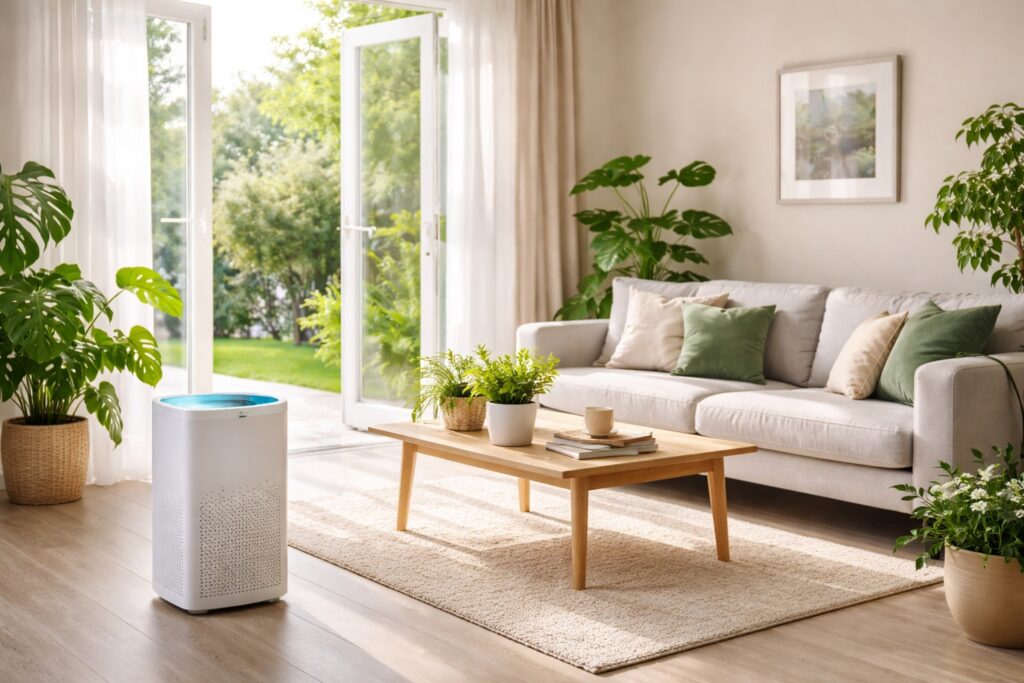
Natural Ways to Improve Home Air Quality in UK Homes
When looking at natural ways to improve home air quality in UK homes, most solutions focus on reducing indoor pollutants and encouraging cleaner airflow without relying on electrical devices. These methods form the foundation of good indoor air habits and are often the first step households take when trying to improve everyday comfort.
While natural approaches can be effective, their impact depends heavily on consistency, weather conditions, and how the home is used on a daily basis.
Ventilation, Airflow, and Fresh Air in the UK Climate
Ventilation is one of the most common natural methods for improving indoor air quality. Opening windows allows stale air to escape and fresh air to enter, helping dilute indoor pollutants such as odours, moisture, and fine particles generated by everyday activities.
In the UK climate, however, ventilation is not always straightforward. Cold winters, rain, wind, and high heating costs often limit how long windows can remain open. As a result, ventilation tends to be brief and inconsistent, providing only temporary improvement rather than long-term stability.
For best results, short but regular ventilation periods are often more practical than leaving windows open for extended periods. This approach helps refresh indoor air while minimising heat loss during colder months.
Reducing Indoor Air Pollution from Everyday Activities
Many sources of poor indoor air quality come from daily habits rather than external factors. Cooking, especially frying or grilling, releases airborne particles and odours that linger long after meals are finished. Cleaning products, candles, and air fresheners can also introduce fine particles and chemicals into the air.
Simple behavioural changes can make a noticeable difference. Using extractor fans during cooking, closing doors to limit airflow between rooms, and choosing low-odour or unscented household products all help reduce the amount of pollution introduced indoors.
Pet ownership is another factor. Pet hair, dander, and odours accumulate gradually, particularly in enclosed spaces. Regular cleaning and grooming help, but they do not fully remove airborne particles once they are suspended in the air.
Where Natural Methods Reach Their Limits
Natural methods work best when conditions allow regular airflow and when indoor pollution levels remain relatively low. In modern UK homes that are well insulated and tightly sealed, airborne particles can build up faster than natural ventilation can remove them.
This is especially noticeable in bedrooms, home offices, and shared living spaces used for many hours each day. In these environments, natural methods alone often struggle to maintain consistently good air quality, which is why many households begin to consider additional support from dedicated devices.
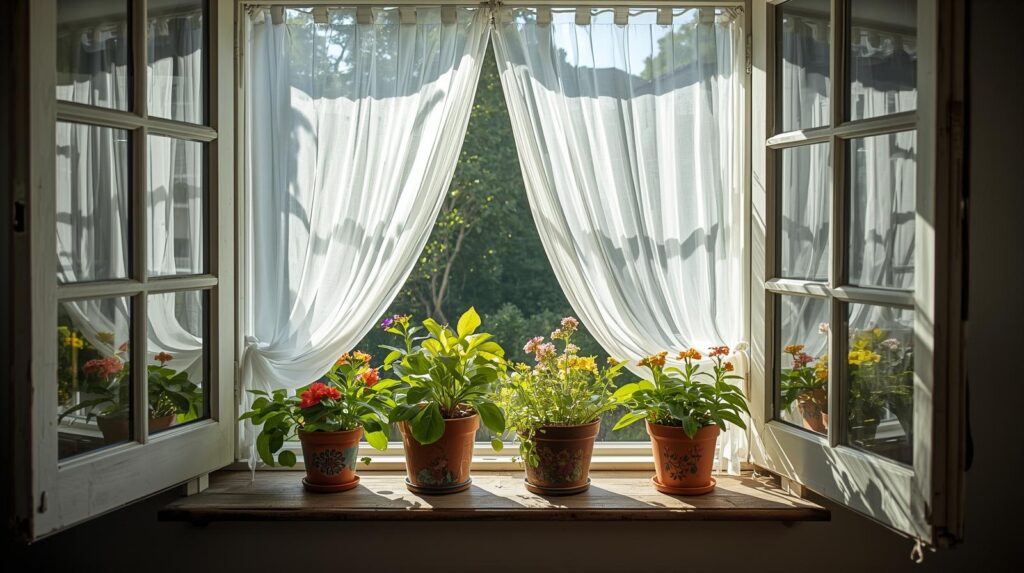
Managing Humidity and Moisture for Better Indoor Air Quality in UK Homes
Managing humidity and moisture is a crucial but often overlooked part of improving home air quality in UK homes. While ventilation helps exchange air, moisture control determines how comfortable, fresh, and stable indoor air feels over time. In the UK’s damp climate, excess humidity is one of the main reasons indoor air quality deteriorates, especially during colder and wetter months.
Moist air holds onto odours and particles more easily, making rooms feel stuffy even when they appear clean. Over time, unmanaged humidity can lead to condensation on windows, lingering musty smells, and a general feeling of poor air freshness throughout the home.
How Damp and Condensation Affect Indoor Air Quality
Condensation forms when warm indoor air meets cold surfaces, such as windows and external walls. This is common in UK homes during winter, particularly in bedrooms, bathrooms, and kitchens. When condensation becomes frequent, it increases indoor humidity levels and creates an environment where air quality declines more quickly.
High humidity does not just affect comfort — it also allows airborne particles to remain suspended longer. Dust, pet-related particles, and everyday pollutants linger in the air rather than settling or being removed naturally. As a result, rooms can feel heavy and stale even with occasional ventilation.
Everyday Sources of Excess Moisture in UK Homes
Moisture enters indoor air through normal daily activities. Cooking, showering, drying clothes indoors, and even breathing all contribute to rising humidity levels. In well-insulated homes, this moisture has fewer escape routes, especially when windows remain closed for long periods.
Bathrooms and kitchens are the most obvious problem areas, but bedrooms and living rooms can also accumulate moisture over time — particularly overnight or in homes with limited airflow. Without consistent moisture management, indoor air quality can gradually decline across the entire property.
Why Moisture Control Is a Key Part of Home Air Quality
Improving home air quality naturally is difficult without addressing humidity. Even regular ventilation may not be enough during colder months when windows cannot stay open. In these situations, moisture control becomes a foundation for better indoor air rather than an optional extra.
By keeping humidity at a balanced level, indoor air feels lighter, odours dissipate more easily, and airborne particles are less persistent. This creates a more stable base for other air quality improvements, whether natural methods or additional devices are used later.
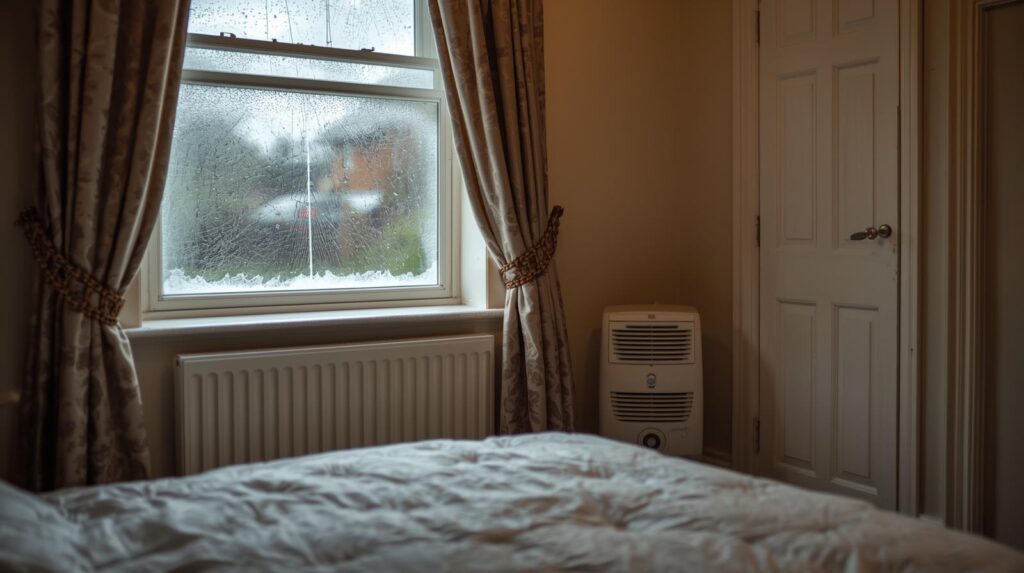
Devices That Improve Home Air Quality – What Actually Works in UK Homes
When natural methods reach their limits, many households start looking at devices that improve home air quality as a practical next step. In UK homes, this usually happens when ventilation is inconsistent, humidity becomes difficult to manage, or indoor air feels stale despite regular airing and cleaning.
Air quality devices are not designed to replace good habits such as ventilation or moisture awareness. Instead, they support and stabilise indoor conditions when everyday activities and environmental factors make natural methods less effective.
Why Devices Matter in Modern UK Homes
Modern UK homes are built to retain heat and improve energy efficiency. While this helps reduce heating costs, it also limits natural airflow. As a result, airborne particles generated indoors — dust, pet dander, cooking particles, and odours — can remain trapped for longer periods.
Devices designed for air quality improvement work continuously rather than occasionally. This allows them to address gradual air quality decline rather than reacting only when problems become noticeable. For many households, this consistency is what makes the biggest difference.
Types of Devices That Support Better Indoor Air Quality
Several types of devices play a role in improving indoor air quality, each addressing a different aspect of the problem. Air purifiers focus on filtering airborne particles and maintaining cleaner air in frequently used rooms. Dehumidifiers help manage moisture levels, which supports air freshness and comfort. In some homes, ventilation systems or extractor fans provide targeted airflow where moisture or odours are most concentrated.
The key is understanding that no single device solves every issue. The most effective setups combine devices with everyday habits, allowing each element to support the others rather than working in isolation.
When Devices Become a Practical Necessity
Devices become particularly useful during colder months, allergy seasons, or in urban environments where outdoor air quality is unpredictable. In these conditions, relying solely on open windows is often impractical or counterproductive.
By adding the right devices to the right rooms, households can maintain more stable indoor air quality without constant adjustments. This approach is especially valuable in bedrooms, home offices, and shared living spaces where comfort and consistency matter most.

Air Purifiers and Home Air Quality – When Devices Make the Biggest Difference in the UK
Among the devices that improve home air quality in the UK, air purifiers are often the most noticeable upgrade when natural methods no longer deliver consistent results. Their main advantage lies in continuous filtration — removing airborne particles steadily rather than relying on short bursts of fresh air.
Air purifiers are particularly effective in rooms where people spend long, uninterrupted periods of time. Bedrooms, living rooms, and home offices benefit most, as airborne particles gradually accumulate through normal daily activity even when the home appears clean.
How Air Purifiers Improve Indoor Air Quality in UK Homes
Air purifiers work by pulling indoor air through multi-stage filtration systems that capture fine particles such as dust, pollen, pet dander, and everyday airborne pollution. Instead of exchanging air with the outdoors, they focus on cleaning the air already inside the home.
This makes them especially useful in UK conditions where outdoor air quality is unpredictable or windows cannot remain open for long. During winter, allergy seasons, or in urban environments, air purifiers provide a stable way to maintain cleaner indoor air without sacrificing comfort or energy efficiency.
Air Purifiers vs Ventilation – Understanding the Difference
A common question is whether air purifiers replace ventilation. In practice, they serve different roles. Ventilation refreshes air and manages moisture, while air purifiers maintain cleanliness and stability over time.
For a deeper comparison of how these two approaches perform under real UK conditions, you can explore our detailed guide on air purifiers vs ventilation in the UK, which breaks down when each solution works best and how they complement one another.
When Air Purifiers Deliver the Most Value
Air purifiers deliver the most value when used consistently rather than occasionally. Running a purifier daily in key rooms helps prevent gradual air quality decline instead of reacting to it after problems appear.
They are especially beneficial for households with pets, home working setups, or limited ventilation options. In these environments, air purifiers help maintain a more predictable indoor atmosphere that feels fresher throughout the day rather than fluctuating based on window opening.

Combining Natural Methods and Devices for Better Home Air Quality in the UK
The most effective way to improve home air quality in the UK is rarely based on a single solution. Instead, it comes from combining natural methods with the right devices to create a balanced, flexible approach that works across different seasons and living conditions.
Natural habits such as ventilation, moisture awareness, and reducing indoor pollution form the foundation of good air quality. Devices then build on that foundation by providing consistency and stability when natural methods are limited or impractical.
Why a Combined Approach Works Best in Real UK Homes
UK homes face changing conditions throughout the year. In warmer months, ventilation can play a larger role, helping refresh indoor air and reduce humidity naturally. During colder, wetter periods, however, windows often remain closed for comfort and energy efficiency, allowing airborne particles to accumulate more easily.
By combining natural ventilation with devices such as air purifiers, households can adapt to these changes without compromising comfort. Short, controlled ventilation periods can be used when conditions allow, while devices maintain air quality during the rest of the day.
Choosing Devices That Support Natural Airflow
Devices should support, not replace, natural airflow. Air purifiers are most effective when placed in rooms where air quality tends to decline the fastest, such as bedrooms, living rooms, and home offices. Dehumidifiers support moisture control in areas prone to condensation, such as bathrooms or rooms where laundry is dried indoors.
Understanding which devices suit which spaces makes it easier to build a setup that feels natural rather than over-engineered.
Exploring Home Air Quality Solutions
To see how different devices fit into this combined approach, you can explore our Home Air Quality category, where solutions are grouped by room size, use case, and performance level. This makes it easier to compare natural-supportive devices rather than choosing equipment based on headline features alone.
By treating natural methods and devices as complementary rather than competing solutions, UK households can achieve more consistent indoor air quality throughout the year.
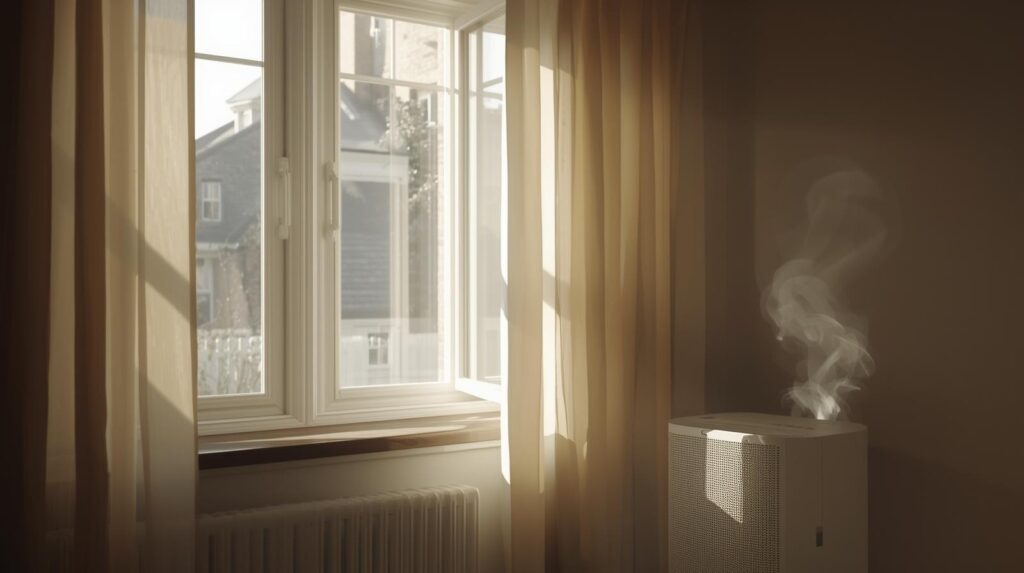
Improving Home Air Quality Room by Room in UK Homes
Improving home air quality in UK homes works best when approached room by room rather than treating the entire house as a single space. Different rooms have different usage patterns, moisture levels, and sources of indoor pollution, which means air quality solutions should be adapted accordingly.
By focusing on how each room is actually used, households can achieve better results without unnecessary complexity or cost.
Bedrooms, Living Rooms, and Home Offices
Bedrooms are one of the most important spaces for air quality improvement. Windows are often closed overnight, and airborne particles from bedding, dust, and everyday activity can build up over several hours. Improving air quality here helps maintain a fresher-feeling environment throughout the night and into the morning.
Living rooms experience fluctuating air quality due to higher occupancy, pets, and daily activity. Cooking odours drifting in, outdoor pollution entering through doors or windows, and general movement all contribute to gradual air quality decline. Consistent air cleaning in these shared spaces helps stabilise conditions rather than relying on occasional ventilation alone.
Home offices, increasingly common in UK households, benefit from steady indoor air quality during long working hours. Limited ventilation during colder months can cause air to feel stale by midday, making room-specific improvements particularly effective.
Kitchens, Bathrooms, and Shared Spaces
Kitchens and bathrooms generate higher moisture levels than other areas of the home. Cooking, boiling water, and showering release humidity and odours that quickly affect indoor air quality if not managed properly. While extractor fans help remove moisture at source, their impact is often short-lived.
Hallways and shared spaces can act as pathways for airborne particles moving between rooms. Improving airflow and controlling moisture in these areas helps prevent problems from spreading throughout the home.
By adjusting solutions room by room, households can maintain better overall air quality without over-relying on a single method or device.
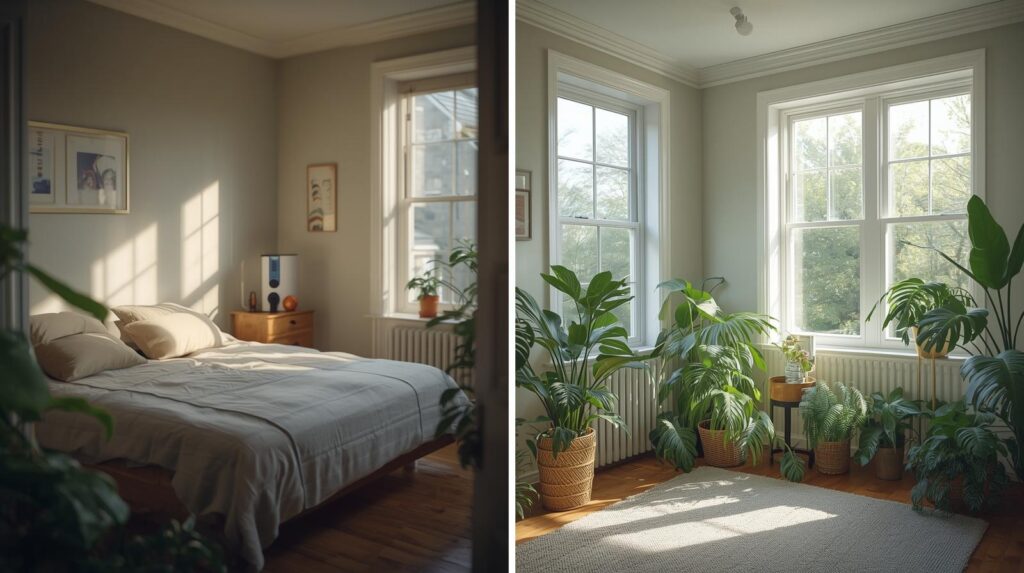
Home Air Quality in the UK in 2026 – Practical Long-Term Improvements
Looking ahead to home air quality in the UK in 2026, the focus is shifting away from quick fixes and towards practical, long-term improvements that fit everyday life. Rather than reacting to stuffy rooms or seasonal discomfort, more households are building simple routines and setups that keep indoor air consistently comfortable throughout the year.
This change is driven by a mix of factors: higher energy costs, increased time spent at home, better awareness of indoor environments, and homes that are more airtight than ever before. As a result, improving air quality is becoming part of general home management rather than a one-off upgrade.
From Occasional Fixes to Everyday Habits
One of the biggest changes is how people approach air quality over time. Instead of opening windows only when air feels stale, households are adopting more regular habits — short, controlled ventilation, better moisture awareness, and room-specific solutions that work quietly in the background.
These habits reduce the need for constant adjustments and help prevent air quality from declining in the first place. Over time, this leads to a home that feels more consistently comfortable rather than alternating between fresh and stale conditions.
Balancing Comfort, Energy Use, and Air Quality
In 2026, air quality improvements are increasingly tied to energy efficiency. Leaving windows open for long periods is no longer practical for many households, especially during colder months. Long-term solutions focus on maintaining indoor comfort while minimising heat loss and unnecessary energy use.
Devices that support air quality are now being used more strategically — not as permanent high-power appliances, but as tools that maintain balance when natural methods are limited. This approach allows homes to stay sealed and efficient while still feeling fresh.
Setting Realistic Expectations for Long-Term Results
Improving home air quality is not about achieving perfection, but about reducing everyday discomfort and maintaining stability. Long-term improvements are gradual and cumulative. Over weeks and months, consistent habits and supportive devices create an indoor environment that feels lighter, fresher, and easier to live in.
For UK households, the most successful strategies in 2026 are those that adapt to seasons, room usage, and lifestyle changes rather than relying on a single solution year-round.
Home Air Quality in the UK - Frequently Asked Questions
How can I improve home air quality naturally in the UK?
Improving home air quality naturally in the UK starts with managing airflow and reducing indoor pollution sources. Short, regular ventilation periods help refresh indoor air without causing excessive heat loss, especially during colder months. Using extractor fans while cooking or showering, limiting scented products, and keeping living spaces clean all contribute to better everyday air quality.
However, natural methods work best when conditions allow. In tightly sealed homes or during winter, their impact can be limited, which is why many households combine natural habits with supportive devices for more consistent results.
Is ventilation enough to maintain good indoor air quality?
Ventilation plays an important role, but on its own it is often not enough to maintain stable indoor air quality in UK homes. Its effectiveness depends heavily on weather, outdoor air quality, and how often windows can realistically be opened.
During cold, wet, or high-pollen periods, ventilation may be brief or avoided altogether. In these situations, indoor air can deteriorate quickly, especially in bedrooms and home offices. Ventilation works best as part of a broader approach rather than a standalone solution.
Do air purifiers really improve home air quality?
Air purifiers can significantly improve home air quality when used correctly and in the right spaces. They work by continuously filtering indoor air, removing particles that naturally accumulate throughout the day.
In UK homes, air purifiers are particularly effective in rooms where people spend long periods of time and where ventilation is limited. They are most valuable when used consistently rather than switched on only when air quality feels poor.
Which rooms benefit the most from air quality improvements?
Bedrooms, living rooms, and home offices typically benefit the most. Bedrooms often have limited ventilation overnight, allowing airborne particles to build up. Living rooms experience fluctuating air quality due to daily activity, pets, and shared use. Home offices benefit from stable air quality during long working hours.
Bathrooms and kitchens require moisture management at source, but improving overall air quality in nearby rooms helps prevent humidity and odours from spreading.
Does humidity affect indoor air quality?
Yes, humidity has a direct impact on indoor air quality. High humidity makes air feel heavy and allows particles and odours to linger for longer. It also contributes to condensation, which can worsen indoor comfort over time.
Managing humidity helps create a more stable indoor environment, making other air quality improvements more effective and noticeable.
What is the best long-term approach to home air quality in the UK?
The best long-term approach combines simple natural habits with supportive devices. Regular, controlled ventilation, awareness of moisture, and room-specific solutions work together to maintain consistent air quality across different seasons.
Rather than relying on quick fixes, successful UK households focus on stability — using natural methods when possible and devices when necessary to adapt to real-life conditions throughout the year.
indiscriminately.