
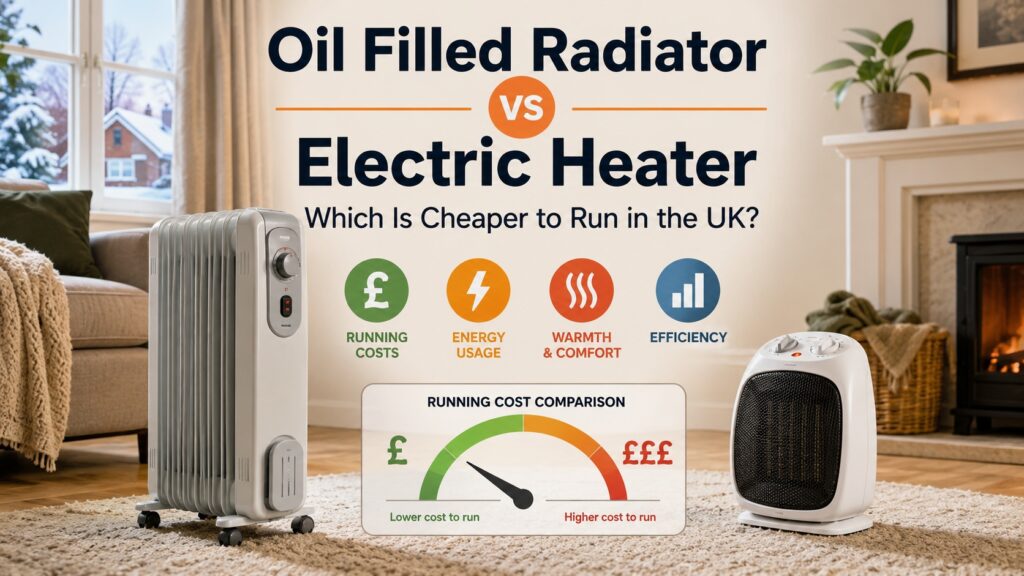
Choosing between an oil filled radiator and an electric heater can be confusing because both use electricity, but they warm a room in different ways. An electric fan or ceramic heater usually gives faster heat, while an oil filled radiator tends to warm up more slowly but can hold heat for longer after it reaches temperature.
The cheapest option to run depends on the heater’s wattage, how long you use it, the size of the room and whether you need quick warmth or steady background heat. In this guide, we compare oil filled radiators and electric heaters for UK homes, looking at running costs, comfort, efficiency and the situations where each type of heater may make more sense.
How Do Oil Filled Radiators and Electric Heaters Work?
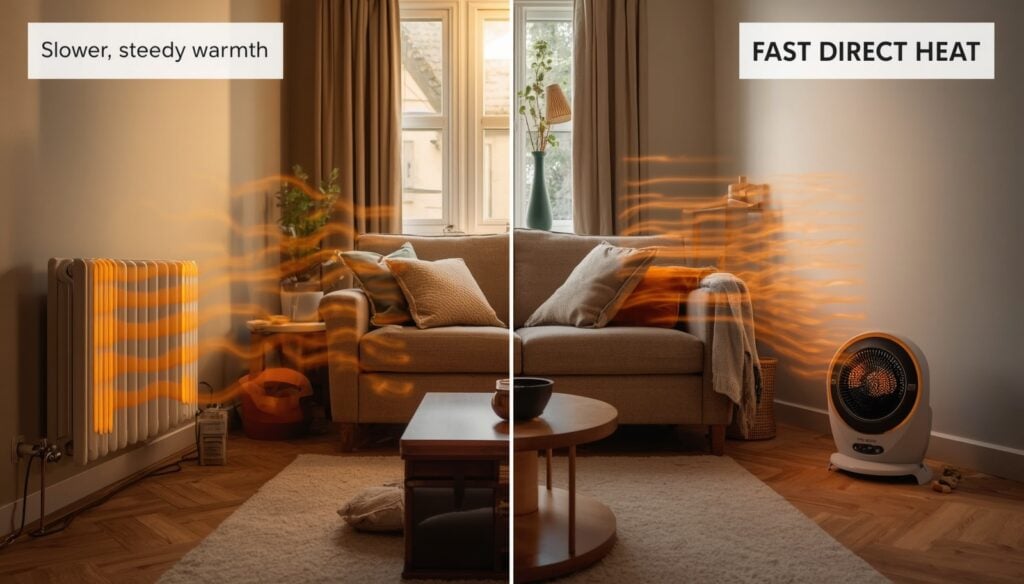
Oil filled radiators and electric heaters both use electricity, but they do not deliver heat in exactly the same way. An oil filled radiator warms internal thermal oil, which then heats the metal fins and releases warmth gradually into the room. This means it usually takes longer to feel the full effect, but the heater can continue giving off warmth for a short time after it has stopped actively heating.
Many electric heaters, such as fan heaters or ceramic heaters, work more directly. They heat an element and push warm air into the room, which can make them feel faster when you want quick heat in a cold space. The downside is that once the heater is switched off, the warmth can disappear more quickly, especially in draughty or poorly insulated rooms.
This difference matters because the cheapest option is not always the one that feels warmest first. If you need fast heat for a short period, a compact electric heater may feel more practical. If you want steadier background warmth over a longer period, an oil filled radiator may be more comfortable and easier to manage.
Which Is Cheaper to Run: An Oil Filled Radiator or an Electric Heater?
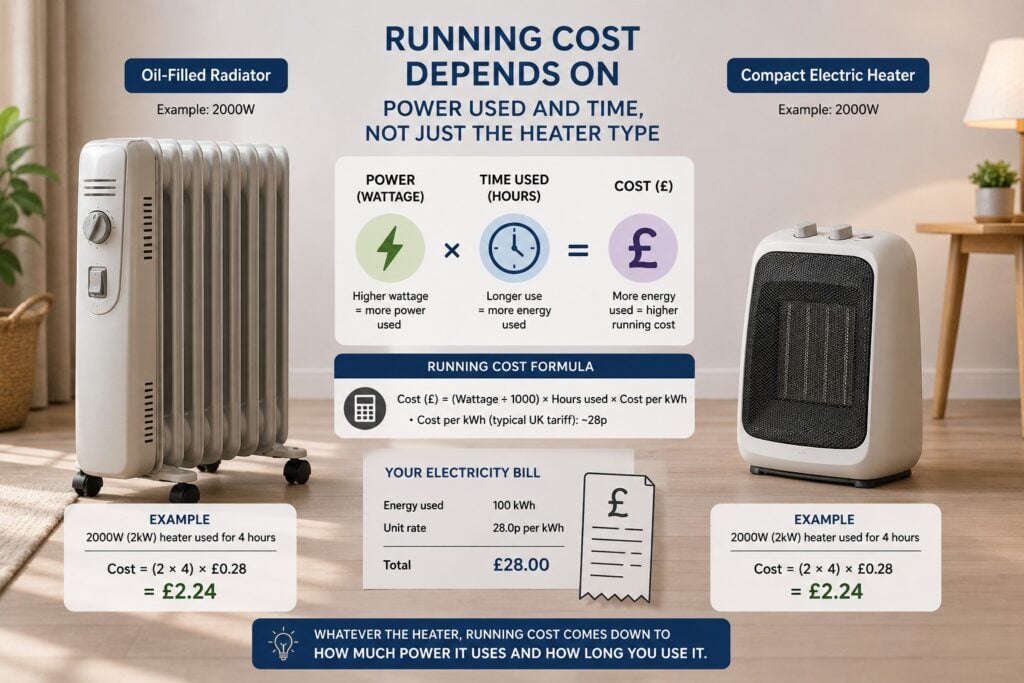
The cheaper option depends mainly on wattage, running time and how the heater is used. A 2,000W oil filled radiator and a 2,000W electric heater will use a similar amount of electricity while they are actively drawing full power. The difference is usually not that one type magically uses cheaper electricity, but how long each heater needs to run to keep the room comfortable.
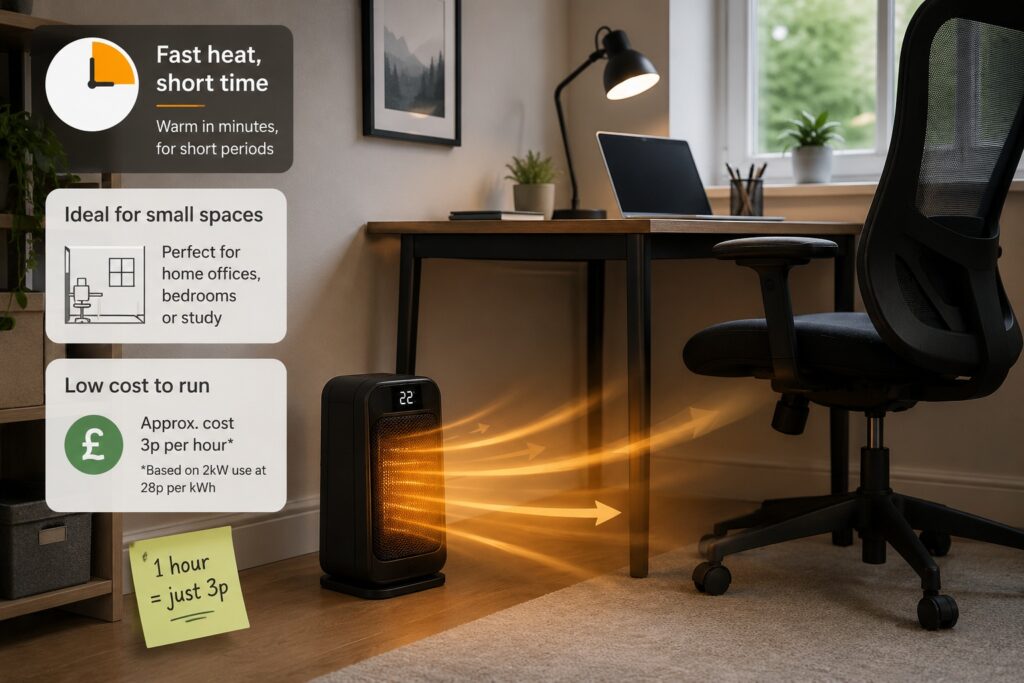
An electric fan or ceramic heater can feel cheaper for short bursts because it warms the air quickly. If you only need heat for 20 or 30 minutes while working at a desk, getting dressed or warming a small space, a compact electric heater may be practical. However, if it needs to stay on for hours to maintain comfort, the running cost can rise quickly.
An oil filled radiator may take longer to warm up, but it can suit steady background heating better. Once the oil and metal body are warm, the thermostat may cycle the heater on and off to maintain the set temperature. This can make it more comfortable for longer use, especially in a small or well-insulated room. If you are also comparing other electric heating options, our guide to oil filled radiators vs panel heaters in the UK explains how oil radiators compare with wall-mounted panel heating.
How to Calculate the Running Cost of Each Heater
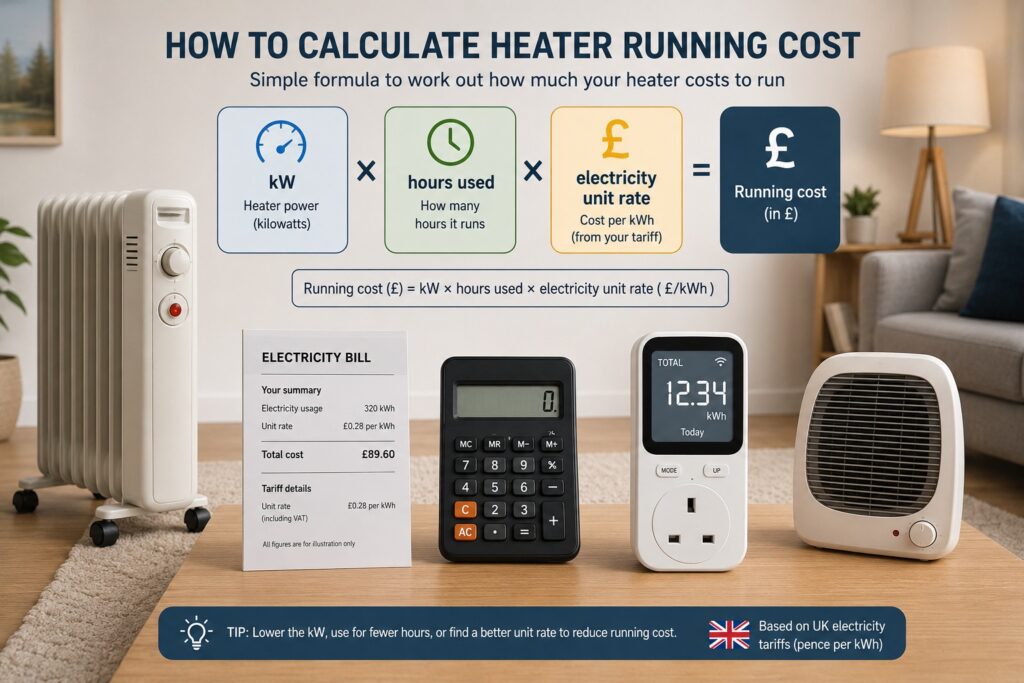
The simplest way to compare running costs is to look at the heater’s wattage, convert it into kilowatts and multiply it by the time used. For example, a 2,000W heater is 2kW. If it runs at full power for one hour, it uses around 2kWh of electricity. The actual cost then depends on the unit rate shown on your electricity bill.
This matters because many heaters do not draw full power constantly once the room reaches the target temperature. A thermostat may switch the heating element on and off to maintain warmth, so real-world usage can be lower than the maximum wattage suggests. However, if the room is cold, draughty or poorly insulated, the heater may need to work harder and run for longer.
For a more accurate comparison, you can monitor the heater’s electricity use over several evenings rather than relying only on the advertised wattage. A plug-in energy monitor such as the Tapo P110 smart plug with energy monitoring can help show how much power a heater actually uses in your own home.
Which Heater Is Better for Short Bursts of Heat?
For short bursts of heat, a compact electric heater is often the more practical choice. Fan heaters and ceramic heaters are designed to push warm air into the room quickly, which makes them useful when you only need heat for a limited period. This can work well for a home office, bedroom, dressing area or small living space where you want fast warmth without waiting for a larger heater to build up temperature.
An oil filled radiator is usually slower to respond. It first needs to heat the internal oil and metal body before the warmth spreads properly into the room. That slower heat-up time can make it less suitable if you only need 15 to 30 minutes of warmth. By the time the radiator reaches a comfortable temperature, you may already be ready to switch it off.
This does not mean electric heaters are always cheaper overall. If a high-wattage electric heater is left running for several hours, it can become expensive. However, for controlled, short-term use, a small electric heater can be convenient and efficient in practice. For example, a compact model such as the Dreo Atom 316 electric ceramic heater is the type of heater people often consider when they want quick warmth in a smaller space.
When Is an Oil Filled Radiator the Better Choice?
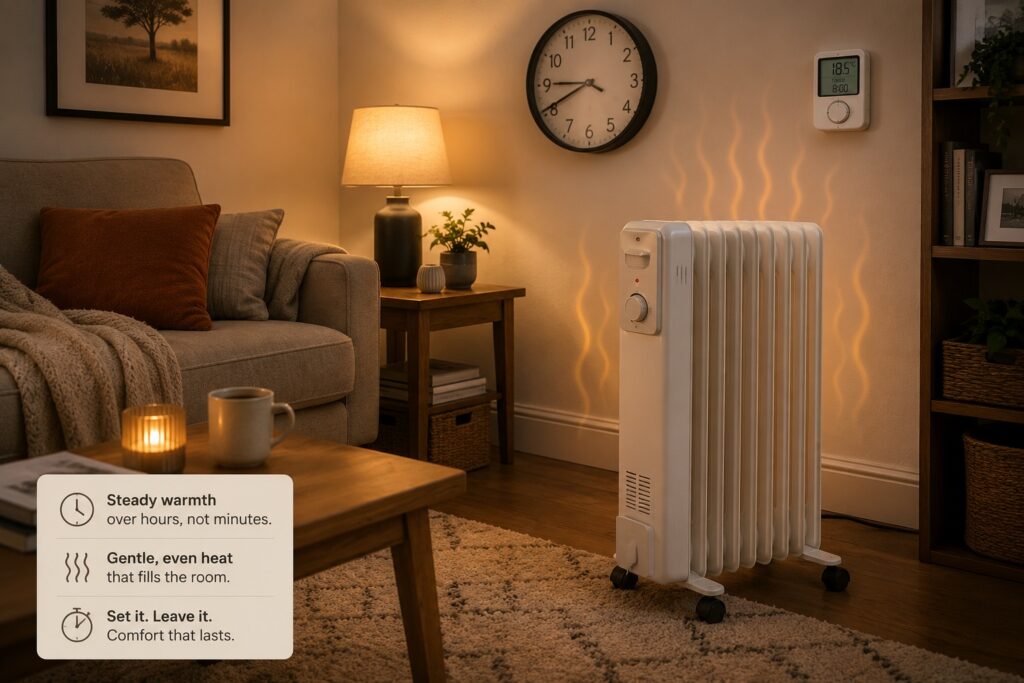
An oil filled radiator can be a better choice when you want steady warmth over a longer period rather than very fast heat for a few minutes. It is usually slower to warm up than a fan or ceramic heater, but once the oil and metal body are hot, the warmth can feel more even and less direct. This can make it more comfortable for rooms where you plan to sit for longer.
For Longer Background Heating
Oil filled radiators often make more sense when you need background heat for several hours. Instead of blasting warm air quickly, they gradually warm the surrounding space and can help maintain a more stable temperature. This can be useful in a living room, bedroom or small office where comfort matters more than instant heat.
The running cost still depends on wattage, room size and how long the radiator is active. However, if the thermostat cycles the heater on and off once the room is warm, it may avoid drawing full power continuously.
For Rooms That Hold Heat Well
An oil filled radiator is more likely to feel effective in a room that is reasonably insulated and not too draughty. If the room loses heat quickly, any electric heater will need to work harder to maintain comfort. In a better-insulated room, the slower and steadier warmth from an oil filled radiator can feel more useful.
This is why the same heater can feel economical in one home and disappointing in another. The condition of the room often matters as much as the heater type.
For Gentle, Consistent Comfort
Some people prefer oil filled radiators because they do not usually create the same strong airflow as a fan heater. This can make the warmth feel quieter and more settled, especially in bedrooms or living spaces where constant air movement may be annoying.
They are not always the best choice for quick heat, but they can be more pleasant when you want a calmer heating source in the background.
When You Use the Thermostat Properly
An oil filled radiator should be used with sensible thermostat settings and, ideally, a timer. Leaving it on at a high setting for hours can still become expensive. The benefit comes from allowing the room to warm up, then letting the thermostat maintain the temperature without unnecessary constant heating.
For longer sessions, this kind of controlled use is usually more sensible than switching the heater on full power and forgetting about it.
What Affects the Running Cost More Than the Heater Type?
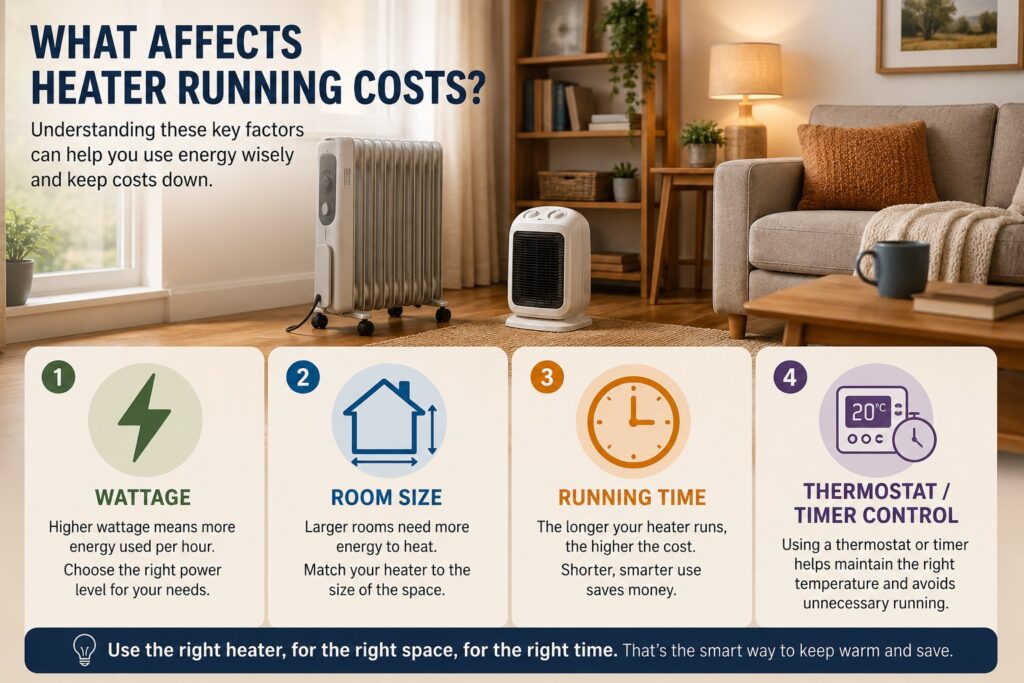
The type of heater matters, but it is not the only factor that decides how much you pay to warm a room. In many UK homes, the running cost depends more on wattage, room size, insulation and usage habits than on whether the heater is oil filled or a compact electric model.
Heater Wattage
Wattage is one of the biggest cost factors. A 1,000W heater uses less electricity per hour than a 2,000W heater when both are running at full power. However, a lower-wattage heater may need to run for longer if the room is cold or too large for its output.
This is why comparing heaters only by wattage can be misleading. The best option is the one that can warm the space effectively without being left on longer than necessary.
Room Size and Insulation
A small, well-insulated room will usually be cheaper to heat than a large, draughty space. If warm air escapes quickly through poor windows, gaps or thin insulation, both oil filled radiators and electric heaters will need to work harder.
In a compact room, a smaller heater may be enough for short periods. In a larger room, a heater that is too weak may feel inefficient because it stays on for longer without reaching a comfortable temperature.
How Long You Leave It On
Running time often has the biggest impact on cost. A powerful heater used briefly may cost less than a lower-powered heater left on for several hours. This is why the cheapest option depends on your routine, not just the product type.
For short use, an electric heater may be practical. For longer background warmth, an oil filled radiator may feel more comfortable, especially when used with a thermostat and timer.
Thermostat and Timer Control
Good controls can make a major difference. A heater with a thermostat, timer or eco mode is easier to manage than one that simply runs continuously. The aim is to keep the room comfortable without heating longer than needed.
If you are comparing different heating products and want a broader overview, our heating solutions buying guide explains how different types of electric heating can suit different rooms and usage patterns.
Which Heater Is Better for Different Rooms?
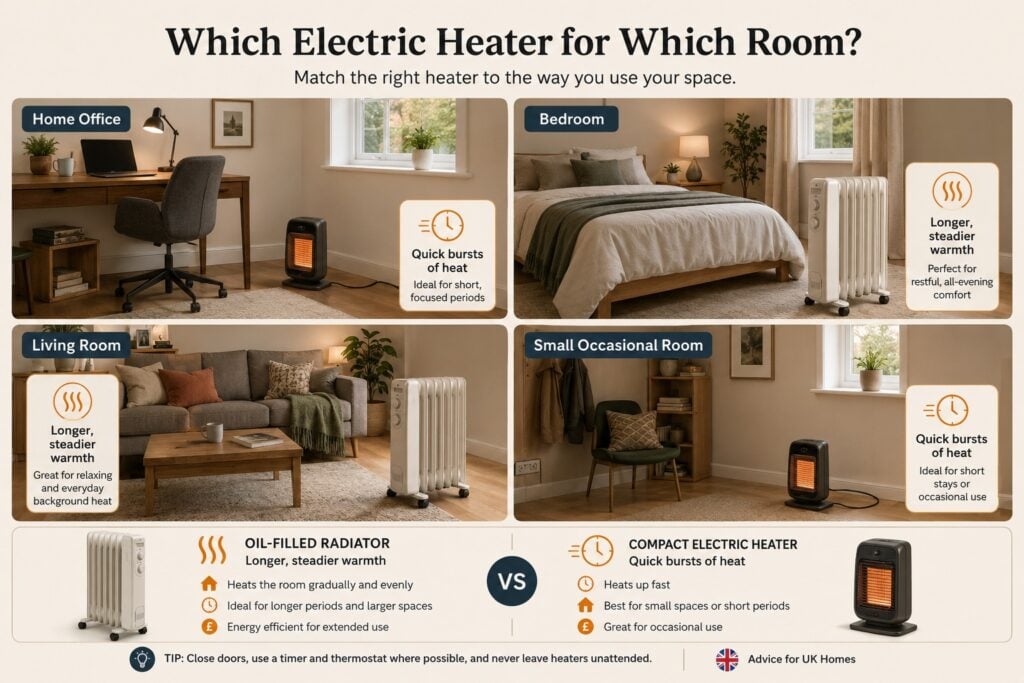
The best choice often depends on the room you want to heat and how long you plan to use it. An oil filled radiator and an electric heater can both be useful, but they suit different situations. A heater that works well in a small home office may not be the best option for a larger living room, and a model that feels comfortable for evening background warmth may be too slow for a quick morning heat boost.
Home Office
For a home office, the right choice depends on how long you sit in the room. If you only need quick warmth while the central heating is off, a compact electric heater can be useful because it warms the space quickly. This can be practical for short working sessions or cold mornings.
If you work from the same room for several hours, an oil filled radiator may feel more comfortable. It gives a slower, steadier heat and can be easier to manage with a thermostat or timer once the room reaches a comfortable temperature.
Bedroom
For bedrooms, gentle and consistent warmth is often more important than instant heat. An oil filled radiator can suit this type of room because it usually provides quieter, less direct warmth than a fan heater. This may make it more comfortable for evening use before bed.
However, any heater used in a bedroom should be managed carefully. A timer, thermostat and safe placement matter more than simply choosing one type over another. Leaving a heater running unnecessarily can increase costs and reduce the benefit of more controlled heating.
Living Room
A living room usually needs more sustained warmth, especially if it is used for several hours in the evening. In this case, an oil filled radiator may be more suitable than a small electric fan heater, particularly if the room holds heat reasonably well.
For households comparing a wider range of electric heating options, a wall-mounted model such as the Devola Smart Glass Panel Electric Heater may also be worth considering if you want a more fixed heating solution rather than a portable heater.
Small Rooms and Occasional Spaces
For small rooms, box rooms, dressing areas or occasional spaces, a compact electric heater can make sense if it is only used for short periods. It can provide fast heat without needing to warm a larger radiator body first.
The key is control. A short burst of heat can be practical, but leaving a high-wattage heater running for hours in a room you barely use can quickly become expensive.
Oil Filled Radiator vs Electric Heater: Quick Buying Verdict
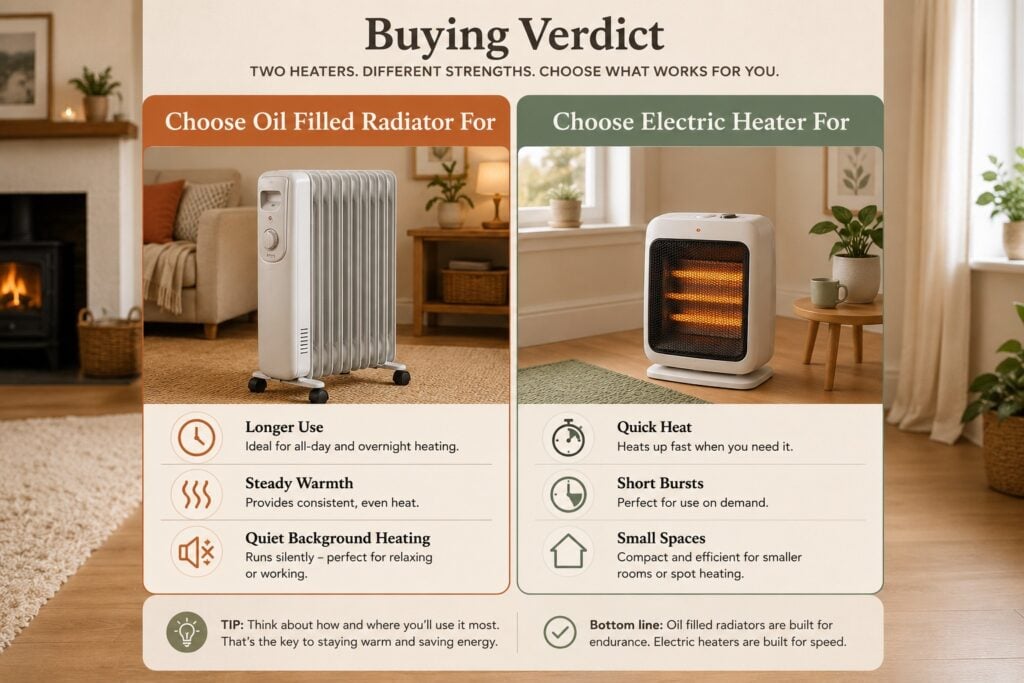
There is no single winner for every UK home. An oil filled radiator is usually the better choice when you want slower, steadier warmth over a longer period, while a compact electric heater is often more practical when you need fast heat for a short time. The cheapest option depends on how you use the heater, not just what type it is.
Choose an Oil Filled Radiator If You Want Longer, Steadier Heat
An oil filled radiator may be the better choice if you want to warm a room for several hours, especially in the evening or while working from home. It takes longer to heat up, but the warmth can feel more stable and comfortable once the radiator body is hot.
This can make it a sensible option for living rooms, bedrooms and home offices where you want background warmth rather than a quick blast of hot air.
Choose an Electric Heater If You Need Fast Heat
A compact electric heater may be better if you only need short bursts of warmth. It can heat the air quickly, which makes it useful for cold mornings, small rooms or temporary use when you do not want to heat the whole home.
The risk is running it for too long. A high-wattage electric heater used for several hours can become expensive, especially if the room loses heat quickly.
Avoid Choosing Based on Heater Type Alone
The biggest mistake is assuming one heater type is always cheaper. Wattage, running time, thermostat control, room size and insulation all matter. A well-controlled heater in the right room will usually be more cost-effective than the wrong heater used for too long.
If you are specifically comparing electric radiator costs, our guide to whether electric radiators are expensive to run in the UK explains how wattage, room size, thermostat settings and running time affect the final cost.
For most households, the best choice is the one that matches the way the room is used. Short, quick warmth usually favours a compact electric heater. Longer, calmer background heat usually favours an oil filled radiator.
Frequently Asked Questions About Oil Filled Radiators and Electric Heaters
Are oil filled radiators cheaper to run than electric heaters?
Oil filled radiators are not automatically cheaper to run than electric heaters, because both use electricity and the running cost depends mainly on wattage and time used. However, an oil filled radiator may feel more cost-effective for longer background heating because it warms up gradually and can retain heat for a short time after the element switches off. A compact electric heater may be more practical for short bursts because it warms the air quickly. The cheaper option depends on whether you need steady warmth for several hours or fast heat for a limited period.
Is an electric heater better for quick warmth?
Yes, an electric fan or ceramic heater is usually better for quick warmth. These heaters are designed to heat the air quickly and can make a small room feel warmer within a short time. This can be useful in a home office, bedroom corner or occasional room where you only need heat for 20 to 30 minutes. The downside is that the warmth may fade quickly once the heater is switched off, especially in a draughty room. For longer use, running time becomes the bigger cost factor.
Do oil filled radiators use a lot of electricity?
An oil filled radiator can use a lot of electricity if it has a high wattage and is left running for long periods. A 2,000W model will use more electricity per hour at full power than a 1,000W model. However, many oil filled radiators include thermostats, so they may cycle on and off once the room reaches the target temperature. This means real-world usage can be lower than the maximum wattage suggests. Room size, insulation and thermostat settings all affect how much electricity the radiator actually uses.
Which heater is best for a bedroom?
An oil filled radiator is often a better fit for bedroom comfort because it gives gentler, steadier warmth and usually works more quietly than a fan heater. This can make it suitable for warming the room before sleep or maintaining a comfortable temperature for a short evening period. However, any heater used in a bedroom should have suitable safety features, a timer or thermostat, and enough space around it. A compact electric heater may still be useful for quick warmth, but it should not be left running unnecessarily.
Which heater is best for a home office?
For a home office, the best choice depends on how long you work in the room. If you only need quick heat at the start of the day, a compact electric heater can be useful because it warms the space quickly. If you work in the same room for several hours, an oil filled radiator may be more comfortable because it provides slower, steadier background heat. The most efficient choice is usually the heater that matches your working pattern and does not need to stay on longer than necessary.
Is it cheaper to use a portable heater or central heating?
It depends on how much of the home you need to heat. A portable heater may be cheaper for short periods if you only want to warm one small room instead of turning on central heating for the whole property. However, using a high-wattage electric heater for many hours can become expensive. Central heating may be more practical when several rooms need warmth at the same time. The better option depends on room use, heating duration, insulation and whether you are trying to heat one space or the whole home.
Final Verdict: Oil Filled Radiator or Electric Heater?
An oil filled radiator and an electric heater can both be useful in UK homes, but they suit different heating needs. If you want quick warmth for a short period, a compact electric heater is usually the more practical choice. It heats the air quickly and can work well in small rooms, home offices or occasional spaces.
If you want slower, steadier warmth over a longer period, an oil filled radiator may be the better option. It takes longer to warm up, but it can provide more settled background heat and may feel more comfortable for evening use, bedrooms or longer working sessions.
The cheapest option is not decided by heater type alone. Wattage, running time, room size, insulation and thermostat control all matter. For most households, the best choice is the heater that matches how the room is actually used: short bursts favour electric heaters, while longer, steadier comfort often favours oil filled radiators.