
Electric radiators can be a useful way to heat a room, but many UK households worry about how much they cost to run. With energy bills still a major concern, it is reasonable to ask whether electric radiators are expensive, when they make sense, and how to use them without wasting electricity.
The answer depends on how the radiator is used. An electric radiator used for short periods in one room can be practical, especially if you only need extra warmth in a home office, bedroom or living room. However, using electric radiators for long hours every day, or relying on several units to heat the whole home, can become expensive quite quickly.
Running cost is mainly affected by the radiator’s wattage, your electricity unit rate, the size of the room, insulation, thermostat settings and how many hours the heater is switched on. A more powerful radiator may heat a room faster, but it can also use more electricity if it runs continuously.
This guide explains whether electric radiators are expensive to run in the UK, what affects their running costs, when they can be a sensible choice, and how to use them more efficiently during colder months.
How Much Does an Electric Radiator Cost to Run?
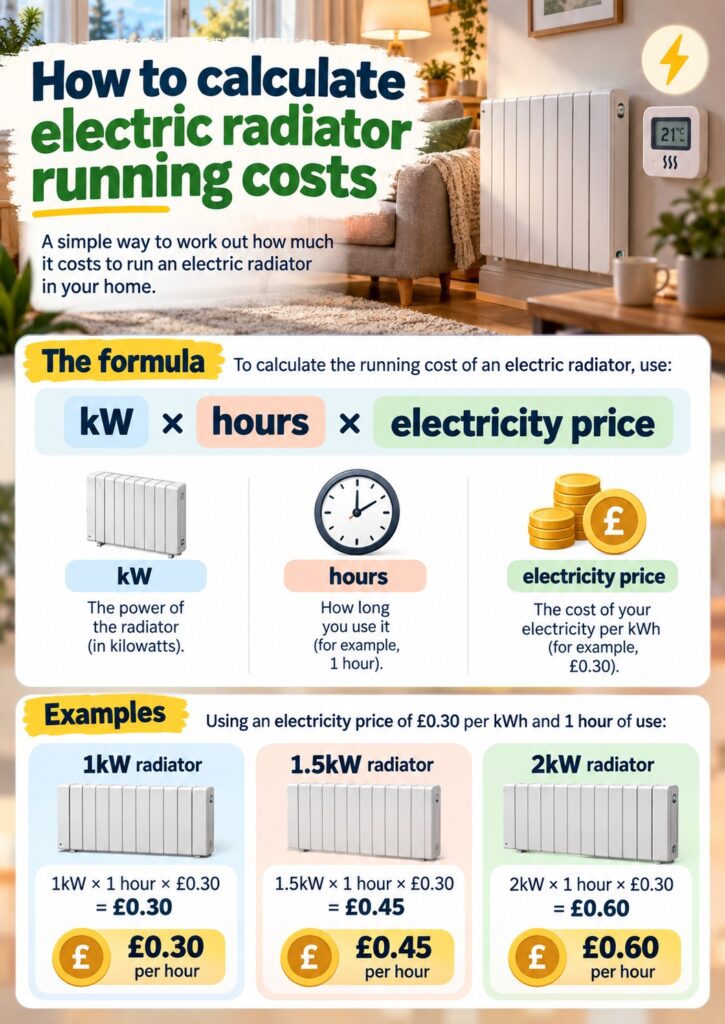
The cost of running an electric radiator depends mainly on three things: the radiator’s wattage, your electricity unit rate and how long the radiator is switched on. In the UK, electricity is charged per kilowatt hour, so a 1kW radiator running at full power for one hour uses 1kWh of electricity.
As a simple example, Ofgem lists the average electricity unit rate for direct debit customers from 1 October to 31 December 2026 at 26.32p per kWh. That means a 1kW electric radiator running at full power for one hour would cost about 26p, while a 2kW radiator would cost about 53p per hour if it stayed on continuously.
In real use, an electric radiator may not run at full power every minute. If it has a thermostat, it should switch on and off once the room reaches the target temperature. This can reduce the actual running cost compared with leaving the heater working at full output all the time.
However, costs can still add up quickly if the radiator is used for long periods. A 2kW electric radiator used for five hours could cost around £2.63 at full output. Used daily, that can become a noticeable part of your energy bill.
This is why electric radiator running costs should be judged by real use, not just the number on the product page. Short targeted heating in one room is very different from using electric radiators for several rooms every day.
For households comparing different heating options, our heating solutions buying guide explains how different heaters may suit different rooms, usage patterns and energy concerns.
Are Electric Radiators More Expensive Than Gas Central Heating?
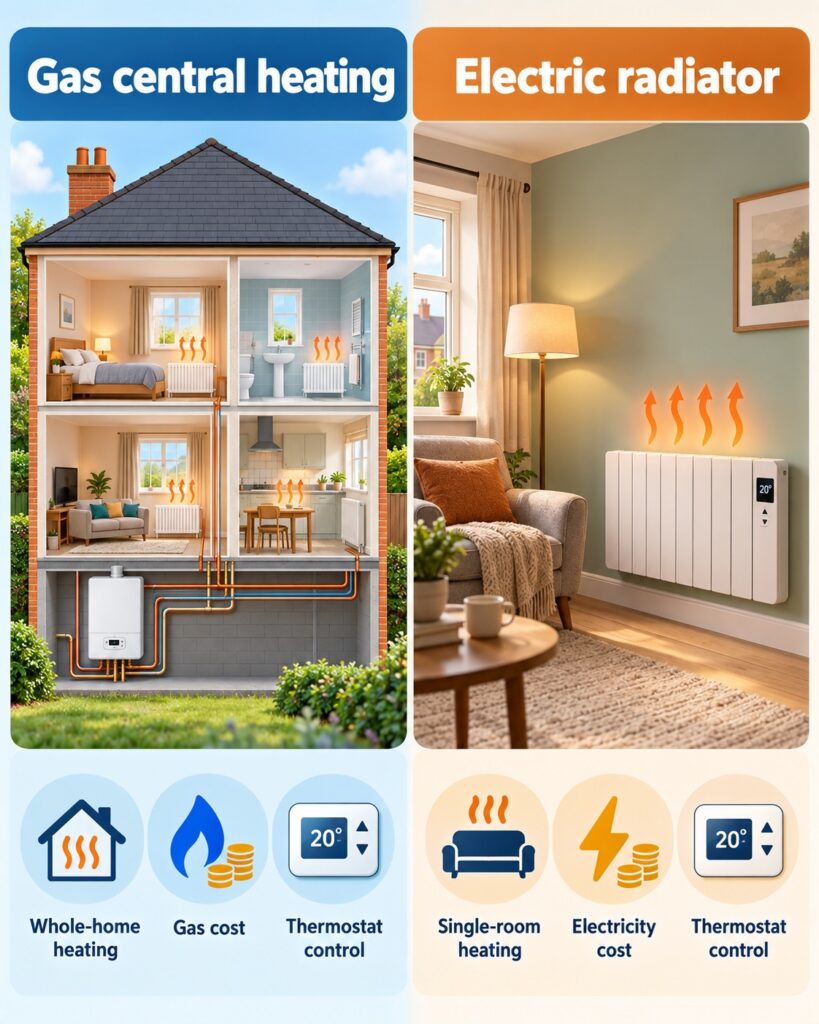
Electric radiators are usually more expensive to run per unit of heat than gas central heating because electricity normally costs more per kWh than gas in the UK. This means that using electric radiators as the main heating source for the whole home can become costly, especially during colder months.
However, the comparison is not always simple. Gas central heating is usually designed to heat several rooms or the whole property. An electric radiator can be used to heat just one room for a short period, which may be more practical if you only need warmth in a home office, bedroom or living room.
This is where electric radiators can make sense. They may be useful as a secondary heat source, a boost for a cold room, or a flexible option in spaces that are not connected to central heating. They can also be helpful in flats, garden rooms, spare rooms or rented homes where changing the full heating system is not realistic.
The problem starts when several electric radiators are used for long hours at the same time. At that point, the running cost can rise quickly. If you are trying to heat most of the home every day, gas central heating or another whole-home heating system may usually be more cost-effective.
So, electric radiators are not always a bad choice. They are simply best used carefully. They work better for targeted heating than for replacing an efficient whole-house heating system.
For a wider comparison of different room heating options, our guide to oil filled radiator vs electric heater running costs explains how running costs, comfort and heating style can differ.
When Can Electric Radiators Be a Sensible Choice?
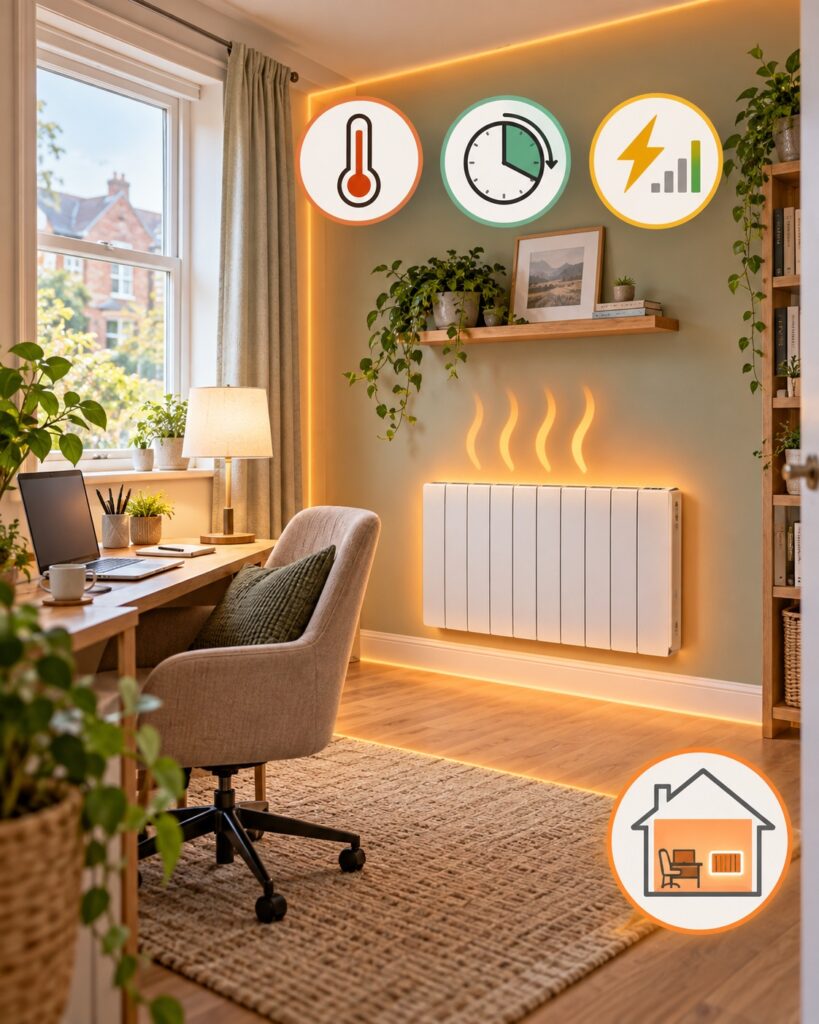
Electric radiators can make sense when they are used for targeted heating rather than trying to heat the whole home for long periods. They are often most useful in rooms where you need extra warmth for a limited time, such as a home office, bedroom, spare room, conservatory or small living space.
One of the main advantages is control. You can heat only the room you are using instead of turning on the full central heating system. This can be useful if one person is working from home, if a bedroom feels colder than the rest of the house, or if you only need heat in the evening for a few hours.
Electric radiators can also be practical in places where central heating is not available or not worth extending. Examples include garden rooms, workshops, converted garages, rental spaces or rooms that are used only occasionally. In these situations, the higher electricity cost may be easier to justify because the heater is not running all day.
They may also suit households that want a simple backup heating option. If the main heating system is slow to warm up, temporarily unavailable or not needed in every room, an electric radiator can provide quick, local warmth without major installation work.
The important point is to match the heater to the room and usage pattern. For occasional single-room heating, an electric radiator can be practical. For heating several rooms every day, the running cost can become much harder to justify.
If you are comparing different electric heating styles, our guide to oil filled radiators vs panel heaters explains how heat-up time, comfort, running style and room suitability can differ.
When Can Electric Radiators Become Expensive to Run?
Electric radiators can become expensive when they are used for long periods, in several rooms at once, or in homes that lose heat quickly. The radiator itself may not be the problem. The bigger issue is often how long it needs to stay on to keep the room comfortable.
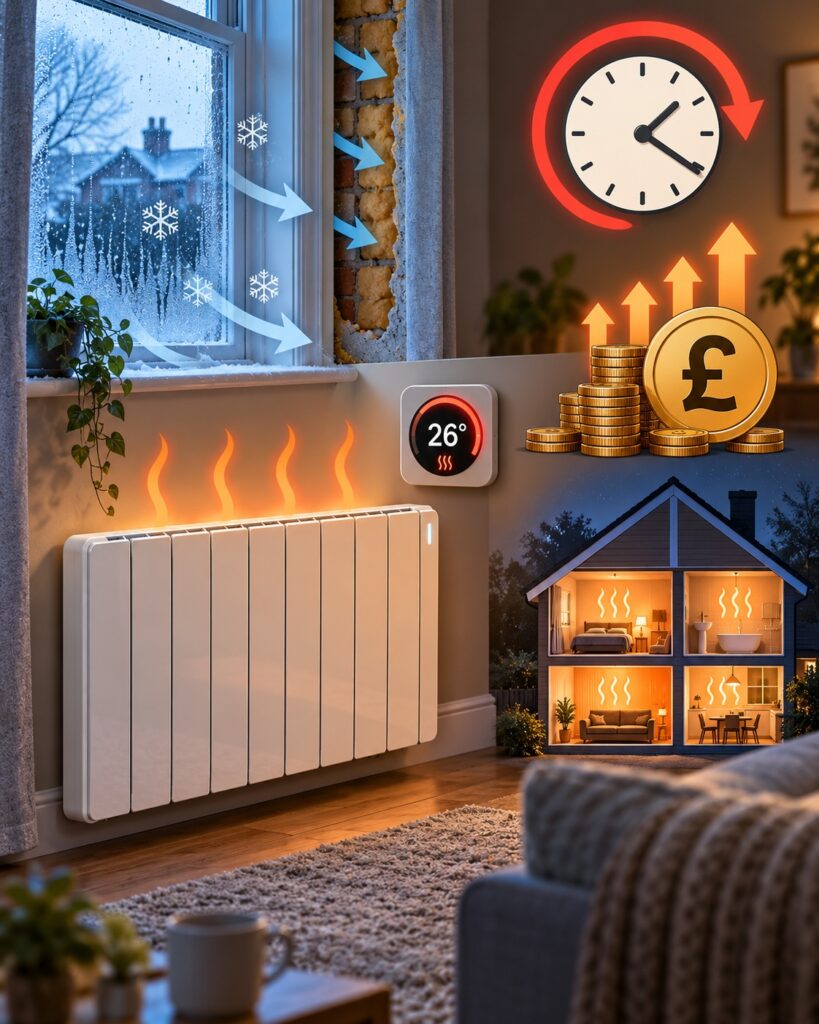
A poorly insulated room will usually cost more to heat because warmth escapes faster. If the room has draughty windows, cold walls, large glass areas or poor insulation, the radiator may need to work harder and stay on for longer. This can increase electricity use even if the radiator has a reasonable wattage.
Electric radiators can also become costly when they are used as the main heating source for the whole home. One radiator in a home office for a few hours is very different from several electric radiators running every evening across bedrooms, hallways and living areas.
Thermostat settings also matter. Setting the temperature too high can make the heater run more often than necessary. Even a small increase in target temperature can affect running time, especially in colder weather.
The most expensive situation is usually a combination of high wattage, long running time, poor insulation and several rooms being heated at once. In that situation, electric radiators may become noticeably more expensive than expected.
If you are looking at a smart panel-style heater, our Devola smart glass panel electric heater review explains the type of features buyers often compare, including timers, app control and thermostat settings.
How to Reduce Electric Radiator Running Costs
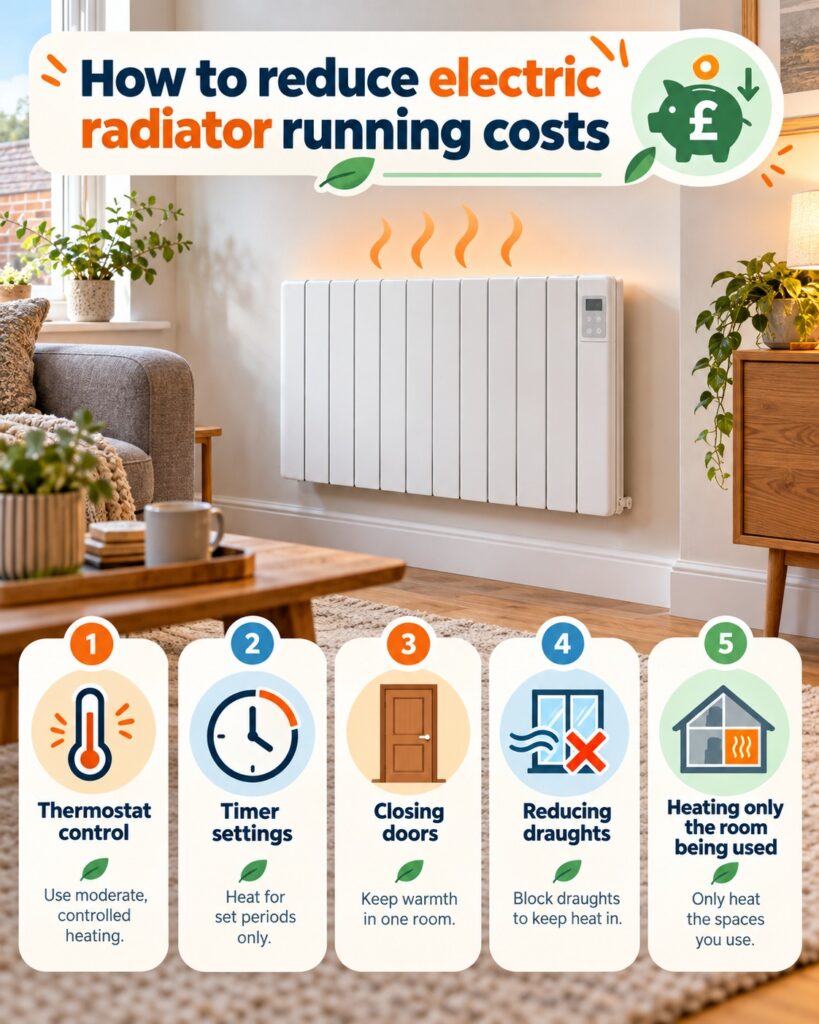
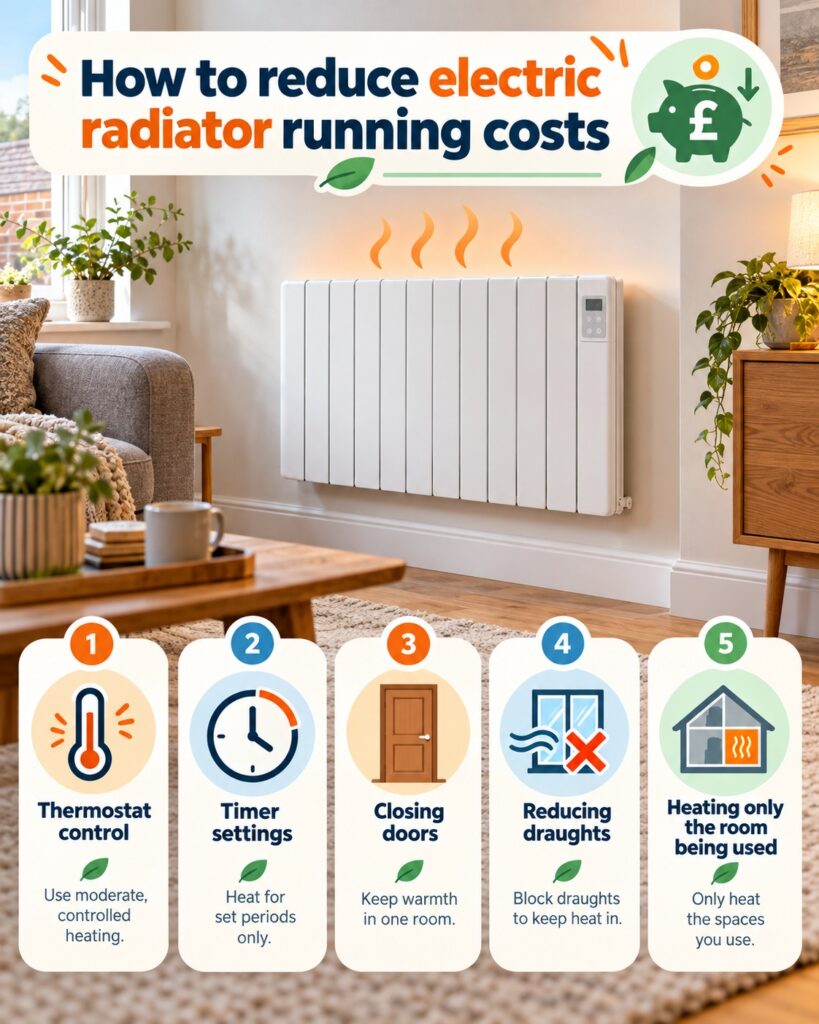
The best way to reduce electric radiator running costs is to control how long the heater runs and avoid heating rooms unnecessarily. Even an efficient electric radiator can become expensive if it is left on for many hours without a clear reason.
Start by using the thermostat properly. Instead of setting the radiator to a very high temperature, choose a comfortable level and allow the heater to maintain it. A lower, steady setting is often more sensible than turning the radiator up too high and letting it run for longer than needed.
Timers can also make a big difference. If you only need warmth in the morning, evening or during work hours, set the radiator to run during those periods rather than leaving it switched on all day. This is especially useful in home offices, bedrooms and spare rooms.
Room setup matters too. Close doors, reduce draughts and avoid blocking the radiator with furniture or curtains. If heat escapes quickly, the radiator has to work harder to keep the room warm, which increases electricity use.
It can also help to think about whether the room really needs electric heating. If the whole house is already being heated, an extra electric radiator may not be necessary. But if you only need one room warm for a short period, targeted electric heating can sometimes be more practical than heating unused rooms.
Smart controls can help some households manage heating more carefully. If you are comparing heating control options, our guide on do smart thermostats save money explains how better scheduling, zoning and temperature control may reduce wasted energy.
What Features Help Make Electric Radiators Cheaper to Use?
The features on an electric radiator can make a big difference to how easy it is to control running costs. The heater still uses electricity to produce heat, but better controls can help reduce waste and stop the radiator running longer than necessary.
A thermostat is one of the most important features. It allows the radiator to switch on and off depending on the room temperature, instead of heating continuously. This is much better than using a basic heater with only simple power settings.
A timer is also useful because it lets you control when the radiator operates. For example, you may only need heat in a bedroom before sleep, in a home office during working hours, or in a living room during the evening. A timer helps avoid accidentally leaving the heater on all day.
Some electric radiators also include open window detection, app control or weekly scheduling. These features can be helpful if you want more control over daily heating patterns, especially in rooms used at regular times.
Energy monitoring can also be useful. If you want to understand how much electricity a heater is actually using, a plug-in energy monitor or smart plug can help track consumption more clearly. Our guide to a smart plug with energy monitoring explains how this type of device can help households monitor appliance energy use.
The best features are the ones that help you use the radiator only when needed. A heater with good controls is usually easier to manage than one that simply stays on until you remember to turn it off.
Should You Leave an Electric Radiator on All Day?
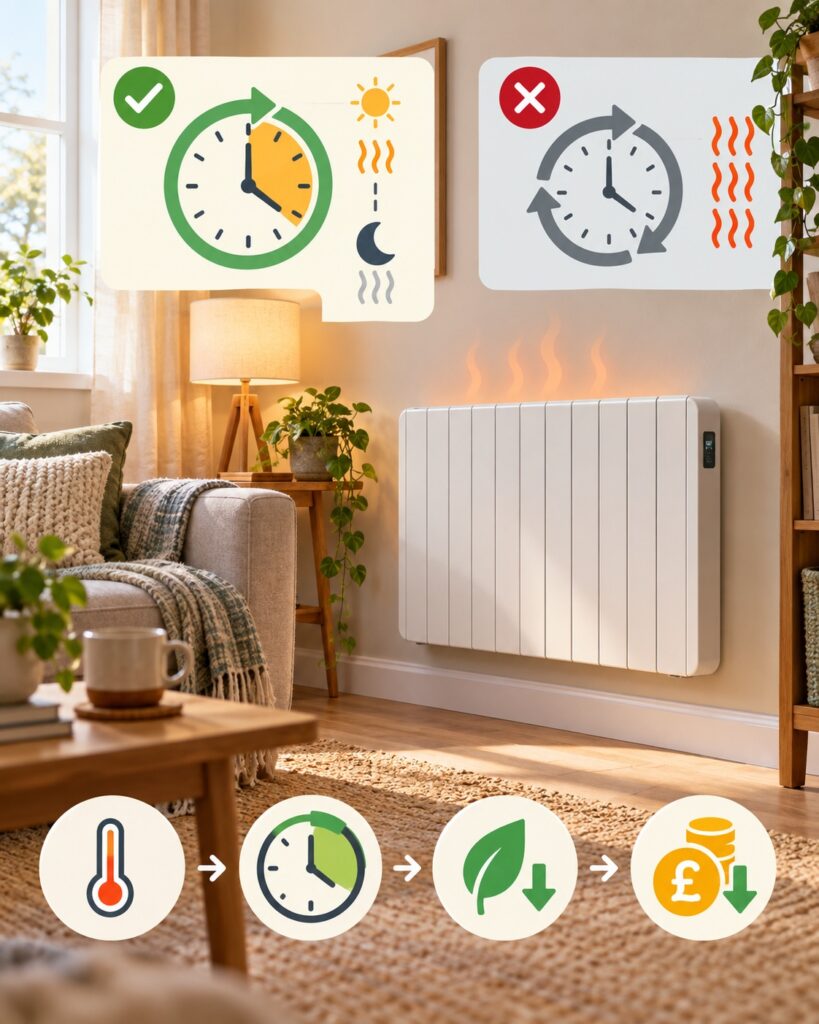
Leaving an electric radiator on all day is usually not the most cost-effective way to heat a room. Even if the radiator has a thermostat, it may still switch on and off throughout the day to maintain the target temperature, which can add to your electricity use.
For most households, it is better to heat the room only when it is actually being used. For example, a home office may only need heating during working hours, while a bedroom may only need extra warmth in the evening or early morning. Running the radiator outside those periods often wastes energy.
If the room is poorly insulated, leaving the radiator on all day can be even more expensive. Heat will escape through windows, walls, doors and gaps, so the radiator may need to keep working to replace the lost warmth. In that situation, improving draught protection and using timed heating may be more useful than simply leaving the heater running.
There may be some situations where a low steady setting makes sense, especially in a room that is used regularly throughout the day. However, this should still be controlled with a thermostat and timer rather than leaving the radiator on full power.
A sensible approach is to use the electric radiator in planned heating periods. Set a comfortable temperature, use the timer, close the room door and switch it off when the room is no longer needed. This gives you better control over comfort and cost.
Electric Radiator vs Electric Heater: What Is the Difference?
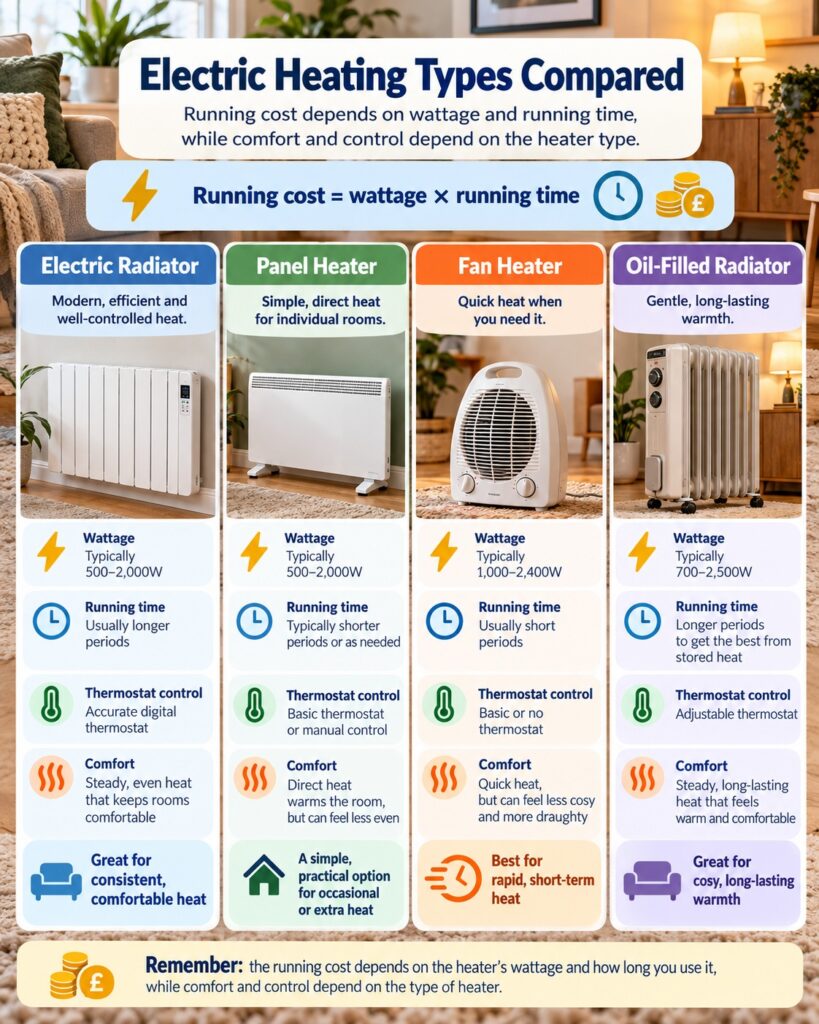
The terms electric radiator and electric heater are often used in a similar way, but they do not always mean exactly the same thing. An electric heater can refer to many types of portable or plug-in heating, including fan heaters, ceramic heaters, oil-filled radiators, panel heaters and convector heaters.
An electric radiator usually means a heater designed to provide steadier room heating, often with a thermostat, timer or wall-mounted design. Some models look more like traditional central heating radiators, while others are slim electric panel radiators.
From a running cost point of view, the most important factor is still the wattage and how long the heater runs. A 2kW electric radiator and a 2kW electric heater can use the same amount of electricity if both are running at full power for the same amount of time.
The difference is often comfort and control. A basic fan heater may warm a space quickly but can feel intense and may cool down soon after switching off. An electric radiator may provide gentler, steadier warmth and better temperature control, depending on the model.
This is why buyers should not judge electric heaters only by the name. Look at the power rating, thermostat, timer, heating style, room size and how the heater will be used. A well-controlled electric radiator may be more practical for regular room heating than a very basic heater that is simply switched on and off manually.
Are Electric Radiators Worth It for One Room?
Electric radiators can be worth it for one room if they are used carefully and for limited periods. This is often where they make the most sense, because you can heat the room you are actually using instead of warming the whole house.
For example, an electric radiator may be useful in a home office during working hours, a bedroom in the evening, or a spare room that is only used occasionally. In these situations, the running cost may be easier to control because the heater is not operating all day across several rooms.
The value depends on how often the room is used and how well it holds heat. A small, well-insulated room will usually be cheaper to heat than a large, draughty space. If the room warms up quickly and the thermostat can cycle the radiator off, the running cost may stay more manageable.
However, an electric radiator may be less cost-effective if the room is cold, poorly insulated or used for many hours every day. If the heater has to stay on constantly to maintain comfort, the electricity cost can rise quickly.
For one-room heating, the best approach is to use a correctly sized radiator, set a sensible temperature, use the timer and close the door to keep warmth in the room. Used this way, an electric radiator can be a practical option for targeted heating, even if it is not the cheapest way to heat a whole home.
Are Electric Radiators Expensive to Run? Quick Verdict
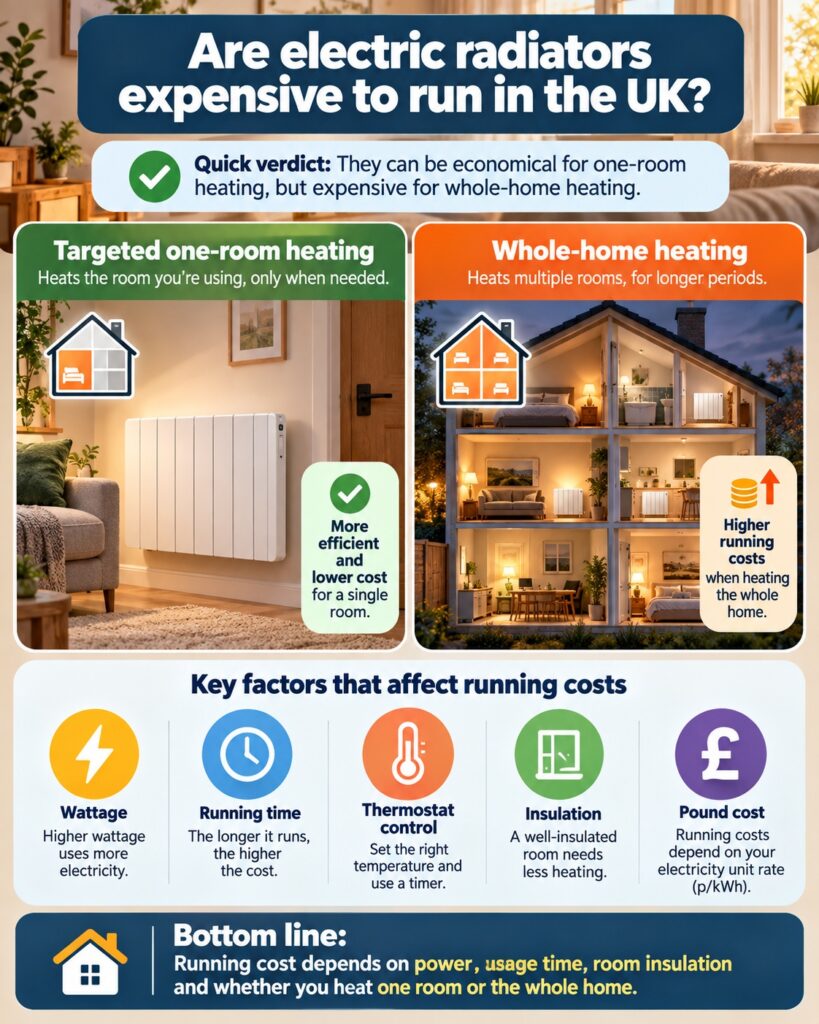
Electric radiators can be expensive to run if they are used for long periods, in several rooms at once, or in poorly insulated spaces. Because electricity usually costs more per kWh than gas, they are not usually the cheapest option for heating a whole home every day.
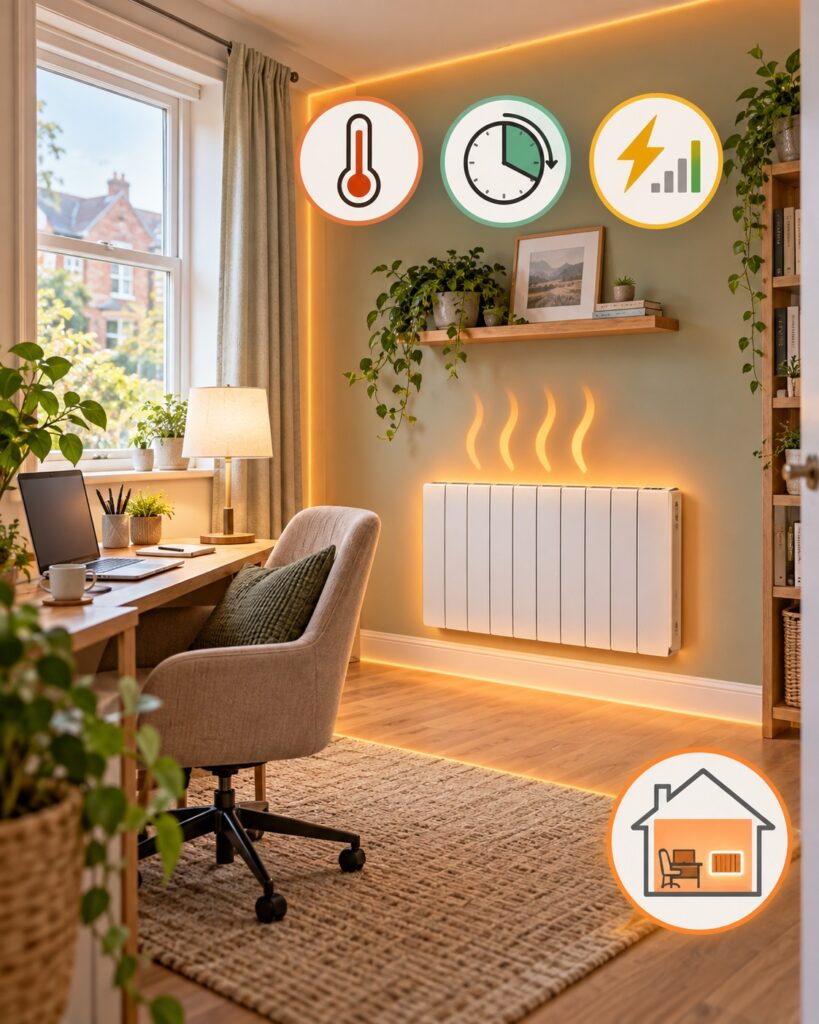
However, electric radiators can still make sense for targeted heating. If you only need to warm one room for a few hours, such as a home office, bedroom or spare room, the running cost may be easier to control than heating unused rooms with the main system.
The biggest factors are wattage, running time, thermostat control, room size and insulation. A high-wattage radiator left on for many hours will cost more, while a correctly sized radiator with a thermostat and timer can be much easier to manage.
For most UK homes, electric radiators are best used as a secondary or room-by-room heating option rather than as the main heating method for the whole property. They are most practical when used occasionally, in the right room, with sensible temperature settings and good heating controls.
Frequently Asked Questions About Electric Radiator Running Costs
Are electric radiators expensive to run in the UK?
Electric radiators can be expensive to run if they are used for long periods or as the main heating source for several rooms. Electricity usually costs more per kWh than gas, so heating a whole home with electric radiators can become costly.
However, they can be more manageable when used for targeted heating. If you only need to warm one room for a few hours, an electric radiator may be a practical option.
How much does a 2kW electric radiator cost to run?
A 2kW electric radiator uses 2kWh of electricity for every hour it runs at full power. If electricity costs around 26p per kWh, a 2kW radiator would cost about 52p per hour at full output.
The actual cost may be lower if the radiator has a thermostat and cycles on and off once the room reaches the target temperature.
Is it cheaper to use an electric radiator in one room?
It can be cheaper to use an electric radiator in one room than to heat the whole house, especially if you only need warmth for a short period. This can be useful for a home office, bedroom, spare room or living room.
The cost depends on the radiator’s wattage, room size, insulation and how long it is used. A small, well-insulated room will usually be easier and cheaper to heat than a large draughty space.
Should I leave an electric radiator on overnight?
Leaving an electric radiator on overnight is usually not the most cost-effective option unless it is properly controlled by a thermostat and timer. Running a heater for many hours can increase electricity use, especially in a poorly insulated room.
If you need overnight heating, use a safe, modern radiator with thermostat control, avoid covering it, keep it away from furniture and follow the manufacturer’s safety instructions.
Are electric radiators cheaper than fan heaters?
A radiator and fan heater with the same wattage can use the same amount of electricity if both run at full power for the same time. The difference is usually in comfort, heat delivery and control.
Fan heaters warm the air quickly but can feel harsh and may cool down quickly after switching off. Electric radiators often provide steadier heat and may be better for longer room heating if they have good thermostat and timer controls.
What is the cheapest way to use an electric radiator?
The cheapest way to use an electric radiator is to heat only the room you need, use a sensible thermostat setting, set a timer and avoid leaving it on unnecessarily. Closing doors, reducing draughts and keeping furniture away from the radiator can also help.
Electric radiators are usually most cost-effective when used for short, targeted heating rather than whole-home heating.
Are electric radiators good for home offices?
Electric radiators can work well in home offices if the room is used for set hours and the heater has a thermostat and timer. They can provide targeted warmth without heating the whole property.
However, running a high-wattage radiator all day in a cold or poorly insulated office can become expensive. Good insulation, draught control and sensible temperature settings are important.
Do electric radiators use a lot of electricity?
Electric radiators can use a noticeable amount of electricity because they convert electrical energy directly into heat. A 1kW radiator uses 1kWh per hour at full power, while a 2kW radiator uses 2kWh per hour.
The total electricity use depends on how powerful the radiator is and how long it runs. Thermostats, timers and better room insulation can help reduce unnecessary running time.
Final Verdict: Are Electric Radiators Expensive to Run in the UK?
Electric radiators can be expensive to run if they are used for long hours, in several rooms at once, or in poorly insulated spaces. Because they rely on electricity, the running cost can rise quickly when they are used as the main heating source for a whole home.
However, they are not always a bad choice. For short periods of targeted heating, such as warming a home office, bedroom, spare room or living room, an electric radiator can be practical and easy to control. The key is to use it in the right room, for the right amount of time, with sensible thermostat and timer settings.
For most UK households, electric radiators are best used as a secondary heating option rather than a full replacement for central heating. They make the most sense when you need extra warmth in one space without heating rooms you are not using.
If you choose an electric radiator, focus on wattage, room size, insulation, thermostat control and running time. A well-controlled radiator in a suitable room can be manageable, while a high-powered radiator left on for hours in a cold room can become expensive very quickly.