Best Dehumidifiers in the UK – Smart Buying Guide
Dehumidifiers have become an increasingly popular solution for households across the UK dealing with excess moisture, condensation, and damp-related problems. Whether you’re trying to reduce humidity in bedrooms and living spaces, prevent mould growth, dry laundry indoors, or protect your home during colder months, choosing the right dehumidifier can make a noticeable difference to everyday comfort and air quality.
With so many dehumidifiers available on the UK market — varying in extraction capacity, room coverage, energy efficiency, noise levels, and running costs — it’s easy to feel overwhelmed. Some models are designed for small rooms or occasional use, while others are powerful enough to manage persistent damp issues across larger living areas or entire homes. Understanding these differences is essential to making a practical and cost-effective choice.
At Smart Choice Adviser, we analyse and compare dehumidifiers based on real-world household use, technical specifications, customer feedback, and overall value for money. Rather than relying solely on manufacturer claims, we focus on how each dehumidifier performs in everyday UK conditions — from managing condensation in winter to improving indoor comfort year-round.
In this comparison and buying guide, you’ll find a carefully selected range of dehumidifiers organised across different performance levels and budgets. This includes entry-level options, balanced all-rounders, higher-capacity picks, and useful alternatives, making it easier to compare models and choose the solution that best suits your home and moisture control needs.
This page contains affiliate links. We may earn a commission if you make a purchase through these links, at no extra cost to you.
Below, you’ll find a side-by-side comparison of carefully selected dehumidifiers available in the UK, covering different room sizes, moisture extraction capacities, and budgets. The models featured on this page are grouped into core recommendations, higher-capacity options, and practical alternatives, making it easier to compare solutions based on real household needs rather than marketing claims.
Each recommendation is based on real-world performance, energy efficiency, noise levels, ease of use, and overall value for money — not just headline specifications.
Detailed Comparison of the 9 Best Dehumidifiers in the UK for Different Needs
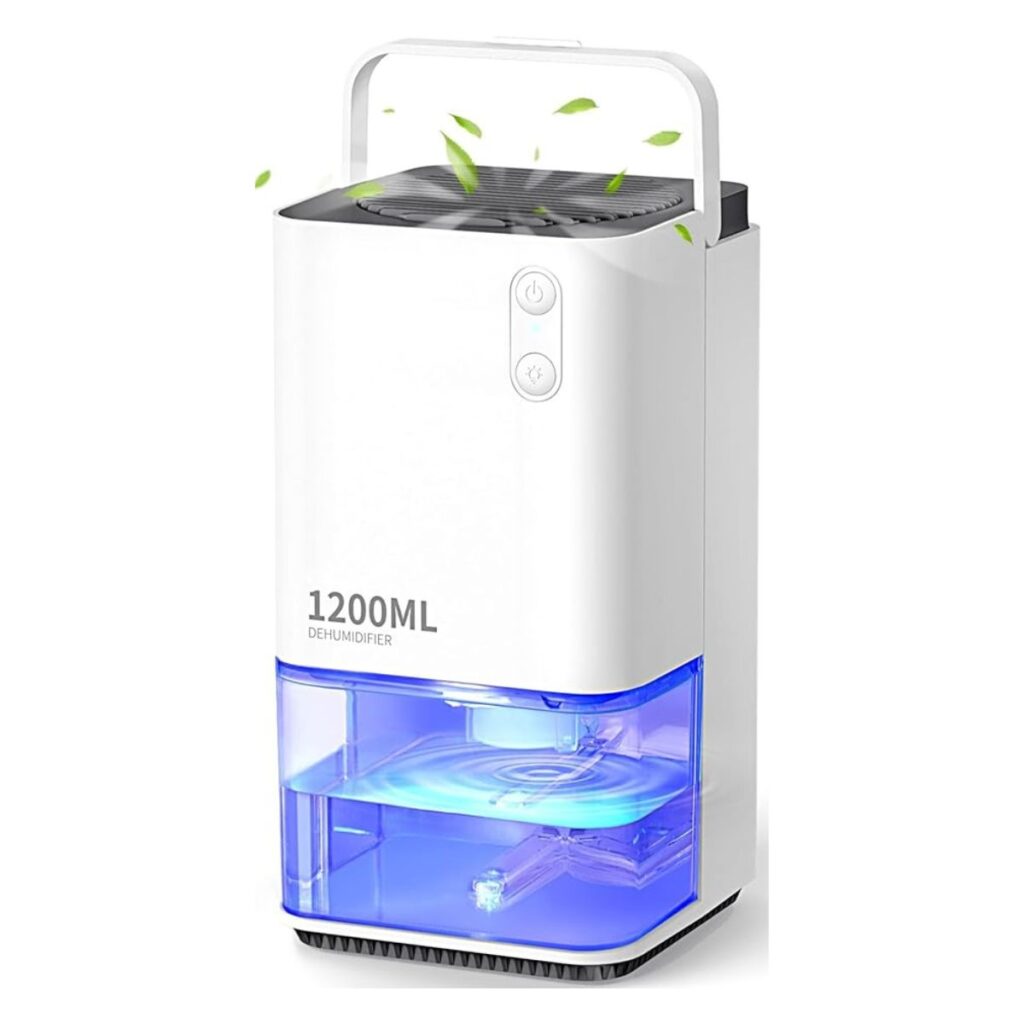
EasyAcc 1200ml Mini Dehumidifier
Best for small rooms, wardrobes and light everyday moisture

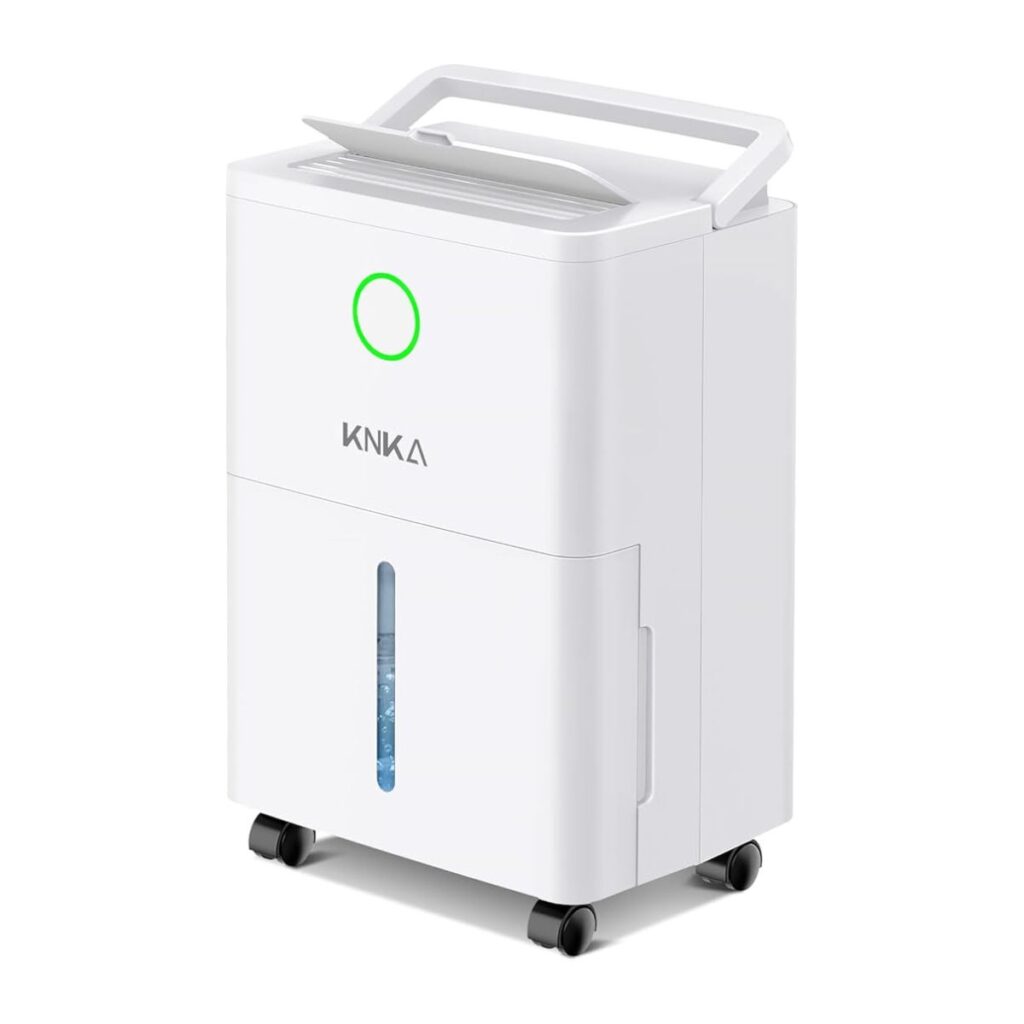
10L Dehumidifier
Best for everyday moisture control, bedrooms, bathrooms and indoor laundry drying
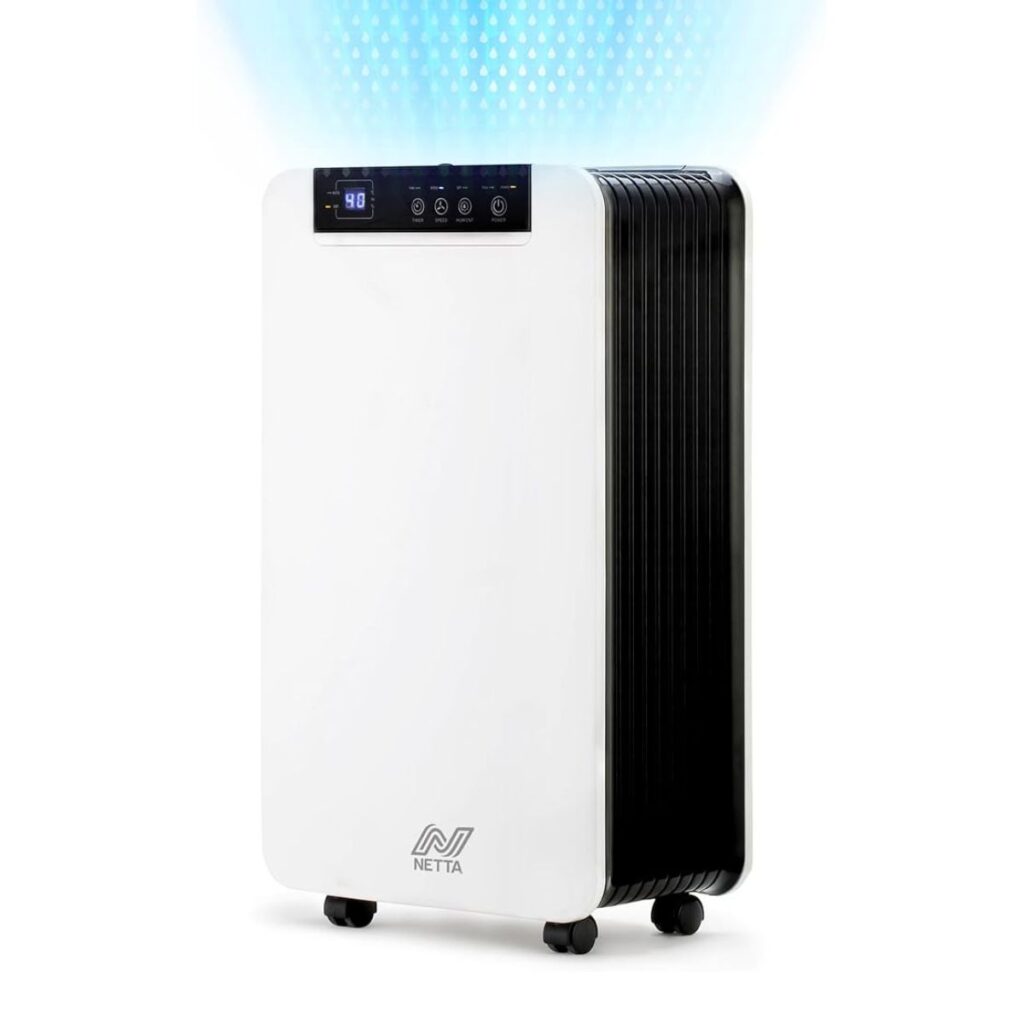
NETTA 12L Dehumidifier
Best for everyday condensation control, bedrooms, bathrooms and indoor laundry drying

Pro Breeze 20L Dehumidifier
Best for whole-home moisture control, serious damp, mould prevention and fast indoor laundry drying

EcoAir DD1 Classic MK6 Desiccant Dehumidifier
Best for cold rooms, unheated spaces, garages, basements and reliable year-round moisture control
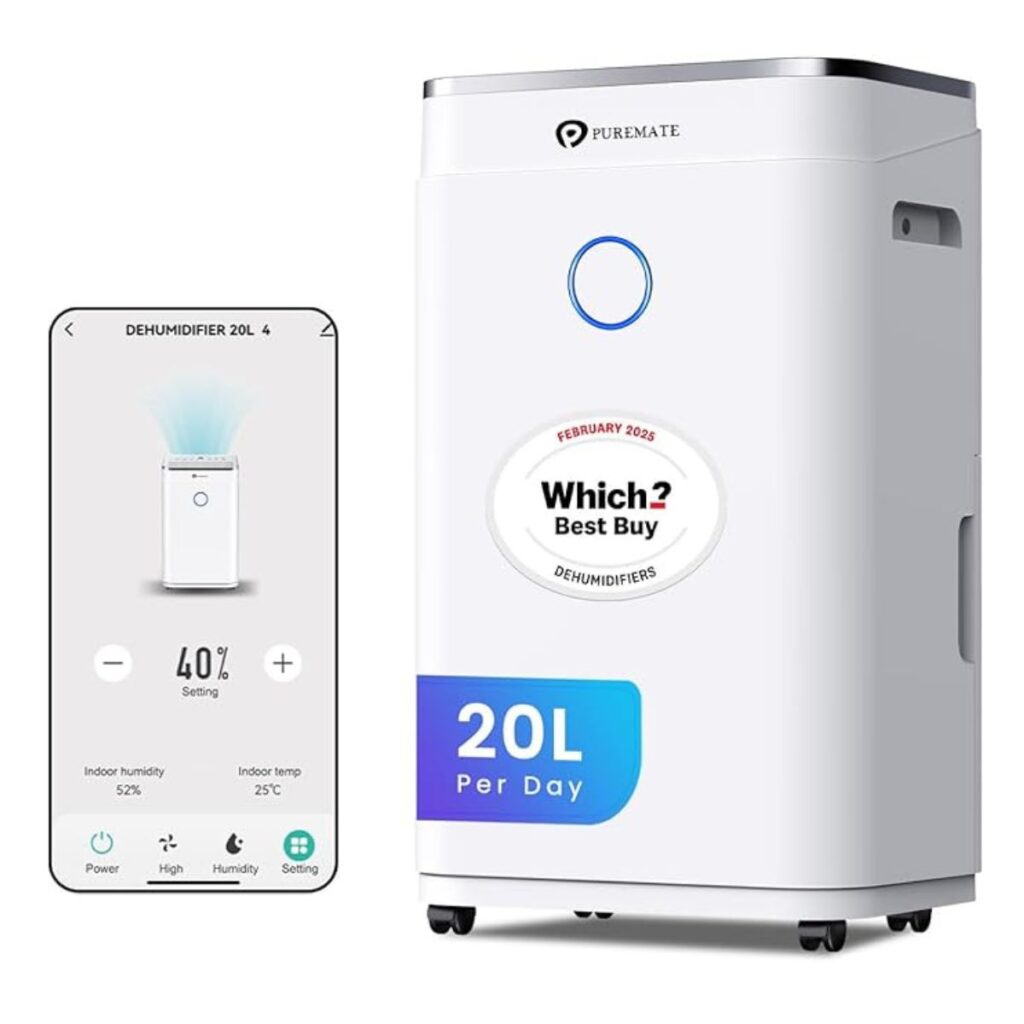
PureMate 20L Smart Dehumidifier
Ideal for whole-room moisture removal, laundry drying and modern connected living.

Devola 12L Low Energy Dehumidifier
Best for everyday damp control, bedrooms, bathrooms and energy-efficient laundry drying
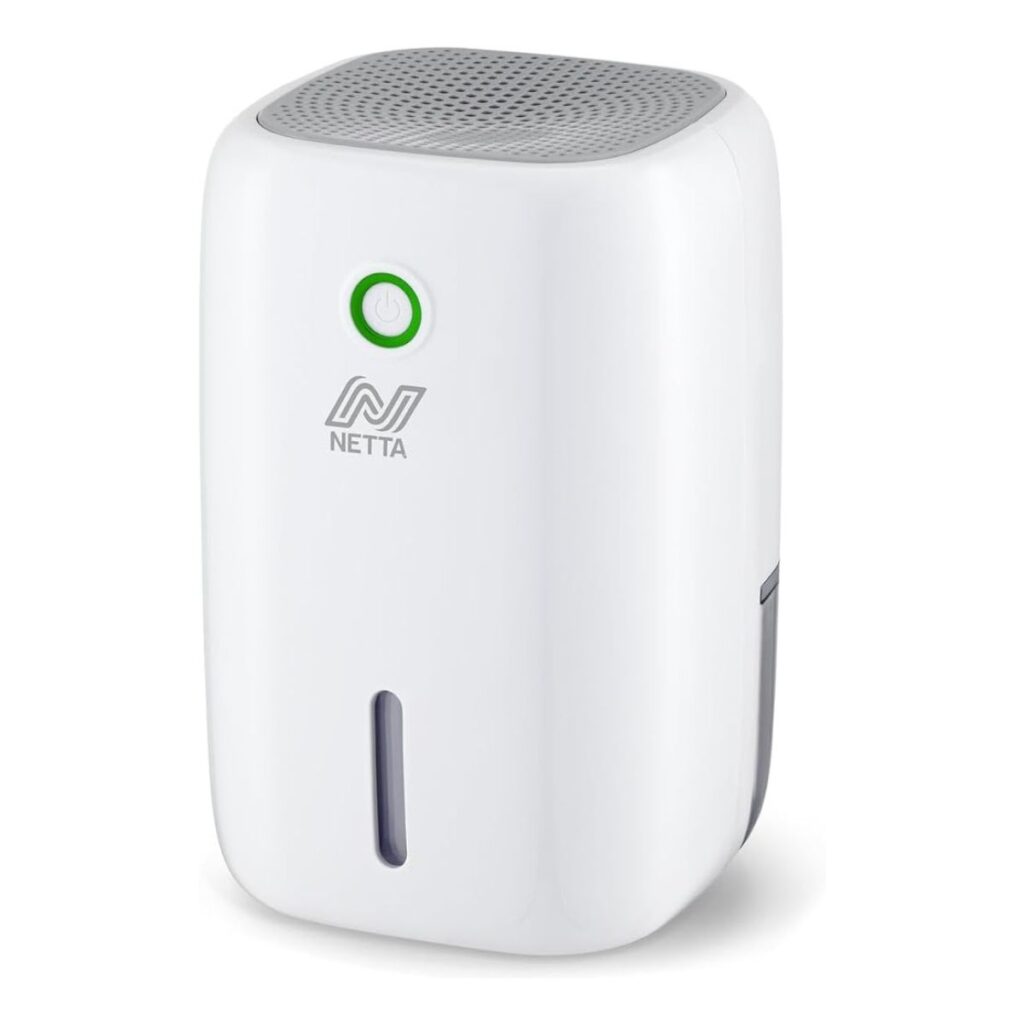
NETTA 800ml Mini Dehumidifier
Best for small rooms, bedrooms, bathrooms and light everyday moisture control
Why Dehumidifiers Are Becoming Essential in UK Homes
Dehumidifiers are no longer niche appliances used only in extreme damp conditions. Across the UK, they have become an increasingly common household solution as modern living environments, housing insulation standards, and weather patterns continue to change. Excess moisture, condensation, and poor indoor air quality are now everyday issues rather than isolated problems.
From older properties with limited ventilation to newer, well-insulated homes that trap moisture indoors, controlling humidity has become essential for maintaining comfort and protecting living spaces. A properly chosen dehumidifier helps create a healthier indoor environment while preventing long-term damage caused by persistent damp.
Condensation, mould, and everyday moisture problems
Condensation is one of the most common moisture issues in UK homes, particularly during colder months. Everyday activities such as cooking, showering, drying laundry indoors, and even breathing release moisture into the air. Without effective ventilation or humidity control, this moisture settles on cold surfaces like windows, walls, and ceilings.
Over time, excess humidity can lead to mould growth, musty odours, peeling paint, and damage to furniture, fabrics, and building materials. Dehumidifiers actively remove moisture from the air, helping to stabilise humidity levels and reduce the conditions that allow mould and condensation to develop.
Health, comfort, and protecting your home
High humidity levels can negatively affect both health and comfort. Damp indoor air may worsen respiratory conditions, allergies, and asthma, while mould spores can contribute to long-term health issues if left unaddressed. A dehumidifier supports better indoor air quality by maintaining balanced humidity throughout the home.
Beyond health benefits, controlling moisture also protects the fabric of the building itself. Reducing damp helps preserve walls, flooring, wooden furniture, and stored belongings, making dehumidifiers a practical preventative investment rather than just a short-term fix.
Who benefits most from using a dehumidifier
Dehumidifiers are suitable for a wide range of households and living situations. Homeowners use them to manage persistent damp, protect interiors, and improve comfort throughout the year. Renters benefit from a non-invasive solution that requires no permanent installation and can be moved between rooms as needed.
They are particularly useful in bedrooms, living rooms, bathrooms, basements, and utility areas where moisture tends to accumulate. Households drying laundry indoors, properties with limited ventilation, and homes in high-humidity regions of the UK all stand to benefit significantly from effective moisture control.
How to Choose the Right Dehumidifier for Your Needs
Selecting the right dehumidifier involves more than simply choosing the largest extraction capacity or the lowest price. The best option depends on where it will be used, how severe the moisture problem is, and how often the unit will operate under real household conditions.
Understanding these factors early helps avoid choosing a dehumidifier that is either underpowered for your space or unnecessarily large, noisy, and expensive to run.
Dehumidifier capacity and room size explained
Dehumidifier capacity determines how much moisture the unit can remove from the air within a set period, while room size coverage indicates how effectively it can operate in a given space. Lower-capacity dehumidifiers are well suited for small rooms, bedrooms, wardrobes, or occasional damp issues, whereas higher-capacity models are designed for larger living areas, basements, or persistent moisture problems.
Choosing the right balance is essential. A dehumidifier should comfortably manage typical humidity levels without running continuously at its limits, which improves energy efficiency, reduces wear, and extends the lifespan of the appliance. Oversizing often leads to unnecessary energy consumption, while undersizing can result in poor moisture control and limited effectiveness.
Dehumidifier energy efficiency and portability
Energy efficiency is a key consideration when choosing a dehumidifier, especially in UK homes where the appliance may run daily during colder or wetter months. Models with efficient compressors, intelligent humidity sensors, and automatic shut-off functions help reduce running costs while maintaining consistent performance.
Portability also matters. Factors such as weight, integrated handles, castor wheels, and compact design affect how easily a dehumidifier can be moved between rooms. This is particularly important for users who plan to use one unit across multiple areas of the home rather than in a single fixed location.
Dehumidifier noise levels, safety and long-term reliability
Noise levels play a significant role in everyday comfort, especially when a dehumidifier is used in bedrooms, living rooms, or home offices. Quieter operation makes it easier to run the appliance overnight or for extended periods without disruption.
For safe and long-term use, features such as automatic shut-off, overflow protection, child safety locks, and reliable humidity sensors are essential. When assessing long-term reliability, it’s important to look beyond basic specifications. Manufacturer reputation, warranty coverage, real-world user feedback, and consistent performance over time provide a far more accurate indication of how a dehumidifier will perform in daily UK household use.
Detailed Comparison of the Best Dehumidifiers
When comparing dehumidifiers, it’s important to focus on real-world performance rather than headline specifications alone. Factors such as moisture extraction efficiency, airflow design, sensor accuracy, and energy consumption have a direct impact on everyday usability, running costs, and long-term reliability.
On paper, many dehumidifiers may appear similar, but in practice their performance can vary significantly depending on how they handle continuous operation, fluctuating humidity levels, and real household conditions. These differences often determine whether a dehumidifier feels effective and unobtrusive or inefficient and frustrating over time.
Some dehumidifiers are designed primarily for small spaces and occasional moisture control, while others prioritise higher extraction capacity, larger room coverage, and continuous operation for more demanding damp or condensation issues. Rather than ranking products based purely on brand recognition or popularity, this comparison focuses on how well each dehumidifier aligns with specific use cases and realistic expectations.
By comparing entry-level, mid-range, premium, and alternative dehumidifiers side by side, it becomes easier to identify which models genuinely offer the best balance of performance, practicality, and value for different moisture control needs.
Which Dehumidifier Offers the Best Value for Money?
Value for money does not necessarily mean choosing the cheapest dehumidifier. A well-balanced dehumidifier should offer reliable real-world moisture control, appropriate extraction capacity for the space, reasonable energy consumption, and features that genuinely improve everyday use — without paying extra for functions that add little practical benefit.
The best choice depends on whether the dehumidifier is intended for occasional use in small spaces, everyday humidity control in living areas, or more demanding damp and condensation problems across larger rooms or multiple areas of the home.
Best entry-level dehumidifier for occasional use
Entry-level dehumidifiers are ideal for users dealing with light moisture issues or occasional condensation in smaller rooms. These models are typically more affordable, compact, and easy to operate, making them a sensible option for first-time buyers or targeted use in bedrooms, wardrobes, or utility areas.
They are best suited for managing everyday humidity caused by activities such as drying laundry indoors or reducing window condensation, where simplicity, portability, and low running costs matter more than maximum extraction capacity.
Best all-round dehumidifier for most households
Mid-range dehumidifiers usually offer the strongest balance between performance, room coverage, and price. These models are versatile enough to handle daily humidity control in living rooms, bedrooms, and shared spaces, making them suitable for most UK homes.
For many households, this category represents the most practical long-term investment, delivering consistent moisture control, reasonable energy efficiency, and quiet operation without the size, cost, or complexity of higher-capacity premium units.
Premium dehumidifier for demanding moisture problems
Premium dehumidifiers are designed for users facing more persistent damp, higher humidity levels, or larger spaces. While more expensive, they typically offer higher extraction capacity, improved airflow, advanced humidity control, and better performance during continuous operation.
These models are better suited for basements, larger open-plan areas, or homes with ongoing moisture challenges, where effective long-term humidity control is more important than upfront cost alone.
Are There Better Dehumidifier Alternatives for Specific Use Cases?
While dehumidifiers are highly effective for managing indoor humidity, certain situations benefit from more specialised designs or different performance priorities. Understanding these distinctions helps match the right dehumidifier to the actual problem and avoids choosing a model that is either oversized or insufficient for the intended space.
Not every household requires a high-capacity unit or advanced features. Selecting a dehumidifier based on real use cases is key to long-term effectiveness, energy efficiency, and overall value for money.
Compact dehumidifiers for wardrobes and small rooms
For small, enclosed spaces such as wardrobes, cupboards, box rooms, or storage areas, compact dehumidifiers or moisture-control units often provide the most practical solution. These models are designed to operate quietly, fit into tight spaces, and manage light moisture without unnecessary power consumption.
Compact dehumidifiers are best suited for preventing musty smells, protecting clothing and stored items, and reducing condensation in areas where portability and discretion matter more than maximum extraction capacity.
Bathroom and utility dehumidifiers for high moisture zones
Bathrooms, utility rooms, and laundry areas generate high levels of moisture over short periods. Dehumidifiers used in these spaces need to respond quickly to humidity spikes and operate reliably in warmer, moisture-heavy environments.
Models designed for frequent use in these areas typically focus on efficient moisture extraction, automatic humidity control, and ease of drainage, making them a better alternative to larger whole-room units when targeting specific high-moisture zones.
High-capacity dehumidifiers for basements and persistent damp
For basements, larger living spaces, or homes with ongoing damp issues, higher-capacity dehumidifiers are often the most effective option. These units are built for continuous operation and can handle sustained humidity levels across larger areas.
Such dehumidifiers prioritise consistent performance, stronger airflow, and long-term moisture control over compact size. They are best suited for situations where persistent damp, poor ventilation, or structural moisture problems require a more powerful and durable solution.
Frequently Asked Questions About Dehumidifiers
Are dehumidifiers effective in UK homes?
Yes, dehumidifiers are highly effective in UK homes, where damp, condensation, and high indoor humidity are common due to the climate. Regular rainfall, cooler temperatures, and limited ventilation in many properties create conditions where excess moisture builds up easily. A dehumidifier actively removes moisture from the air, helping to stabilise humidity levels and reduce condensation on windows, walls, and ceilings.
When used correctly and matched to the size of the room, a dehumidifier can significantly improve indoor comfort and help prevent longer-term moisture-related problems.
Can a dehumidifier really help prevent mould?
A dehumidifier can play an important role in preventing mould by reducing the humidity levels that allow mould spores to grow. Mould thrives in damp environments, particularly where moisture is present over long periods. By keeping indoor humidity within a healthier range, a dehumidifier helps create conditions that are far less favourable for mould development.
However, it’s important to note that a dehumidifier is most effective as part of a broader moisture-control approach, which may also include ventilation, addressing leaks, and managing everyday moisture sources such as drying laundry indoors.
What size dehumidifier do I need for my home?
The right dehumidifier size depends on both the size of the room and the severity of the moisture problem. Small rooms with occasional condensation typically require lower-capacity units, while larger living spaces or areas with persistent damp benefit from higher extraction capacities.
Choosing a dehumidifier that is too small may result in continuous operation with limited impact, while an oversized unit can lead to unnecessary energy use and higher running costs. Matching capacity to room size ensures effective moisture control and efficient operation.
Are dehumidifiers expensive to run in the UK?
Running costs vary depending on the model, capacity, and how often the dehumidifier is used. Modern dehumidifiers are generally designed to be energy efficient, especially when equipped with humidity sensors that switch the unit on and off automatically as needed.
In many cases, the cost of running a dehumidifier is lower than the long-term expense of repairing damage caused by damp, mould, or condensation. Using the appliance strategically — rather than continuously — helps keep energy consumption manageable.
Is it safe to use a dehumidifier in bedrooms?
Yes, dehumidifiers are generally safe to use in bedrooms, provided they are designed for indoor residential use and operated according to the manufacturer’s instructions. Many models are specifically built for quiet operation, making them suitable for overnight use.
For bedrooms, factors such as noise level, automatic shut-off, and humidity control settings are especially important. Choosing a quieter model with reliable safety features helps ensure comfort and peace of mind during extended use.
Can I use a dehumidifier and moisture absorbers together?
Yes, dehumidifiers and moisture absorbers can be used together in different areas of the home. Dehumidifiers are more effective for actively reducing humidity in rooms where people spend time, while moisture absorbers can be useful in small, enclosed spaces such as wardrobes or cupboards.
Using each solution where it works best allows for more targeted moisture control without relying on a single approach for the entire property.
How long does it take for a dehumidifier to reduce humidity?
The time it takes for a dehumidifier to reduce humidity depends on factors such as room size, initial moisture levels, ventilation, and the unit’s extraction capacity. In lightly damp rooms, noticeable improvements can occur within a few hours, while more severe moisture problems may take several days of regular use to stabilise.
Consistent use and correct placement of the dehumidifier help achieve faster and more reliable results.
Do dehumidifiers replace the need for ventilation?
Dehumidifiers do not replace proper ventilation, but they complement it. Ventilation helps remove moist air and introduce fresh air, while a dehumidifier actively extracts moisture from the air inside the room.
In many UK homes, especially during colder months when windows are kept closed, combining basic ventilation with a dehumidifier provides a more effective and practical solution for managing indoor humidity.
How Moisture Control Fits into a Smarter, More Resilient Home
Effective moisture control rarely exists in isolation. In real UK homes, managing humidity, condensation and damp is often part of a broader approach to everyday comfort, resilience and protecting living spaces — particularly during colder months or periods of unsettled weather. How efficiently a home uses energy and how heating is managed both play a significant role in how moisture behaves indoors.
Moisture problems often become more noticeable when heating systems, ventilation or airflow are disrupted. Poorly controlled heating or inefficient energy use can lead to uneven temperatures, cold surfaces and increased condensation. Improving Home Energy Efficiency helps stabilise indoor conditions, reduce unnecessary heat loss and support more consistent moisture control, especially in well-insulated properties.
In situations where power supply or heating is interrupted, access to flexible energy solutions can help maintain basic comfort and support essential devices. Exploring our Portable Power Stations category can be useful for understanding how portable energy options support everyday household needs beyond fixed power sources, including temporary moisture control during outages or maintenance periods.
Planning for power continuity also plays an important role in maintaining a healthy indoor environment. During outages, reduced heating or ventilation can lead to higher humidity levels, condensation on windows and walls, and an increased risk of damp-related issues. Our Emergency Power guides focus on practical backup solutions that help households stay prepared for these situations, complementing moisture control strategies during colder or wetter periods.
Moisture control works most effectively when considered as part of a wider indoor strategy that includes both air movement and temperature control. Well-designed Heating Solutions support moisture management by keeping surfaces warm, improving airflow patterns and reducing the conditions that allow damp to form. Home Air Quality is also closely linked to humidity management, particularly in modern UK homes where excess moisture can build up quickly if airflow and heating are not balanced.
By viewing dehumidifiers as part of a connected home approach — alongside Home Energy Efficiency, Heating Solutions, portable energy solutions, emergency power planning and wider air quality considerations — it becomes easier to create a living environment that supports comfort, protection and peace of mind throughout the year, rather than reacting to damp or moisture-related problems only after they appear.
Choosing the right dehumidifier ultimately comes down to understanding your home environment and realistic moisture control needs. Whether you’re dealing with everyday condensation, preventing damp and mould, or managing humidity across larger living spaces, selecting the right balance of extraction capacity, energy efficiency, and noise levels makes a noticeable difference.
By focusing on real-world performance, usability, and long-term reliability — rather than marketing claims alone — it becomes much easier to choose a dehumidifier that genuinely suits both your home and your budget. A well-matched model not only improves indoor comfort day to day, but also helps protect your living space over time.